For one pan of onions, prioritise adjustable low-to-medium heat, a useful timer and a hob that works with your pan rather than choosing by boost power or zone count. A portable induction cooker suits a kitchen where you cannot alter the worktop; a built-in induction hob needs suitable cookware, space and an electrical supply matched to the model. Ceramic is worth considering if keeping non-magnetic pans matters more to you than induction’s pan-focused heating.
Who is this for?
Solo cooks who want controlled heat
If you cook small batches of onions regularly, being able to turn the heat down after they soften may matter more than maximum boiling speed. Which? assesses low-temperature simmering as well as heating performance in its hob tests.
Renters and cooks with limited space
If changing the worktop is impractical, a portable single-zone cooker avoids a built-in installation. If you want a permanent hob instead, check its opening and electrical requirements before choosing a plug-in or hardwired model.
Cooks who want to keep their pans
If your usual frying pan lacks a flat magnetic base, check it before choosing induction. A ceramic electric hob does not depend on that induction-pan requirement, although its glass surface can remain hot after cooking.
What matters when choosing?
Start with the pan and the space available, then compare heat controls and installation requirements on the exact model. A cooking sensor is a model-specific extra, not a substitute for checking whether the hob suits a slow, one-pan task.
| Concern |
What to check |
Who this matters to |
| Controlled heat and timing |
Look for clear heat adjustment and a timer; check any frying-temperature sensor on the exact model. |
If I cook onions slowly, I want to lower the heat and be reminded to check the pan rather than rely on a burst of power. Roughly 37% of consumers put heat control and timing first. |
| Space and installation |
Check whether the model is portable, plug-in or hardwired; for a built-in hob, confirm the cut-out and electrical requirements. |
When I cannot change the worktop, avoiding permanent installation takes priority; with an existing opening, I need a hob that fits it. Around 27% of consumers make space and installation their primary concern. |
| Pan compatibility |
For induction, check that your pan has a flat magnetic base and meets the model’s pan-size requirements. |
I would rather keep my usual frying pan than replace it to use a new hob. About 18% of consumers put cookware compatibility first. |
| Simple one-pan cooking |
Decide whether one zone meets your routine before choosing extra zones or assisted-cooking functions. |
If onions are my main hob task, I may have little use for four zones or additional controls. Roughly 18% of consumers prioritise a straightforward one-pan setup. |
Buying pitfalls
-
Choosing by boost power alone
Boost helps with rapid heating, but slowly caramelising onions calls for heat you can adjust and monitor over time. Which? treats low-temperature simmering as a separate hob-test criterion from heating speed.
Compare the low-heat controls and timer on the exact model. If you want temperature assistance, check that the stated sensor function is relevant to frying rather than assuming a boiling sensor does the same job.
-
Assuming every frying pan works on induction
Induction needs suitable cookware with a flat magnetic base. A pan without one may not heat as intended.
Check your pan’s induction marking or test its base with a magnet before choosing induction. If keeping a non-magnetic pan is the priority, consider ceramic.
Changing to induction may also mean replacing the pan you planned to use.
-
Ordering a built-in hob before checking the kitchen
Built-in hobs differ in cut-out size and electrical connection. Bosch specifies its PUG61RAA5B as a 3.0 kW, 13A Plug & Play model, while AEG specifies its SO64IA0SCB as hardwired.
Measure the opening, read the exact installation instructions and ask a qualified electrician to assess the supply if its suitability is unclear.
A mismatch may require worktop alterations or electrical installation work before the hob can be used.
-
Treating a switched-off ceramic hob as cool
Ceramic elements heat the glass surface, which can remain hot after the controls are switched off. Hotpoint’s HR 620 R H has residual-heat indicators for this reason.
Heed the indicator and allow the surface to cool before touching or cleaning it; keep items that could catch fire away from the cooking area.
Brands to consider for these hob types
Bosch
Bosch offers the PUG61RAA5B for a permanent induction setup using its specified 13A Plug & Play connection.
- The PUG61RAA5B is a four-zone, 60 cm model specified at 3.0 kW, with touch controls and PowerBoost.
- Its connection type does not establish that other Bosch models are plug-in; the worktop opening and electrical supply still need checking.
AEG
AEG has built-in induction models for cooks considering timers and other assisted-cooking controls.
- The cited 80 cm SenseBoil model includes a boil sensor and individual-zone timers, according to AEG.
- The cited 60 cm SO64IA0SCB is hardwired; assisted features vary by model, and a boil sensor does not establish how a hob will handle onions at low heat.
Hotpoint
The HR 620 R H is a built-in ceramic option for cooks who prefer physical side dials or want to keep non-magnetic cookware.
- Hotpoint specifies four zones, six power levels and residual-heat indicators for this model.
- The ceramic surface can remain hot after the controls are off; follow the residual-heat warning.
Neff
Neff is relevant if an exact-model frying-temperature control is part of your choice of built-in induction hob.
- Neff lists an Extended Frying Sensor and a flexible induction zone on the T66FHE4L0.
- Sensor functions are model-specific. Check the controls on the particular hob rather than assuming every Neff induction model has the same features.
Joybuy product choices
These choices include compact and four-zone built-in induction hobs, a portable induction cooker and a built-in ceramic hob. For one pan of onions, compare the controls you will use with your pan, available space and installation arrangements; extra zones or boost functions need not decide the choice.
 No image available
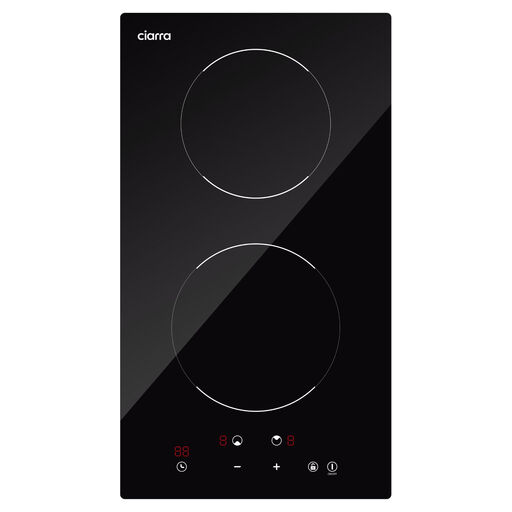
CIARRA CBBIH292T 29 cm two-zone induction hob
A compact built-in choice if you want room for one pan and a second zone, rather than a portable cooker.
The product name specifies 2900 W, touch controls, nine power levels, a timer and a child safety lock. Check that your magnetic pan fits the stated 12–26 cm range.
Confirm the stated 260 × 490 mm cut-out and 16 A electrical requirement against the installation instructions and your kitchen supply. Heat-setting options alone do not establish how steadily the hob cooks at low heat.
View on Joybuy
 No image available
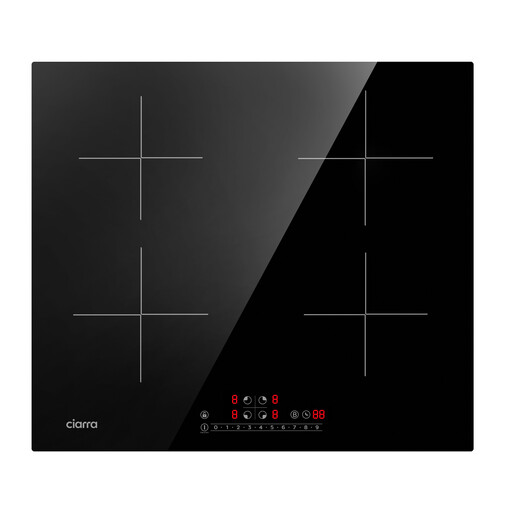
Ciarra four-zone built-in induction hob
Consider this built-in format if the same kitchen hob must serve more than the occasional single-pan task; four zones may be unnecessary if you usually cook only onions.
The product name specifies touch controls, nine power levels and a booster function. Use magnetic cookware and check the pan-size requirements for the zone you intend to use.
Check the stated 560 × 490 mm cut-out and 32 A fuse requirement against the installation instructions and property supply. The number of power levels does not establish low-heat stability.
View on Joybuy
 No image available
ochama 2000 W portable induction cooker
A portable choice for cooking one pan without changing a worktop, provided your pan and electrical arrangement suit the cooker.
The product name specifies touch controls, ten power settings, six functions and a safety lock. Use cookware with a magnetic base, and check the instructions for the required electrical supply and any timer function you need.
The product information warns that the panel becomes hot in use and says not to leave the cooker operating unattended.
View on Joybuy
 No image available
Bosch PIE631BB5E Series 4 60 cm induction hob
A permanent built-in option if your kitchen can accommodate a hardwired induction hob and you use magnetic cookware.
Check its heat controls and individual-zone timer against the way you plan to monitor a long cook; neither a timer nor the available settings establishes its low-heat cooking results.
Confirm the stated 592 × 522 mm appliance dimensions, worktop cut-out and 7.4 kW hardwired requirement with the installation instructions and a qualified electrician.
View on Joybuy
 No image available
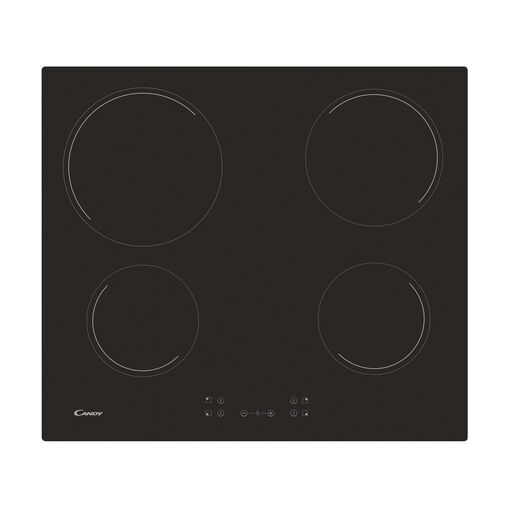
CANDY CH64CCB 59 cm ceramic hob
A built-in ceramic choice if keeping a non-magnetic frying pan is more important to you than choosing induction.
Check the heat-setting range and whether its controls provide the reminders you want for a long cook. Ceramic glass can remain hot after use, so heed the residual-heat indicators and allow it to cool before cleaning.
Confirm the exact worktop opening and electrical connection in the installation instructions before arranging fitting.
View on Joybuy
Common questions
Do I need a particular pan for an induction hob?
Yes: use a pan with a flat, magnetic induction-compatible base, and check the hob’s pan-size requirements. If you want to keep a non-magnetic frying pan for your onions, a ceramic electric hob avoids that induction requirement.
Can I plug any built-in electric hob into an ordinary socket?
No; the required connection depends on the exact hob. Bosch specifies the PUG61RAA5B as a 3.0 kW model with a 13A plug, while AEG specifies the SO64IA0SCB as hardwired. Check the installation instructions and ask a qualified electrician if you are unsure whether the supply is suitable.
Does a ceramic hob stay hot after it is switched off?
Yes, its glass surface can retain heat after cooking. Hotpoint equips the HR 620 R H with residual-heat indicators; heed the warning and let the surface cool before cleaning it.
How should I clean the hob after cooking onions?
Let the hob cool fully before cleaning it, and follow the maker’s instructions for suitable cleaners. Take particular care with a ceramic surface while its residual-heat indicator is showing.


