
24/7 Customer Support

Free returns

Same-day & Next-day Delivery

Quality Guaranteed

Unlock Your Welcome Offers: FREE Delivery | Up to 80% OFF | Free 30-day JoyPlus trial
Download the APP
Choosing between electric kettles can seem straightforward until you compare capacity, wattage, materials, safety features and cleaning requirements. A low-priced model may boil slowly, develop a difficult-to-remove scale build-up or feel awkward to use. Meanwhile, a stylish kitchen kettle may prioritise appearance over practical details such as a clear water window or a comfortable pouring spout.
Before choosing a kettle for a flat, family kitchen, home office or shared house, look beyond the headline claims. The following guide explains the specifications that matter and highlights suitable options for different households.
A 3000W kettle can offer rapid boiling, but actual performance also depends on the amount of water added, the starting water temperature, the heating element and the kettle’s design. Boiling a single cup will generally take less time than heating a full 1.7-litre capacity.
A rapid-boil kettle is useful for busy mornings, but avoid filling it to the maximum mark when you only need one mug. This saves time and avoids using more electricity than necessary.
A 1.7-litre electric kettle is often described as making around seven cups, but mug sizes vary. A large family may appreciate the capacity, while a single-person household could find a 1.5-litre kettle easier to handle.
Always check the MIN and MAX markings. Operating below the minimum level may activate boil-dry protection, while overfilling can cause hot water to escape through the spout or lid.
A retro kettle or other stylish kitchen kettle can complement your worktop, but the exterior finish is only one part of the buying decision. Check whether the lid opens widely enough for cleaning, whether the heating element is concealed and whether a removable limescale filter is included.
For everyday UK use, useful safety features include automatic shut-off, boil-dry protection, a stable base and a handle that stays comfortable to hold. These features are safeguards rather than a reason to leave a kettle unattended.
Capacity affects weight as well as volume. A full kettle can be heavy to lift, so consider the handle shape and pouring angle if several people will use it throughout the day.
A 3000W kettle is commonly selected for rapid boiling, while models around 2100W to 2200W can still provide convenient everyday performance. Power ratings should be compared alongside capacity and intended use rather than treated as a guarantee of a particular boiling time.
A concealed heating element can make the interior easier to wipe and may reduce exposed areas where limescale collects. If speed is important, also look for a clearly stated rapid-boil function and a practical minimum fill level.
A stainless-steel kettle can provide a durable interior and a neutral-looking finish. Double-wall construction can help reduce heat transfer to the exterior, although the kettle, water and steam will still become hot.
A limescale-filter kettle is worth considering in areas with hard water. The filter can help catch loose scale when pouring, but it does not replace regular descaling. Other useful details include:
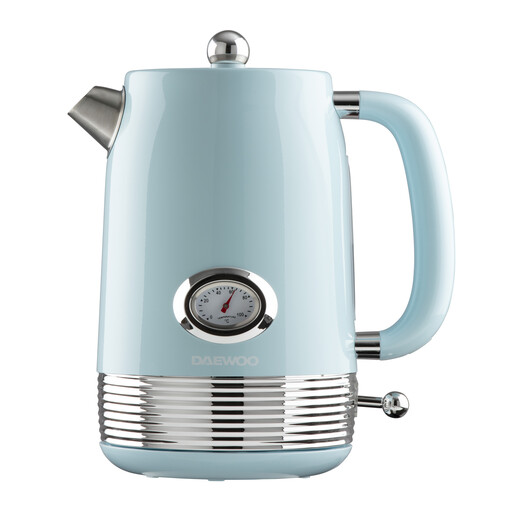
Why This Fits Their Persona: The 1.5-litre capacity suits couples, smaller kitchens and first-time buyers who want a manageable kettle with a distinctive retro appearance.
Its concealed heating element and stainless-steel interior address common cleaning and durability concerns, while automatic shut-off and boil-dry protection provide useful safeguards.
1.5-litre capacity, 360° swivel base, ergonomic handle and easy-pour spout.
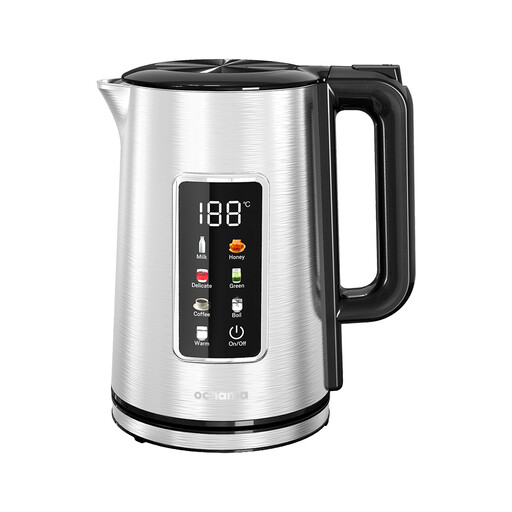
Why This Fits Their Persona: This model suits households that prioritise a larger capacity, insulated construction and visible temperature information for tea, coffee and hot drinks.
The double-wall design provides a less exposed outer surface than a single-wall construction, while the display makes the temperature and operating status easier to monitor.
1.7-litre capacity, 2100W heating, double-wall stainless-steel construction, keep-warm function and colour temperature display.

Why This Fits Their Persona: Its family-size capacity and stated 3000W heating element suit households that regularly prepare several drinks in succession.
The removable anti-scale filter and wide-opening lid make routine rinsing and cleaning more practical than designs with restricted access.
1.7-litre capacity, 3000W heating element, 360° swivel base, auto shut-off, boil-dry protection and water-level window.
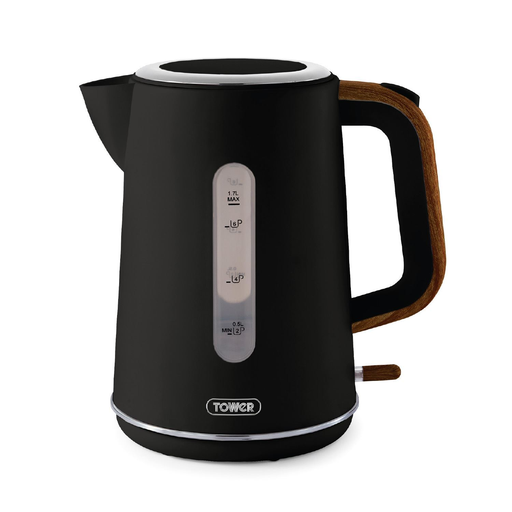
Why This Fits Their Persona: The contemporary design works well in a visible kitchen or home-office area without removing practical features needed for daily use.
The appearance is paired with a viewing window, easy pull-up lid, removable limescale filter and automatic safety shut-off.
1.7-litre capacity, 3kW rapid boil, 360° base, removable filter and boil-dry protection.
We have compiled a complete, real-time list of products that fully satisfy these strict selection criteria and UK safety regulations.
Use only the amount of water required for your drinks. Repeatedly boiling a full kettle can increase energy use, even when the kettle has an energy-efficient design. A clear water window makes accurate filling easier.
In hard-water areas, descale the kettle according to the manufacturer’s instructions. Mineral deposits can affect the heating element, reduce usable capacity and leave flakes in the water. Remove and rinse a limescale filter where the design permits, and never immerse the base, cable or electrical connections in water.
A keep-warm kettle can be convenient for repeated drinks, but holding water at temperature uses electricity. For occasional tea or coffee, boiling a fresh, measured amount may be more economical.
They can be practical for heating a measured amount of water, particularly when making one or two drinks. Running cost depends on the amount of water, the appliance’s power rating, usage frequency and the electricity tariff. Avoid filling a large kettle for a single cup.
Lifespan varies according to construction, frequency of use, water hardness and maintenance. Regular descaling, avoiding overfilling and allowing the kettle to switch off normally can help preserve performance. Replace a kettle if the cable, plug, base or casing shows damage.
A 1.7-litre electric kettle is suitable for many families and shared households because it can prepare several cups from one fill. Check the water-level window and only boil the volume needed. If the full kettle feels too heavy to pour, a smaller 1.5-litre model may be easier to handle.