
24/7 Customer Support

Free returns

Same-day & Next-day Delivery

Quality Guaranteed

Unlock Your Welcome Offers: FREE Delivery | Up to 80% OFF | Free 30-day JoyPlus trial
Download the APP
An electric rice cooker can simplify weekday meals, but choosing the wrong model may leave you with wasted worktop space, difficult cleaning or a capacity that does not match your household. Marketing often focuses on the number of programmes, yet that figure alone does not show whether a cooker suits your cooking habits.
As the Joybuy Product Recommendation Officer, I have filtered the practical details that matter most for UK households, from students and couples to families and meal-preppers.
A stated capacity refers to the inner pot’s maximum volume, not necessarily the amount of cooked rice you should prepare in one cycle. A 1.0L to 1.2L mini rice cooker is generally more appropriate for one or two people, while a 4L to 6L model provides more room for family meals and batch cooking.
Overfilling can affect cooking and may cause spills, particularly when preparing porridge, pasta or ingredients that expand. Always follow the marked maximum level and the manufacturer’s instructions.
A digital rice cooker may advertise ten or more modes, but most households regularly use only a few: rice, porridge, steam, reheat and keep warm. Consider whether the extra functions replace another appliance or simply make the control panel more complicated.
A multifunctional rice cooker can be useful if you want to prepare soups, stews, pasta or steamed vegetables. However, a basic model may be more practical if your main purpose is cooking rice with minimal setup.
A non-stick rice cooker still requires careful handling. Metal utensils, abrasive sponges and stacking sharp accessories inside the pot may damage the coating. Check whether the inner pot, lid and steam vent are removable, and whether accessories are dishwasher-safe.
Stainless steel inner pots avoid concerns about coating damage but may require more attention to prevent rice sticking. The material should be considered alongside cleaning design, not in isolation.
Use your normal meal pattern as a guide:
If you frequently prepare meals in advance, a family rice cooker or electric multicooker may be more practical than a compact appliance.
Wattage indicates the appliance’s electrical input, but it does not guarantee a particular cooking speed or result. For example, the Bear 1.2L model is rated at 200–238W, while the ochama 4L model is rated at 930W. The larger model requires more power, but it is also designed for a greater volume of food.
Look for useful controls such as a programmable rice cooker timer, digital display, delayed start and automatic temperature management. A rice cooker with keep warm function can be convenient when household members eat at different times, but avoid leaving food warm for longer than recommended in the user manual.
The inner pot should sit securely on the heating plate, with its outer surface dry before use. Useful design features include:
All electric rice cookers produce hot steam. Place the appliance on a stable, dry, heat-resistant surface, keep the steam vent clear and open the lid away from your face and hands.
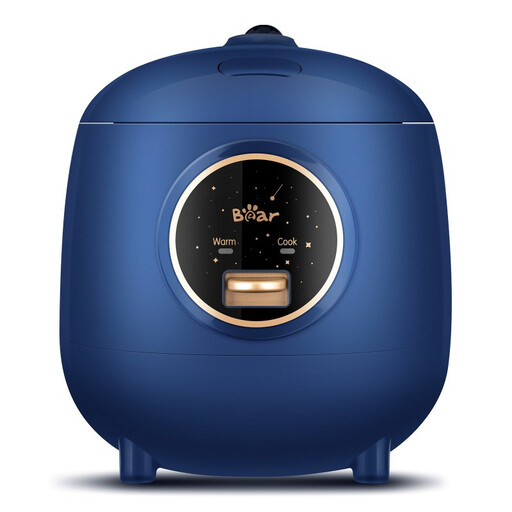
Why This Fits Their Persona: Its 1.2L capacity and one-button operation suit students, singles and couples in flats, halls or compact kitchens.
The compact capacity discourages oversized portions, while the removable non-stick pot and detachable inner lid support routine cleaning.
Automatic warming, 200–238W rated power and functions for rice, porridge, soup, pasta and small hot-pot meals.
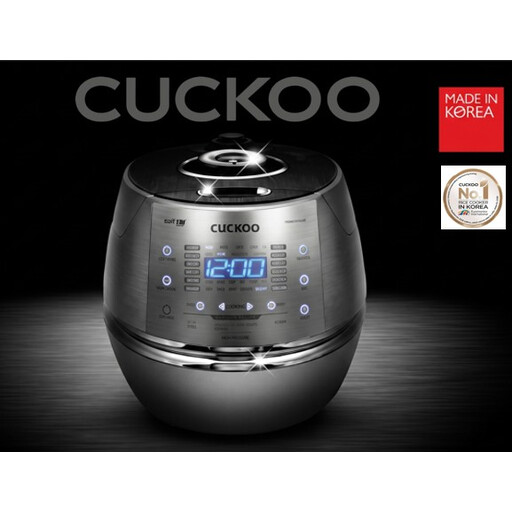
Why This Fits Their Persona: The 1.8L programmable format is suited to home cooks who want more control over rice styles and additional dishes.
Its programmable controls make the stated functions more usable than a crowded panel with limited adjustment.
Induction heating, DSP control, 19 pre-programmed functions and a high-quality non-stick coating are listed features.

Why This Fits Their Persona: Its larger capacity is appropriate for families, batch cooking and households wanting an electric multicooker rather than a rice-only appliance.
The nine listed cooking modes replace several separate appliances, giving the extra capacity a clear use case.
Pressure cook, steam, rice cook, slow cook, sauté, bake, yoghurt and sous vide functions, plus a ceramic non-stick inner pot.

Why This Fits Their Persona: The 3L size suits households of two to six people and supports scheduled cooking for busy routines.
The app, timer and clear programme list provide practical controls rather than relying only on a high programme count.
Eight preset modes, 24-hour delay timer, up to 12-hour keep warm setting, non-stick interior and steamer basket.
We have compiled a complete, real-time list of products that fully satisfy these strict selection criteria and UK safety regulations.
Before ordering, confirm that the appliance is suitable for the UK’s 220–240V supply and check whether a compatible UK plug is supplied. Use a stable surface and a suitable wall socket, particularly for higher-powered multifunctional models.
To estimate electricity cost, multiply the appliance’s kilowatt rating by the hours used, then multiply by your tariff per kWh. A 500W cooker running for one hour uses approximately 0.5kWh, although actual consumption varies because many cookers cycle their heating element and switch to keep warm.
It depends on the appliance’s wattage, cooking time and your electricity tariff. A rice cooker may use less energy for a contained rice-cooking cycle, but the result varies by household and cooking method. Compare the rated wattage and expected usage rather than assuming a universal saving.
Lifespan depends on frequency of use, cleaning, storage and the condition of the inner pot and electrical components. Avoid abrasive cleaning, do not immerse the main unit in water, and stop using the appliance if you notice smoke, unusual noise, a damaged cable or failure to heat.
Yes. Depending on the model, it may prepare porridge, soup, pasta, vegetables, stews or steamed dishes. Check the specific programme list and capacity before buying. A rice cooker and steamer is useful for simple two-part meals, while a pressure multi-cooker offers a wider range of cooking methods but usually occupies more cupboard and worktop space.