Loft listeners seeking controlled bass
You want electronic music to sound full in an open room, but need a way to manage the bass you hear rather than simply increase the volume.


Choose active hi-fi speakers for everyday, whole-room listening; choose studio monitors if you produce music or listen at a defined position; choose powered PA speakers when DJ playback for groups genuinely calls for event-style output. In a converted loft, speaker placement and bass control matter more than output figures alone, and residential noise remains a consideration whichever route you take.
You want electronic music to sound full in an open room, but need a way to manage the bass you hear rather than simply increase the volume.
You work at a desk or another defined listening position and need suitable line-level connections and room-response adjustment for mixing or preparing tracks.
You need flexible inputs and event-style output for guests or DJ playback, while planning for the extra setup and the effect of noise on neighbours.
Choose when: Music-first listening across the loft matters more than working at one fixed monitoring position.
Allow for: Integrated streaming does not remove the need to position the speakers and manage bass in the room.
Choose when: Production, DJ preparation or focused listening takes place at a defined position.
Allow for: A pair of monitors may need stands, cabling and a suitable interface or controller; room adjustment does not prevent sound reaching neighbours.
Choose when: DJ sets for groups or occasional events make mixer inputs and event-style output a primary need.
Allow for: PA output can be excessive for personal listening in a residential loft and does not solve bass transfer.
| Concern | What to check | Who this matters to |
|---|---|---|
| Room acoustics and bass control | Check placement options and whether the chosen model has response controls or compatible measured calibration. | When bass builds up near a wall, I want to adjust what I hear rather than turn everything up; around 42% of consumers put bass control first. |
| Whole-room listening and sources | Confirm that the exact model works with your streaming devices and has the wired inputs you need. | For everyday listening across the loft, I want to start music from the devices I already use; roughly 25% of consumers prioritise easy access to their sources. |
| Focused monitoring and DJ preparation | Check whether speakers are sold singly or as a pair and whether their inputs match your interface, mixer or controller. | If I prepare sets or mix at a desk, I need a consistent listening position and suitable connections; about 17% of consumers make focused monitoring their main concern. |
| Playback for occasional events | Check mixer inputs, stated output, stand requirements and the rules for your residential building. | When I play for a group, I need event-oriented connections and output without overlooking neighbours; around 16% of consumers put that event use first. |
More output does not correct an uneven bass response in the loft. Genelec explains that the room changes the sound balance heard from monitors, while Yamaha identifies wall placement as a reason to adjust low-frequency response.
Decide whether the main use is whole-room listening, focused monitoring or events before comparing output figures and bass-control options within that route.
Stands, cables or calibration equipment can add to the setup if the route you choose requires them.
A spacious room can still change the balance at the listening position; Genelec specifically identifies room effects in improvised and home monitoring spaces.
Work out where you will listen and where speakers can stand before choosing their size or adding a subwoofer. Check which response adjustments are available on the exact system.
In England, the Department for Environment, Food & Rural Affairs says councils can investigate statutory-nuisance complaints at any time of day or night. Northern Ireland guidance from nidirect says there is no fixed noise level that automatically constitutes a statutory nuisance.
Consider sound passing through shared walls and floors, and check your building rules and applicable council guidance before choosing equipment for loud group playback.
The LS60 Wireless is an integrated active floorstanding option for music-first listening without a separate amplifier and passive speakers.
Genelec Smart Active Monitoring systems are relevant when focused listening and measured adjustment at the listening position are priorities.
The HS5 and HS7 are powered nearfield monitors to consider for a desk or another defined listening position.
The EON715 is an event-oriented powered PA option for DJ playback or occasional groups, rather than a nearfield monitoring setup.
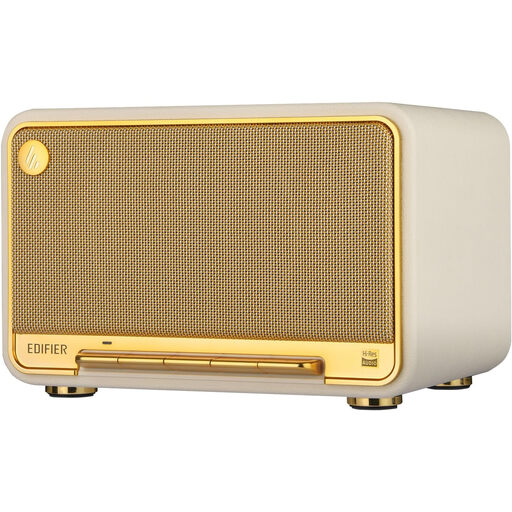
This tabletop speaker is a choice to examine for everyday listening from wireless or wired sources. For a converted loft, check its placement and bass-adjustment options against your room before deciding.
 No image available
For tabletop music listening, the listed connection options include Bluetooth, AirPlay 2, USB-C and AUX. The product name states 60 W RMS output, a 2.1 acoustic architecture and 11-hour playtime; confirm the Bluetooth version and available bass adjustments with the seller before choosing it for your loft.
Not automatically: more output does not correct bass imbalance caused by the room. Genelec notes that room acoustics change the balance heard from monitors, so establish a workable speaker position and check response controls or compatible measured calibration before prioritising output.
Choose powered PA when DJ sets for groups or occasional events make mixer inputs and event-style output central to your use. JBL describes its EON715, with a three-channel mixer and EQ, as equipment for mid-sized events; for mainly personal listening in a residential loft, consider whether you would use those functions.
No time of day automatically makes loud music acceptable. In England, the Department for Environment, Food & Rural Affairs says councils can investigate statutory-nuisance complaints at any time; in Northern Ireland, nidirect says there is no fixed level that automatically constitutes a statutory nuisance. Check the guidance for your area and any tenancy or building rules.
Not automatically: establish where the main speakers will stand and how their bass sounds at your listening position first. If you later add a subwoofer, check the exact system’s connection and adjustment options; Genelec says GLM can adjust subwoofer crossover phase on compatible SAM systems, while KEF lists optional subwoofer outputs for the LS60 Wireless.