
24/7 Customer Support

Free returns

Same-day & Next-day Delivery

Quality Guaranteed

Unlock Your Welcome Offers: FREE Delivery | Up to 80% OFF | Free 30-day JoyPlus trial
Download the APP
By Joybuy Product Recommendation Officer
Choosing electronics and electrical accessories can look straightforward until a cable fails, an extension lead overheats or a phone lanyard does not fit the case. Product pages often focus on appearance, headline wattage or broad compatibility, while leaving out the details that determine whether an accessory suits your home, commute, workshop or vehicle.
Before buying, watch for three common traps:
Start at both ends of the cable. For phones and tablets, check whether you need:
Cable length also affects practical use. A 1m cable is generally convenient at a desk, bedside table or in a travel bag, while a longer cable can be useful where the socket is further away. Do not assume that a cable supporting fast charging includes a wall adaptor; many cables, including USB-C models, are sold separately from the power adaptor.
For a phone lanyard, check that your case has a compatible lanyard tab or attachment point. A crossbody phone strap is useful for commuting, festivals, shopping and travel, but inspect the connector regularly and avoid sharp edges or strong force.
When selecting an extension lead, look beyond the number of sockets. A six-way extension lead provides more outlets, but the combined load must remain within its stated maximum. The STATUS six-socket model listed here has a 13A plug, 2m cable and 3,120W maximum load, alongside a neon power indicator and wall-mountable design.
A switched extension lead can make a desk or entertainment set-up easier to manage. Individually switched sockets allow unused equipment to be turned off without unplugging everything. Look for details such as BS1363-2 compliance, a fitted 13A plug and a non-rewireable socket. Indoor extension products should not be used in damp or wet conditions, and extension leads should not be connected to one another or to a cable reel.
A cable reel is suitable when reach matters, particularly in a garage, workshop or large room. However, always fully unwind the cable before using higher loads. The 20m cable reel described below is rated at 5A/1,200W when wound and 13A/3,120W when fully unwound. A 25m cable reel offers greater reach, but it carries the same stated wound and unwound load limits on the listed model.
For electric vehicle charging accessories, check the vehicle’s on-board charger (OBC) and the charging point before selecting a cable. A Type 2 EV charging cable is commonly used with compatible Type 2 and CCS2 electric vehicles and plug-in hybrids, but it is not suitable for J1772, CCS1 or CHAdeMO connections.
The headline categories mean different things:
Check the vehicle manual and charger specifications rather than choosing solely by the largest kW number.
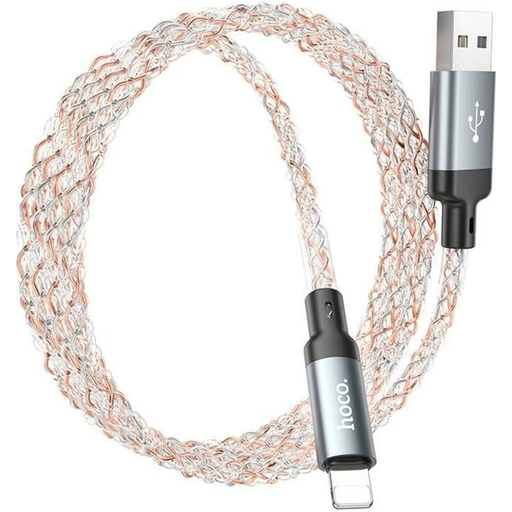
Why This Fits Their Persona: A practical 1m Lightning charging cable for Apple device owners replacing a worn cable for everyday home, office or travel use.
Its named Lightning connector makes compatibility clearer than a vague universal-cable description. Check the device port before ordering.
1m length is easy to store and suitable for desk or bedside charging; grey finish is understated.
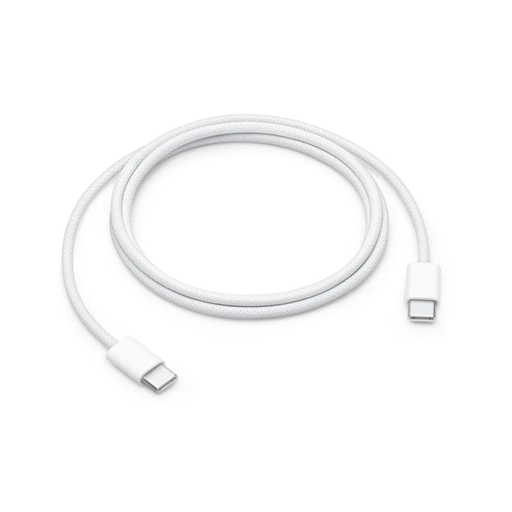
Why This Fits Their Persona: Suitable for users with USB-C iPhone, iPad, Mac, AirPods cases or other USB-C equipment who want one cable for charging and syncing.
The specifications state 60W charging support and USB 2 data speeds, preventing assumptions about higher-speed data transfer.
Woven construction; 1m length; supports charging, syncing and data transfer between compatible USB-C devices.
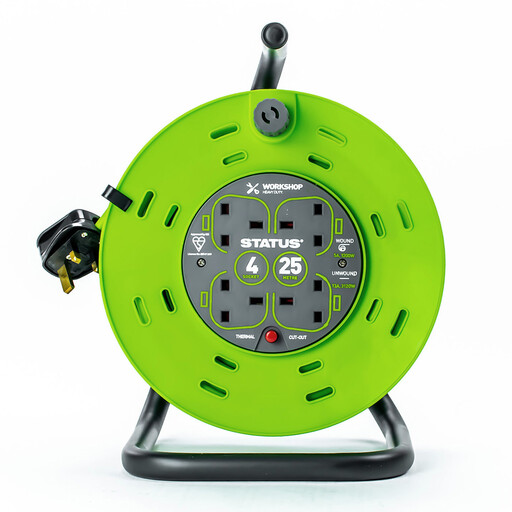
Why This Fits Their Persona: A 25m cable reel with four sockets suits workshops, garages and larger indoor spaces where a standard extension lead lacks reach.
The wound and unwound ratings are stated clearly: 1,200W when wound and 3,120W when fully unwound. This helps prevent overload assumptions.
25m reach; four sockets; fitted 13A plug; thermal cut-out; practical reel storage.
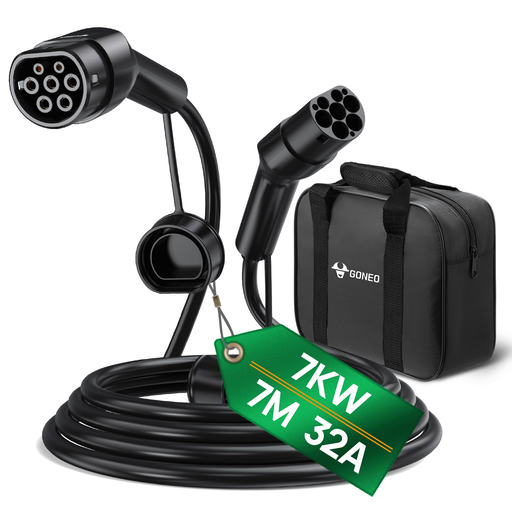
Why This Fits Their Persona: A 7m Type 2-to-Type 2 cable offers useful reach for compatible EVs and PHEVs at home or public charging locations.
The 7.2kW, 32A, single-phase specification makes its intended charging category clear. Confirm the vehicle OBC and socket type first.
7m cable; carry bag; IP54 rating; Type 2 connectors; listed compatibility with Type 2 and CCS2 vehicles.
We have compiled a complete, real-time list of products that fully satisfy these strict selection criteria and UK safety regulations.
No. Charging speed depends on the cable’s power rating, the charger and the device. Check the stated wattage and ensure the wall adaptor can supply the required power. A USB-C cable may support charging but only USB 2 data speeds.
Only within its stated wound rating. Heat can build up when a reel remains coiled, so fully unwind it before connecting appliances that draw more power. Never exceed the listed load and stop using it if the cable, plug or casing is damaged.
Not necessarily. Charging speed is limited by the lowest-rated part of the system, including the vehicle’s OBC, charging point and cable. A 22kW EV cable is relevant only where the vehicle and charging equipment support that capacity.