
24/7 Customer Support

Free returns

Same-day & Next-day Delivery

Quality Guaranteed

Unlock Your Welcome Offers: FREE Delivery | Up to 80% OFF | Free 30-day JoyPlus trial
Download the APP
Navigating the baby food aisle can feel overwhelming. With so many options promising the world for your little one, it's easy to fall into common traps. As you move into the next phase of weaning, you want convenient, nutritious meals, but many products can be misleading. Some are labelled for a certain age yet have a texture that doesn't help your baby learn to chew, while others that claim to be 'natural' can contain surprisingly high levels of sugar from fruit concentrates or borderline levels of salt.
As a Joybuy Product Recommendation Officer, my role is to help you see past the marketing jargon. This guide will break down what really matters when choosing a Stage 2 meal like an Ella's Kitchen spaghetti bolognese, focusing on the key details that ensure you're getting a suitable and balanced meal for your baby.
One of the most significant steps in weaning is introducing texture. After months of smooth purées, your baby needs to start developing the muscles and coordination for chewing. This is where stage 2 baby food comes in.
Texture is Key: For babies around seven months, you should look for meals with a mashed or minced consistency, containing soft, small lumps. This textured baby food for weaning encourages your baby to move food around their mouth and practise a gentle chewing motion, which is vital for their development and the eventual transition to family meals. Avoid overly smooth purées that are simply Stage 1 foods with a new label, as well as overly chunky meals that might be challenging for a baby just starting on textures.
Reading the Ingredients: The front of the pack tells a story, but the ingredients list on the back tells the facts. For organic baby meals 7 months and older, the two most important things to check for are no added sugar and no added salt. A baby's kidneys are not mature enough to handle much salt, and avoiding added sugar helps develop a preference for savoury flavours. Also, check the percentages. A baby beef bolognese should have a reasonable amount of beef listed to ensure it's a good source of protein and iron.
Pouches vs. Jars: The format you choose often comes down to lifestyle. Baby food pouches are lightweight and brilliant for meals on the go, allowing you to squeeze the contents onto a spoon without fuss. Glass jars, on the other hand, are often easier to heat in a bowl of hot water and can feel more substantial for at-home feeding. There is no right or wrong answer, only what works best for your routine.
Instead of a simple list, we've matched our recommendations to different parenting needs, helping you find the right fit for your family's weaning journey.
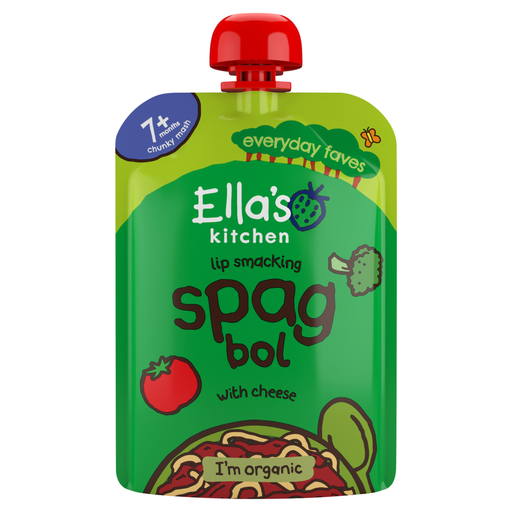
Why This Fits Their Persona: This is an ideal choice for parents who prioritise 100% organic ingredients from a trusted brand. The recipe is tailored specifically for the Ella's Kitchen 7 months stage, providing a gentle yet effective introduction to more complex meals.
The texture is perfectly mashed with soft pasta pieces, avoiding the pitfall of being too smooth or too chunky. It contains no added sugar or salt, and the ingredient list clearly states the percentages of beef (11%) and vegetables.
Made with 100% organic ingredients, including a good mix of vegetables like carrots, broccoli and mushrooms. As a Certified B Corporation, the brand meets high social and environmental standards.
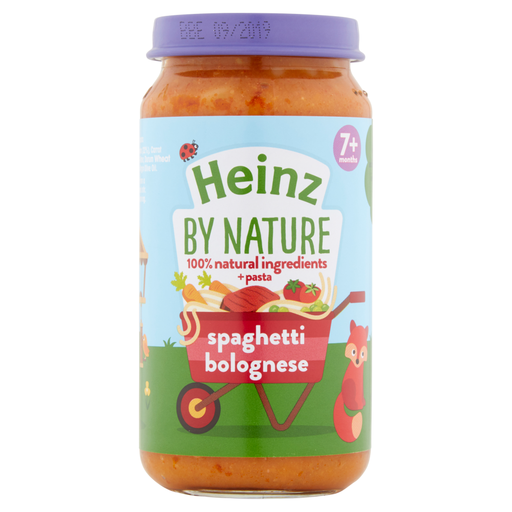
Why This Fits Their Persona: For parents who prefer the classic glass jar format and a trusted, long-standing brand. It offers a familiar meal that is easy to prepare at home and provides a slightly larger portion size.
This recipe is made with natural ingredients and explicitly states it has no added sugar or salt. The mashed texture with soft spaghetti is a time-honoured consistency for introducing babies to more complex foods.
It contains two of your baby’s five a day from a blend of tomatoes, carrots and peas. The 200g jar offers good value and is convenient for heating in hot water.
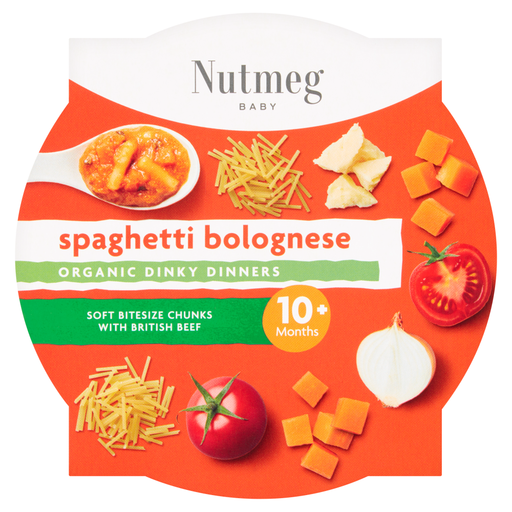
Why This Fits Their Persona: This meal is perfect for babies who have mastered Stage 2 textures and are ready for the next step. It helps bridge the gap between mashed meals and solid family foods with a more complex, lumpy consistency.
By being clearly labelled for 10+ months, it avoids the trap of misleading stage information. The organic recipe contains no added colours or preservatives and features soft, bitesize chunks appropriate for this age.
This meal is made with British beef and is a good source of protein and iron. The lumpy texture is specifically designed to help develop more advanced chewing skills.
We have compiled a complete, real-time list of products that fully satisfy these strict selection criteria and UK safety regulations.
It is important to always check the packaging for heating instructions. For most pouches, including Ella's Kitchen, the advice is to never put the pouch in the microwave. The metallic layer inside the pouch is not microwave-safe. The recommended method is to squeeze the contents into a bowl to microwave, or to stand the sealed pouch in a jug of hot water to warm it up.
Once opened, any uneaten baby food should be refrigerated immediately. Most manufacturers, including Ella's Kitchen and Heinz, state that the product should be consumed within 24 hours of opening. Always discard any leftovers after this period to ensure safety and freshness. It is also not recommended to reheat the food more than once.
In the UK, for a product to be labelled 'organic', it must meet strict legal standards. This means the ingredients are grown without the use of artificial chemical fertilisers or pesticides. For meat, it means the animals are reared under high welfare standards without the routine use of antibiotics. While it doesn't automatically guarantee a product is healthier in all aspects, it does ensure a certain standard of production and traceability.