
24/7 全天候客户支持

免费退货

当日/次日达

品质保障

开启新人专享福利: 全场免邮 | 低至 2 折 | 免费试用 30 天 JoyPlus 会员
下载 Joybuy
An enamelled cast iron casserole can handle stews, soups, braising, roasting and slow cooking on many UK hobs. However, the impressive weight and colourful enamel finish do not automatically mean a pan will suit your kitchen.
The main buying mistakes are usually practical rather than cosmetic:
A good purchase should match your cooking volume, storage space, hob and preferred cleaning routine rather than relying on appearance or broad marketing language.
A 2.9L casserole dish is a practical size for smaller families, couples, soups, stews and compact oven cooking. It also takes up less cupboard space than a large Dutch oven. A 22cm casserole dish is relatively manageable for everyday use, but cast iron remains heavy even in a smaller format.
For larger households or batch cooking, consider a 24cm cast iron casserole dish. It may provide more room for a joint, whole vegetables or several portions of stew, although the filled weight will also increase.
Remember that the stated capacity is not always the amount you should fill to the rim. Leave space for bubbling sauces, steam and safe handling, particularly when cooking on the hob.
The main advantage of enamel cookware is the smooth coated interior. It provides a non-porous cooking surface that is simpler to clean than traditional uncoated cast iron and does not usually require seasoning.
Look for clear information about:
Avoid treating phrases such as “heavy duty” or “professional” as a substitute for specifications. A product page should identify the body material, coating and included lid clearly.
An induction-compatible casserole should have a suitable magnetic cast iron base, but always confirm compatibility in the product details. Ideally, the casserole should also work on gas, electric, ceramic and halogen hobs if it will be used in different kitchens.
An oven-safe casserole is useful for recipes that begin on the hob and finish in the oven, such as braised meat, baked pasta or crusty bread. Check the manufacturer’s oven guidance where available, especially if the lid has a non-metal component.
To protect the enamel:
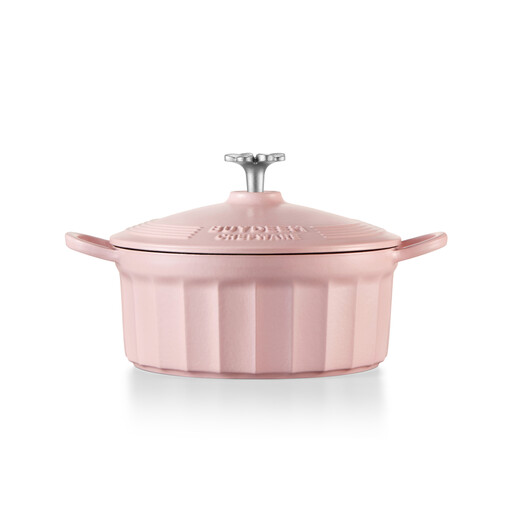
Why This Fits Their Persona: Its 2.9L capacity suits couples, smaller households and cooks buying their first cast iron stew pot for regular soups, braises and slow-cooked meals.
The listing states the 22cm diameter, 2.9L capacity and compatibility with gas, induction, electric, halogen and ceramic hobs, helping buyers check fit before purchase.
Enamelled cast iron body, tight-fitting domed lid and stainless steel knob; the product is listed as oven-safe.
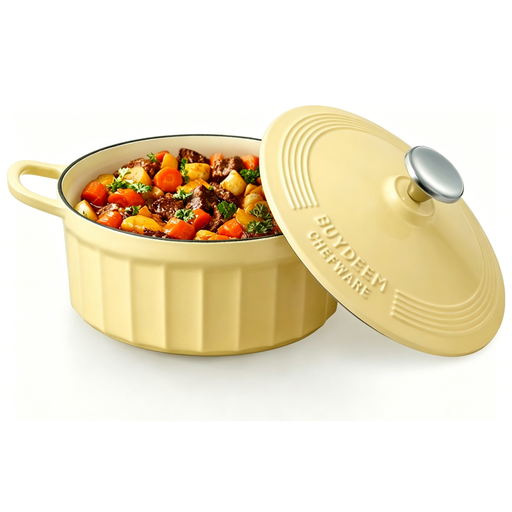
Why This Fits Their Persona: Suitable for cooks who want one enamel cookware piece for hob-to-oven recipes, including braising, roasting, stewing and slow cooking.
The specification identifies a 2.9L capacity, enamel coating, stainless steel knob, oven safety and multi-hob use instead of relying only on appearance-led descriptions.
The listing states that it is dishwasher-safe, while hand washing is recommended to help preserve the enamel finish.
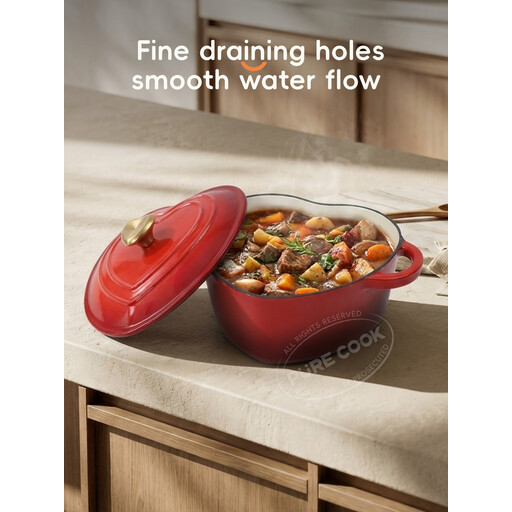
Why This Fits Their Persona: A distinctive choice for cooks making individual or shared stews, baked dishes and slow-cooked recipes while wanting a decorative serving piece.
The listing gives a 19cm diameter, included lid, hob and induction compatibility, oven safety and hand-washing guidance, making its specialist format clearer.
Heart-shaped cast iron construction, matching lid and enamel coating; it is listed for hob, induction and oven use.
We have compiled a complete, real-time list of products that fully satisfy these strict selection criteria and UK safety regulations.
Yes, cast iron is generally suitable for induction, but check the individual product listing before buying. The casserole should also be placed and lifted carefully on glass induction or ceramic hobs to reduce the risk of scratching.
Its service life depends on heat control, handling and cleaning. Avoid empty overheating, sudden temperature changes, metal scouring pads and metal utensils. If the enamel develops significant chips or cracks, discontinue use and check the manufacturer’s guidance.
Cast iron retains heat for longer than many lighter pans, which can be useful for simmering and slow cooking. It still needs time to heat, so begin with moderate settings and avoid leaving it empty on a high temperature. Energy use will depend on the recipe, hob type, cooking time and temperature rather than the pan alone.