Parents and carers planning children’s snacks
A fizzy flavour or small can does not make a high-caffeine energy drink a suitable snack drink for a child. Choose a caffeine-free option for the children’s supplies.


Do not choose high-caffeine sparkling energy drinks as school-holiday snacks for children; choose a caffeine-free drink instead. If an adult wants an energy drink during a family activity, compare caffeine for the whole can, can size and sugar or sweeteners, and keep it separate from children’s drinks.
A fizzy flavour or small can does not make a high-caffeine energy drink a suitable snack drink for a child. Choose a caffeine-free option for the children’s supplies.
When an energy drink is an adult’s separate purchase, compare the caffeine in the complete can as well as its size and sugar or sweetener formulation.
Keep children’s drinks distinct from adult energy drinks in the shopping basket and at home. A zero-sugar label describes sugar, not whether a drink contains caffeine.
Start with who will drink it. For an adult’s energy drink, compare the complete can rather than judging it by flavour, branding or the number of cans in a pack.
| Priority | What to check | Your needs |
|---|---|---|
| Children’s drinks | Check whether the drink contains caffeine. Do not use carbonation, flavour or a sugar-free label as a child-suitability test. | I’m buying snacks for children, so I’ll choose a caffeine-free drink instead of a high-caffeine energy drink. |
| Whole-can caffeine | Read the caffeine quantity alongside can size. Red Bull states 80 mg per 250 ml can for Original; Monster Energy UK states 160 mg per 500 ml can for Original Green. These figures describe those specific products. | If the can is for me as an adult, I want to know the caffeine in the entire container, not just the amount per 100 ml. |
| Sugar and sweeteners | Check the exact variant’s sugar information separately from caffeine. Red Bull states that Original and Zero each contain 80 mg caffeine per 250 ml can, while Zero uses sweeteners instead of sugars. | I may prefer a no-sugar formulation, but I won’t assume it is caffeine-free or suitable for children. |
| Shared supplies | Identify which drinks are intended for adults and which are for children before putting them away. | When everyone uses the same fridge, I want the children’s drinks to be easy to distinguish from adult energy drinks. |
| Age-of-sale rules | Check where and when the purchase takes place. The Department of Health and Social Care and Department for Education announced a planned England ban on sales to under-16s of drinks, other than tea or coffee, containing more than 150 mg caffeine per litre, intended from April 2027 subject to Parliamentary approval. | I don’t want to mistake a planned England restriction for a rule already in force throughout the UK. |
Flavour, carbonation and small packaging do not remove caffeine from a high-caffeine energy drink.
For children’s school-holiday snacks, choose a caffeine-free drink instead.
Red Bull states that both Original and Zero contain 80 mg caffeine per 250 ml can, despite their different sugar formulations.
Read caffeine and sugar information separately on the exact variant. A no-sugar energy drink is not a caffeine-free substitute for a child’s drink.
Monster Energy UK states that Original Green contains 160 mg caffeine and 55 g sugar per 500 ml can. Those are whole-can figures for that variant, not figures for every large energy drink.
When comparing can sizes for an adult, check caffeine and sugar for each complete container.
The Department of Health and Social Care and Department for Education describe an England restriction intended for April 2027, subject to Parliamentary approval.
Check the applicable rules for the place and date of purchase rather than extending that announcement to the rest of the UK.
A brand name alone does not establish the caffeine or sugar content of every variant; check the particular can an adult is considering.
Its UK range includes Original and Zero in 250 ml cans.
Monster Energy UK describes both Original Green and a separate Zero Sugar drink.
Relentless identifies Tesco and Sainsbury’s among retailers of its drinks.
Lucozade describes Alert as a high-caffeine drink, distinct from choosing a drink by the wider Lucozade name alone.
These Joybuy options are energy drinks for an adult considering a separate purchase, not drinks to add to children’s school-holiday snacks. Check the exact pack when comparing caffeine and sugar.
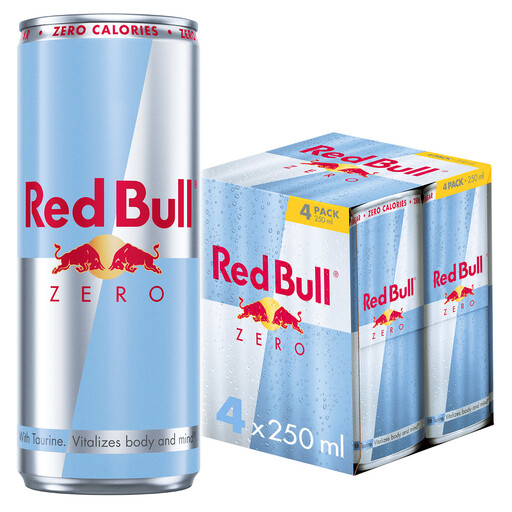 Image unavailable
For an adult comparing a no-sugar energy drink in 250 ml cans. Red Bull states that Zero contains 80 mg caffeine per 250 ml can and uses sweeteners instead of sugars. It is not a caffeine-free choice for children.
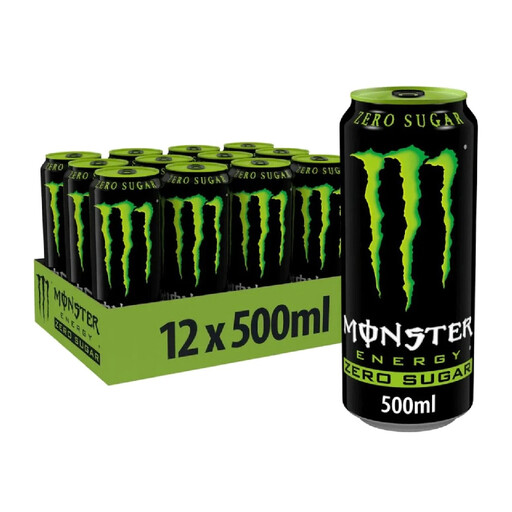 Image unavailable
For an adult considering a multipack of zero-sugar energy drinks. Monster Energy UK describes its Zero Sugar drink as carbonated and containing caffeine; check the exact can’s size and whole-can caffeine figure before comparing it with another variant. Keep it separate from children’s drinks.
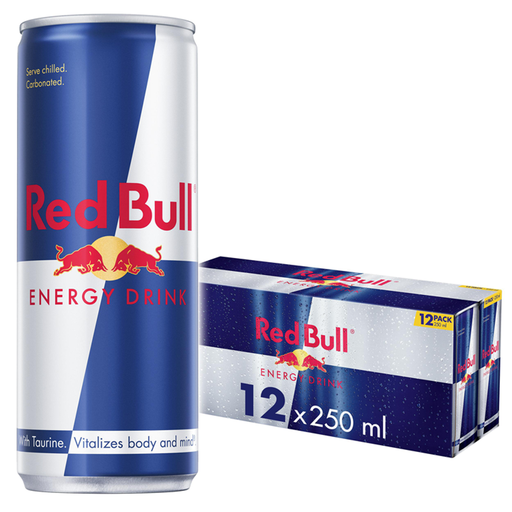 Image unavailable
For an adult comparing the regular drink in 250 ml cans with a no-sugar variant. Red Bull states that its Original drink contains 80 mg caffeine per 250 ml can and contains sugars. Check the pack label before relying on an exact sugar comparison; this is not a children’s snack drink.
Do not choose high-caffeine sparkling energy drinks as snacks for children; offer a caffeine-free drink instead. The Department of Health and Social Care and Department for Education have also announced a planned restriction on sales of high-caffeine energy drinks to under-16s in England from April 2027, subject to Parliamentary approval.
No: zero sugar does not mean zero caffeine. Red Bull states that Zero contains 80 mg caffeine per 250 ml can, the same amount it states for Original, so it is not a caffeine-free children’s drink.
Compare caffeine for the complete can, then its size and sugar or sweetener formulation. Red Bull states 80 mg caffeine per 250 ml can for Original, while Monster Energy UK states 160 mg per 500 ml can for Original Green; those figures apply to the named variants, not every drink from either brand.
The announced restriction is not a current UK-wide rule. The Department of Health and Social Care and Department for Education say that England intends to prohibit sales to under-16s of drinks, other than tea or coffee, containing more than 150 mg caffeine per litre from April 2027, subject to Parliamentary approval. Check the applicable rules separately in Scotland, Wales and Northern Ireland.
No: check the amounts in the whole can before deciding. Monster Energy UK states that Original Green contains 160 mg caffeine and 55 g sugar per 500 ml can; those amounts should not be assumed for a different Monster variant or another 500 ml drink.