Choose an energy-drink multi-pack for marathon training only if you want a measured caffeine option that you have already tried in training, rather than a drink to cover an entire long run. A systematic review in Nutrients suggests energy drinks may be more appropriate before exercise, while caffeinated sports drinks appear more useful during long-duration exercise when the drink is intended for both rehydration and caffeine; a sugar-free energy drink does not supply carbohydrate fuel. Check the caffeine in each can alongside other sources, and plan what you will drink and eat during the run separately.
Who is choosing these drinks?
Adults trialling caffeine before a run
A labelled amount per can helps you repeat a pre-run trial and count caffeine from other drinks or products. Red Bull states that its Original 250 ml can contains 80 mg caffeine; that figure alone does not tell you how you will respond to it.
Runners choosing a drink for a long session
If you intend to drink while running, consider the drink’s role in fluid and carbohydrate intake, not just its caffeine content. A systematic review in Nutrients distinguishes sports drinks used for rehydration during long-duration exercise from energy drinks that may be more appropriate beforehand.
Runners choosing caffeine without sugar
A sugar-free can may meet a preference for caffeine without sugar, but it cannot stand in for a carbohydrate plan. Compare the exact variant and can size before deciding what else to take on a training run.
What should you check before buying?
Decide when you intend to drink it before comparing multi-packs. Then check the caffeine, carbohydrate information and warnings on the exact product.
Sports drink during a long run
Consider when: The drink is intended to contribute to fluid intake during extended exercise. A review in Nutrients suggests caffeinated sports drinks can be more useful for combined rehydration and caffeine supplementation in that setting.
Check: Being sold as a sports drink does not establish its caffeine amount or whether its composition matches your plan; read the individual label and try it in training.
Energy drink before a run
Consider when: You are an adult who has already tried the drink in training and wants a stated caffeine amount before exercise, rather than a during-run drink.
Trade-off: A can can add caffeine without covering the fluid and carbohydrate you intend to take during a long run; sugar-free versions do not supply carbohydrate fuel.
| Priority | What to check | Your needs |
|---|
| Caffeine amount |
Compare caffeine per can, not just per 100 ml. Red Bull UK states 80 mg per 250 ml Original can; Monster Energy UK lists 160 mg per 500 ml Absolutely Zero can. Include caffeine from other sources when considering the amount. |
I want to know how much caffeine one can adds before I try it around a training session. |
| Carbohydrate |
Read carbohydrate and sugars on the exact variant. Red Bull UK lists 27 g sugars per 250 ml Original can, whereas Monster Energy UK lists 0 g sugar for a 500 ml Absolutely Zero can. |
If I choose a sugar-free drink for caffeine, I will need to make a separate decision about carbohydrate during the run. |
| When you will drink it |
Check whether the pack is an energy drink or a sports drink, and whether its stated composition fits its intended use. The Nutrients review suggests these categories can serve different roles before and during long-duration exercise. |
For a drink I will carry on a long run, fluid intake matters as well as any caffeine. |
| Pack and warnings |
Confirm the number and size of cans or bottles, caffeine concentration and current label warnings. The European Food Safety Authority’s single-dose assessment of up to 200 mg applies to the general healthy adult population and counts caffeine from all sources. |
A larger can changes the amount I consume at once; I also need to check whether the product’s caffeine warnings apply to me. |
What can go wrong with the choice?
-
Treating an energy-drink multi-pack as the whole long-run plan
Caffeine is only one consideration. A systematic review in Nutrients suggests caffeinated sports drinks are more useful when a drink is intended for both rehydration and caffeine supplementation during long-duration exercise.
Choose a during-run drink for its intended role, and work out separately what fluids and carbohydrate you plan to use in training. Do not assume a pre-run energy drink covers those needs.
-
Comparing cans without comparing their sizes
Red Bull UK states 80 mg caffeine in a 250 ml Original can, while Monster Energy UK lists 160 mg in a 500 ml Absolutely Zero can. Counting each simply as one can hides that difference.
Use the amount for the actual can you would drink, then account for other caffeine sources such as coffee or caffeinated gels.
-
Assuming sugar-free means the drink supplies running fuel
A sugar-free energy drink can contain caffeine without the sugars found in a sugar-containing variant. Monster Energy UK lists 0 g sugar for Absolutely Zero, compared with Red Bull UK’s 27 g per 250 ml Original can; these are different products and serving sizes.
If you choose sugar-free for caffeine, decide separately whether and how carbohydrate fits into your training plan.
Which brand references help?
A brand name does not establish what every flavour or format contains. Use these product-line examples to identify which label details matter.
Red Bull
Its Original and Sugarfree 250 ml formats offer different sugar profiles in a small-can format.
- Red Bull UK states that Original contains 80 mg caffeine and 27 g sugars per 250 ml can.
- The Joybuy Sugarfree four-pack listing states 0 g sugars per 100 ml; do not count it as a carbohydrate source.
Monster Energy
Its named 500 ml energy-drink variants make can size particularly important when comparing caffeine amounts.
- Monster Energy UK lists 160 mg caffeine and 0 g sugar for a 500 ml Absolutely Zero can.
- Those figures belong to Absolutely Zero, not automatically to every Monster variant; check the precise pack.
Lucozade
Lucozade Energy and Lucozade Sport are distinct ranges, so the range name matters when selecting a drink for a run.
- Tesco lists Lucozade Sport four-packs in its sports-drinks category.
- Do not assume a Lucozade Energy product has the same composition or intended use as a Lucozade Sport bottle.
Relentless
Relentless Cherry is a 500 ml energy-drink example with stated sugar and caffeine information.
- Sainsbury’s lists 21 g sugars per 500 ml Cherry can and 32 mg caffeine per 100 ml, equivalent to 160 mg per can.
- Its listing carries a high-caffeine warning, including advice against consumption by children, pregnant or breastfeeding women, and people sensitive to caffeine.
Tesco
As a retailer, Tesco provides separate energy-drink and sports-drink listings to compare product types.
- Its category listings include Red Bull and Monster energy-drink multi-packs and Lucozade Sport four-packs.
- A category listing does not establish the nutrition or caffeine content of every individual pack; check its product label.
How do the drink examples compare?
These examples retain the supplied order by intended use: a sports drink for drinking during a long run, then smaller-can energy drinks for a pre-run choice, followed by a larger-can option. It is a use-case comparison, not a performance or popularity ranking; the figures below apply only to the variants named.
| Rank | Drink | Main specifications | Why consider it | Supplier or platform |
|---|
| 1 |
Lucozade Sport Orange 4 x 500 ml |
Four 500 ml sports-drink bottles; check the individual pack for its nutrition and caffeine information. |
Tesco lists this pack among sports drinks. For long-duration exercise involving both rehydration and caffeine supplementation, a systematic review in Nutrients suggests caffeinated sports drinks may be more useful than energy drinks; that finding does not establish the caffeine content of this particular pack. |
Tesco |
| 2 |
Red Bull Original Energy Drink 4 x 250 ml |
Red Bull UK states 80 mg caffeine and 27 g sugars per 250 ml Original can. |
A stated amount per small can can help with a planned pre-run caffeine trial. It does not replace a long-run fluid or carbohydrate plan. |
Joybuy / Tesco |
| 3 |
Red Bull Sugarfree Energy Drink 4 x 250 ml |
The Joybuy four-pack listing states 32 mg caffeine and 0 g sugars per 100 ml. |
A smaller-can option when the intention is caffeine without sugar, not carbohydrate fuel. Count caffeine from other sources as well. |
Joybuy |
| 4 |
Monster Energy Ultra 4 x 500 ml |
Four 500 ml cans in Tesco’s energy-drink listing; check the exact variant’s caffeine and nutrition label. |
A larger-can format to compare if that serving size suits your intended use. Figures for Monster Absolutely Zero should not be applied to Ultra without checking the Ultra pack. |
Tesco |
Joybuy options for each drinking plan
These options include energy-drink cans for a deliberate pre-run caffeine choice and a Lucozade Sport bottle multi-pack to consider for drinking during a long training run. Check each exact pack against what you intend to drink and when.
 No image available
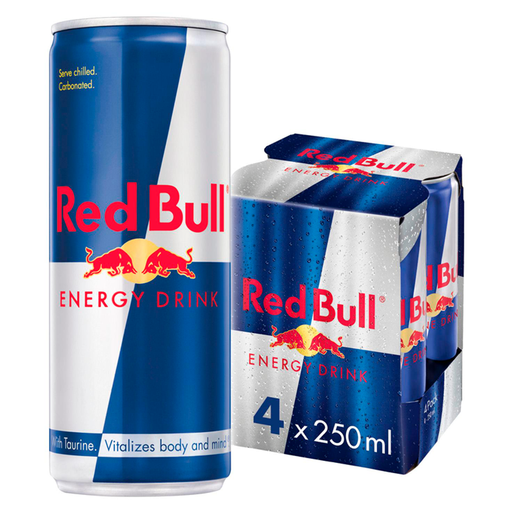
Red Bull Original Energy Drink 4 x 250 ml
Consider this small-can format if you want to trial a stated caffeine amount before a run. Red Bull UK states 80 mg caffeine and 27 g sugars per 250 ml Original can. It is not a complete drink-and-fuel plan for a long run.
View on Joybuy
 No image available
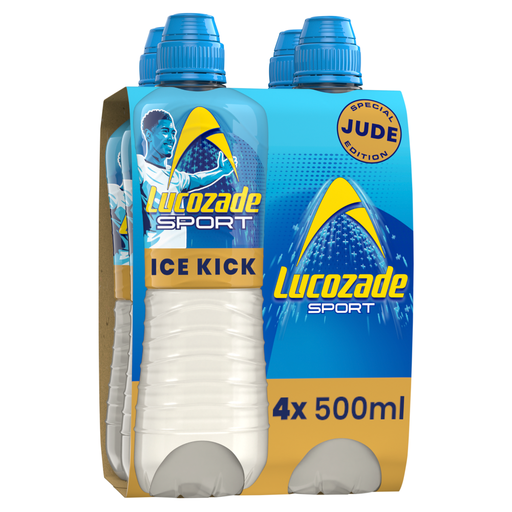
Lucozade Sport Lemon & Lime 4 x 500 ml
This sports-drink bottle multi-pack is an option to assess when choosing what to drink during a long training run. Check the current label for its carbohydrate, salt and caffeine information before fitting it into your plan; the pack format alone does not establish those amounts.
View on Joybuy
 No image available
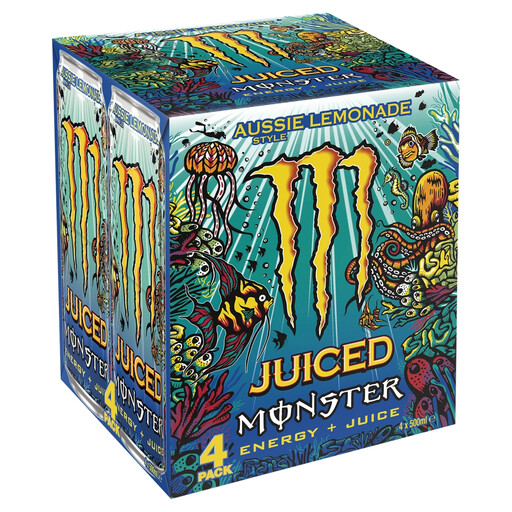
Monster Energy Aussie Style Lemonade 4 x 500 ml
If you are considering a larger energy-drink can before a run, check the caffeine and nutrition figures on this exact variant before trying it in training. A 500 ml energy drink should not be assumed to serve as your long-run hydration plan.
View on Joybuy
 No image available
Red Bull Sugarfree Energy Drink 4 x 250 ml
This small-can option fits a choice for caffeine without sugar, rather than carbohydrate fuel. The Joybuy four-pack listing states 32 mg caffeine and 0 g sugars per 100 ml. Account for other caffeine sources and plan carbohydrate separately if you intend to take it during training.
View on Joybuy
 No image available
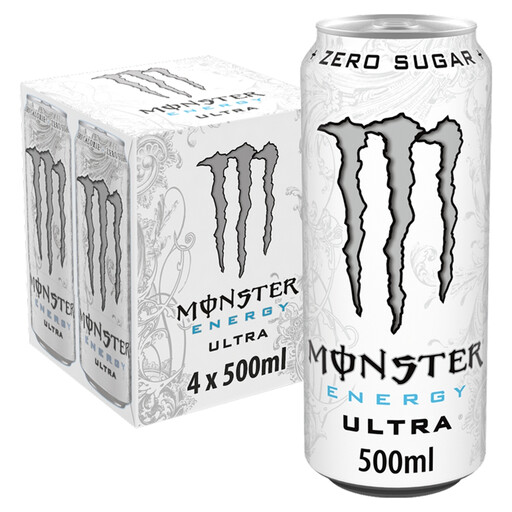
Monster Energy Ultra Zero Sugar 4 x 500 ml
Consider this larger-can, zero-sugar variant only if that is the format you want for a planned caffeine choice. Read the Ultra pack’s caffeine figure rather than borrowing one from another Monster variant, and make a separate plan for long-run fluids and carbohydrate.
View on Joybuy
Frequently asked questions
Should an energy drink be my main drink on a long training run?
Do not assume it will cover your drinking and fuelling plan. A systematic review in Nutrients suggests caffeinated sports drinks may be more useful during long-duration exercise when the drink is used for both rehydration and caffeine supplementation, while energy drinks may be more appropriate before exercise.
How do I compare caffeine across different can sizes?
Compare the amount in the can you would actually drink. Red Bull UK states 80 mg per 250 ml Original can; Monster Energy UK lists 160 mg per 500 ml Absolutely Zero can. Relentless Cherry’s Sainsbury’s listing states 32 mg per 100 ml, equivalent to 160 mg in its 500 ml can. Check the exact variant’s label rather than applying these figures across a brand.
Does a sugar-free energy drink provide carbohydrate for a run?
Do not rely on it as a carbohydrate source. Monster Energy UK lists 0 g sugar for Absolutely Zero, and the Joybuy Red Bull Sugarfree four-pack listing states 0 g sugars per 100 ml. If carbohydrate is part of your training plan, choose and trial it separately.
What caffeine reference should an adult consider?
The European Food Safety Authority states that a single caffeine dose of up to 200 mg from all sources does not raise safety concerns for the general healthy adult population. That is not a target for training or an individual clearance: count other caffeine sources, read product warnings and seek appropriate individual advice if a medical condition or medicine makes caffeine suitability uncertain.


