Who is choosing?
At lunch, the useful distinction is whether you want to limit the caffeine in one drink, avoid sugar, or choose a glucose-based sparkling drink.
Workers counting caffeine from other drinks
If coffee or tea is already part of your day, compare caffeine in the complete lunch serving. Red Bull states 80 mg per 250 ml Red Bull Zero can; Monster Energy UK lists 160 mg per 500 ml Monster Energy Zero Sugar can.
Workers choosing zero sugar
Red Bull Zero and Monster Energy Zero Sugar are zero-sugar options in the cited UK product information, but both contain caffeine. Check the ingredient list as well if particular sweeteners matter to you.
Workers choosing a glucose-based fizzy drink
Lucozade describes its Energy range as sparkling and containing glucose. Joybuy UK lists glucose syrup, caffeine and 4.5 g sugars per 100 ml for the 380 ml Lucozade Energy Original bottle, so it serves a different preference from a zero-sugar drink.
What should you check?
Start with one full can or bottle, then check its ingredients and any warnings relevant to where it will be served.
| Priority | What to check | Your needs |
|---|
| Whole-serving caffeine |
Read the caffeine amount for the full container, or use the stated amount per 100 ml and the container volume. Count caffeine from coffee, tea and other drinks as well. Red Bull states 80 mg per 250 ml Zero can; Monster Energy UK lists 160 mg per 500 ml Zero Sugar can. |
I want to know how much caffeine my lunch drink adds to what I have already consumed today. |
| Sugars and sweeteners |
Compare sugars per 100 ml with the bottle size, and read the sweetener ingredients. Joybuy UK lists 4.5 g sugars per 100 ml for the 380 ml Lucozade Energy Original bottle, equivalent to 17.1 g per bottle; its ingredients include glucose syrup and caffeine. |
A zero-sugar can and a glucose-based fizzy bottle meet different preferences, even if both sit alongside lunch. |
| Pack and serving size |
Check the volume of one can or bottle rather than treating a multipack as one serving. Compare products using the same basis: per 100 ml or per complete container. |
I usually finish one drink at lunch, so the figures for that whole drink matter more to me than the pack total. |
| Warnings and service rules |
Read the exact product warning and check the rules that apply to the canteen. Sainsbury's publishes an under-16 policy for high-caffeine energy drinks; its retailer policy does not establish a rule for another venue. |
If the canteen also serves young visitors, I need to distinguish the venue's policy from a retailer's policy. |
Brand and product references
These examples show why the variant and container size matter more than the brand name alone.
Red Bull
Its 250 ml Zero and Original cans illustrate two different sugar choices at the same stated volume.
- Red Bull states that a 250 ml Zero can contains 80 mg caffeine; Joybuy UK lists 0 g sugars for Red Bull Zero.
- Red Bull states that its 250 ml Original contains 27 g sugars. Check the variant rather than applying Zero's figures to Original.
Monster Energy
Monster Energy UK lists a 500 ml Zero Sugar can for shoppers considering a larger carbonated serving.
- Monster Energy UK lists 0 g sugar and 160 mg caffeine for its 500 ml Zero Sugar product.
- Zero sugar does not remove the need to count the caffeine in the whole can alongside other drinks.
Lucozade Energy
Lucozade describes its Energy range as sparkling and containing glucose.
- Joybuy UK lists the 380 ml Original bottle with glucose syrup and 4.5 g sugars per 100 ml.
- That Original listing also includes caffeine; do not treat the range name as a caffeine-free or zero-sugar description.
Relentless
Relentless Cherry is another carbonated, caffeinated flavour to assess by its own label.
- The brand's Cherry ingredient list states caffeine at 0.03%.
- Its product warning says it is not recommended for children, people sensitive to caffeine, pregnant women or women who are nursing.
Joybuy product options
These sparkling lunch-drink options include zero-sugar cans, a peach drink and a glucose-based Lucozade bottle. Compare the exact serving and label for each product rather than assuming the same figures apply across them.
 No image available
Monster Energy Original Green Zero Sugar, 4 × 500 ml
A larger zero-sugar can for a workplace lunch. Compare caffeine for the complete 500 ml can with other caffeine you have that day, and check the ingredient list if particular sweeteners matter to you.
View on Joybuy
 No image available
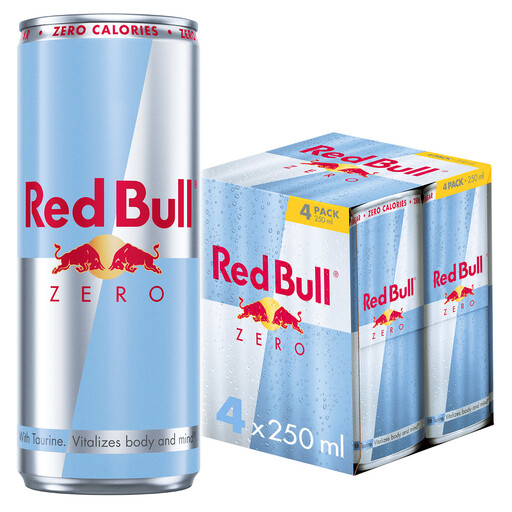
Red Bull Zero, 4 × 250 ml
A smaller zero-sugar can for comparing one lunch serving. Red Bull states 80 mg caffeine per 250 ml Zero can, and Joybuy UK lists 0 g sugars for this product; it still contains caffeine, so account for other sources.
View on Joybuy
 No image available
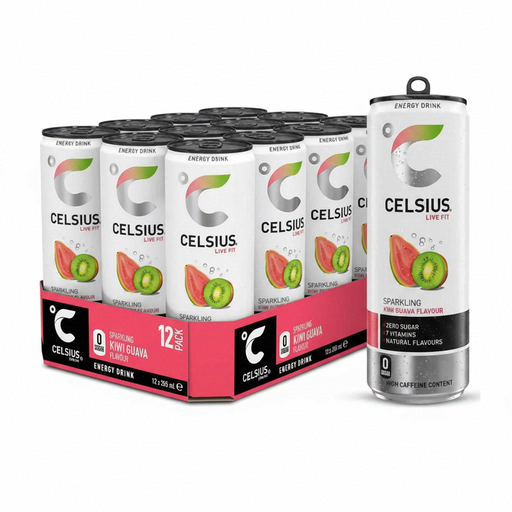
CELSIUS Kiwi Guava, 12 × 355 ml
For a 355 ml can at lunch, check its caffeine and sugars for the complete serving and read the sweetener ingredients. The pack contains twelve cans; do not use another brand's caffeine figure for this drink.
View on Joybuy
 No image available
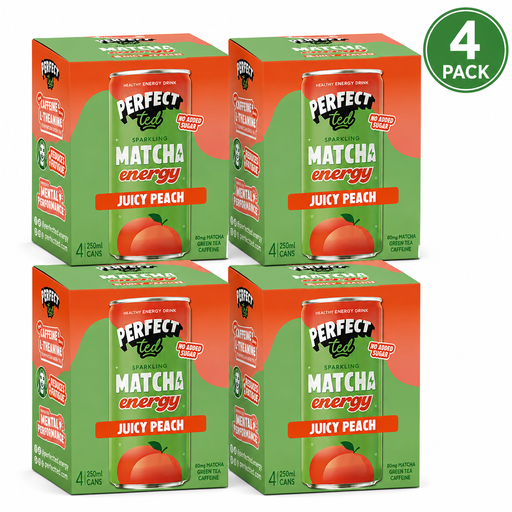
PerfectTed Energy Juicy Peach, 4 × 250 ml (4 packs)
A peach-flavoured 250 ml can to compare with other small lunch servings. Check the exact can for total sugars as well as caffeine: “no added sugars” and “zero sugar” do not mean the same thing.
View on Joybuy
 No image available
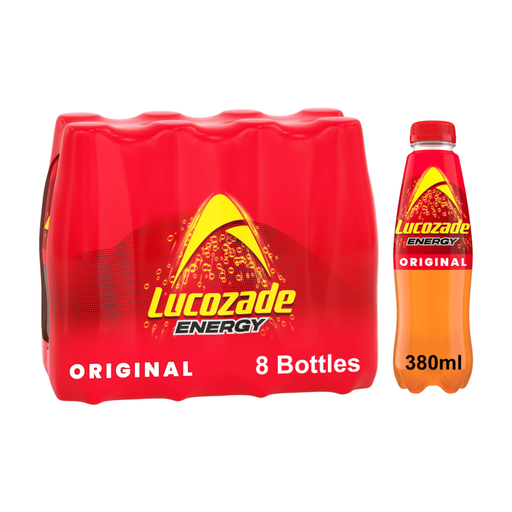
Lucozade Energy Original, 8 × 380 ml
A fizzy glucose-based option rather than a zero-sugar substitute. Joybuy UK lists glucose syrup, caffeine and 4.5 g sugars per 100 ml, equivalent to 17.1 g sugars per 380 ml bottle. Check the bottle's caffeine declaration if you need to calculate your full lunch serving.
View on Joybuy
Questions about choosing
What should I compare first for a lunch drink?
Compare caffeine and sugars in the complete can or bottle, then check its volume and sweetener ingredients. Red Bull states 80 mg caffeine per 250 ml Zero can, whereas Monster Energy UK lists 160 mg per 500 ml Zero Sugar can; looking only at sugar would miss that serving difference.
Does zero sugar mean caffeine-free?
No. Red Bull Zero and Monster Energy Zero Sugar both contain caffeine according to their respective brand information. Read the caffeine statement on the exact pack before adding it to coffee, tea or other caffeinated drinks.
How should I think about caffeine across the day?
Count caffeine from all sources, not only the lunch drink. In its 2015 scientific opinion, the European Food Safety Authority said daily intakes up to 400 mg from all sources do not raise safety concerns for adults in the general population; that is not a suggested amount to consume, and individual circumstances can differ.
What if I am pregnant?
The NHS advises no more than 200 mg caffeine a day during pregnancy and identifies energy drinks among its possible sources. Check the caffeine in the whole container and include coffee, tea and other sources in that daily amount; a non-caffeinated drink avoids adding caffeine at lunch.
Does an under-16 retailer rule automatically apply to a canteen?
No. Sainsbury's states its own under-16 sales policy for high-caffeine energy drinks, while the Department of Health and Social Care's England page of 16 July 2026 says it intends to introduce a sales ban. A canteen operator should check the current law for its location and its own venue and supplier policies rather than treating either statement as a rule for every canteen.


