Adults fitting a small can into a rushed morning
A 250 ml can gives you a defined portion to compare with a larger can. Count caffeine from coffee, tea and other sources too, rather than treating the morning drink in isolation.


For a rushed breakfast, a sparkling energy drink is a drink to have alongside food, not breakfast on its own. If you want a smaller caffeine serving, compare 250 ml cans; if you prefer a larger can or a sugar-free formulation, check caffeine and sugars for the whole can, the ingredients and any suitability warning before buying.
A 250 ml can gives you a defined portion to compare with a larger can. Count caffeine from coffee, tea and other sources too, rather than treating the morning drink in isolation.
If you want carbonation and caffeine but prefer a sugar-free formulation, read the nutrition panel and ingredients. Sugar-free does not mean caffeine-free, and sweeteners differ between products.
Compare caffeine and sugars for the entire 500 ml can, not just per 100 ml. If the can is replacing the time you would spend eating, plan food separately.
Start with the whole-can serving, then compare the formulation and label warnings against what else you will have that day.
| Priority | What to check | Your needs |
|---|---|---|
| Caffeine per can | Check the can volume and caffeine in mg per can, or calculate it from mg per 100 ml. Red Bull states 80 mg in its 250 ml original can; Monster Energy labels Original at 32 mg per 100 ml, equivalent to 160 mg in 500 ml. Count other caffeine sources as well. | I want to know how much caffeine the entire can adds to my day, particularly if I also drink tea or coffee. |
| Sugars and sweeteners | Compare sugars for the whole can as well as per 100 ml, and read the ingredient list for sweeteners. Check caffeine separately on a sugar-free drink. | A sugar-free formulation may suit my preference, but I still want to know which sweeteners it contains and how much caffeine is in the can. |
| Food alongside the drink | Decide what food you can take with you if breakfast would otherwise be skipped. NHS balanced-diet guidance describes eating a variety of foods; a can of energy drink is not that variety. | If I have only a few minutes to leave, I need something to eat as well as deciding what to drink. |
| Suitability warnings | Read the intended drinker and high-caffeine warnings on the exact can. The NHS advises no more than 200 mg of caffeine a day during pregnancy; product warnings may also advise against use during pregnancy. | When buying for someone else, I need to check that the drink is appropriate for them, rather than relying on the brand name or a sugar-free label. |
Two cans can show the same caffeine concentration per 100 ml while providing different amounts across the full container. Red Bull states 80 mg in a 250 ml original can; Monster Energy labels Original at 32 mg per 100 ml, which gives 160 mg in 500 ml.
Compare whole-can caffeine and sugars before choosing a larger format.
Sainsbury's lists Red Bull Sugarfree 250 ml with a high-caffeine warning and 32 mg caffeine per 100 ml.
Check the caffeine figure and warning separately from the sugars and sweetener ingredients.
An energy drink does not provide the variety of foods described in NHS balanced-diet guidance.
If you choose one on the way out, take food as well rather than relying on the can alone.
A brand name alone does not tell you the can size, formulation or caffeine amount; check the particular product.
Its 250 ml original and Sugarfree drinks offer two formulations to compare in the same can size.
Monster Original provides a 500 ml example for comparing a larger can with a 250 ml drink.
Relentless Origin is another 500 ml carbonated option to assess by its full-container label.
The Energy and Alert ranges should not be treated as interchangeable caffeine choices.
These options include small 250 ml cans and larger 500 ml cans, in sugared or sugar-free formulations. Compare an individual can for a rushed morning, even where the product is sold as a multipack.
 Image unavailable
A 250 ml sugar-free option for comparing a smaller can with larger morning drinks. Sainsbury's lists the same 250 ml Sugarfree drink as high caffeine at 32 mg per 100 ml; check the can's ingredients and suitability warning as well.
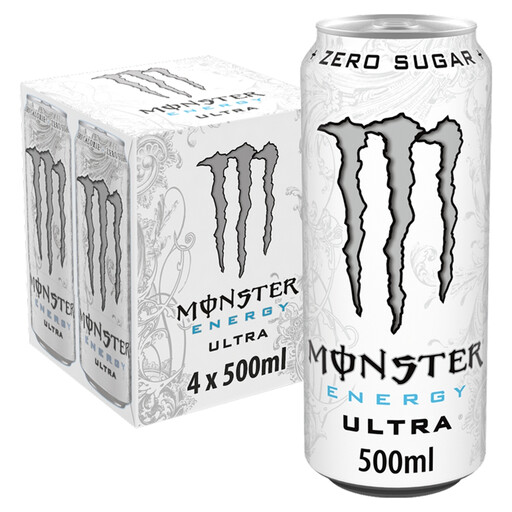 Image unavailable
A zero-sugar formulation in 500 ml cans. If you are choosing it instead of a smaller can, check caffeine for the full 500 ml serving and read the suitability warning.
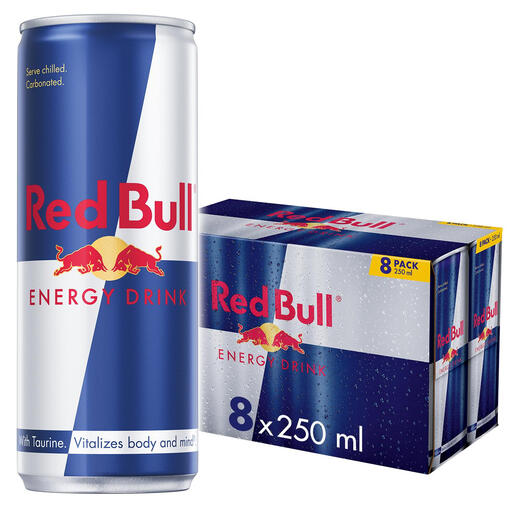 Image unavailable
A 250 ml original-formulation option when you want a smaller can rather than a 500 ml serving. Red Bull states that its 250 ml original drink contains 80 mg caffeine; compare the can's sugars and count caffeine from other drinks too.
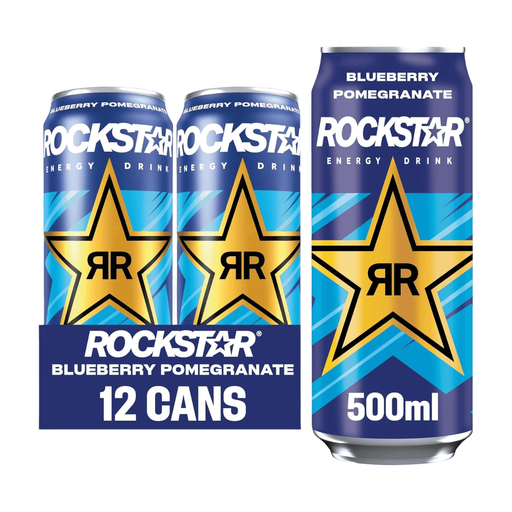 Image unavailable
This pack contains 500 ml cans in the Blueberry & Pomegranate variant. Before treating one as a quick morning drink, compare the caffeine and sugars for a full can and check its warning.
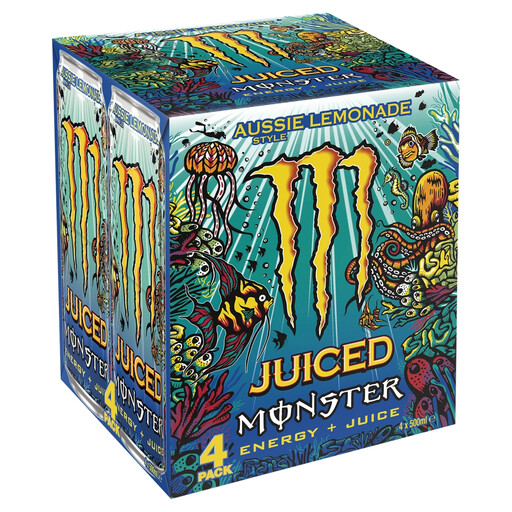 Image unavailable
The Aussie Style Lemonade variant comes in 500 ml cans. Use the label on this variant to compare whole-can caffeine and sugars; figures for Monster Original should not be substituted for it.
No: it can be a drink alongside breakfast, but it does not replace food. NHS balanced-diet guidance describes eating a variety of foods, so take something to eat if a rushed morning would otherwise mean skipping breakfast.
Compare caffeine for the entire can, multiplying a per-100 ml figure by the can volume when needed. Red Bull states 80 mg in its 250 ml original can; Monster Energy labels Original at 32 mg per 100 ml, equivalent to 160 mg in a 500 ml can. Check the exact variant you intend to buy.
No. Sainsbury's lists Red Bull Sugarfree 250 ml with a high-caffeine warning and 32 mg caffeine per 100 ml. Read the caffeine warning as well as the nutrition panel and ingredients.
Check the product warning and caffeine from all sources, not just the energy drink. The NHS advises no more than 200 mg caffeine a day during pregnancy, and high-caffeine energy drinks may carry warnings against use during pregnancy.
No UK-wide statutory ban should be assumed. Sainsbury's says it does not sell high-caffeine energy drinks to under-16s under its own policy. For England, the Department of Health and Social Care announced a ban intended to take effect from April 2027, subject to parliamentary approval; that is not a current rule across all four UK nations.