Who is this choice for?
The useful starting point is whether you want a particular sugar claim, a defined caffeine serving, or both.
Travellers comparing caffeine per can
If you plan to drink one can during the journey, compare the caffeine in that whole can rather than choosing by size alone. Red Bull UK states 80 mg in its 250 ml Sugarfree can; Monster Energy UK states 150 mg in a 500 ml Ultra can, while Tesco’s Monster Ultra listing states 160 mg. Check the can you intend to buy.
Shoppers choosing sugar-free drinks
A sugar-free or zero-sugar description can help you narrow the selection, but it does not mean the drink is caffeine-free. Read the ingredients if particular sweeteners matter to you, and check the caffeine amount separately.
Readers requiring ‘no added sugar’
If that exact claim is part of your requirement, do not substitute a sugar-free or zero-sugar description for it. The UK nutrition-claim conditions published by legislation.gov.uk distinguish ‘with no added sugar’ from ‘sugar-free’; check the wording on the current pack.
What should you check?
Settle the claim you need, then compare caffeine per can and the amount you actually want to carry and drink.
| Priority |
What to check |
Your needs |
| Sugar claim |
Read the exact claim on the current pack and check the ingredients. Under the UK nutrition-claim conditions published by legislation.gov.uk, ‘sugar-free’ concerns sugar content, while ‘with no added sugar’ concerns what has been added for sweetening. |
I need the wording to match my requirement, rather than assuming ‘zero sugar’ also means ‘no added sugar’. |
| Caffeine per can |
Compare the amount in the whole container, not only per 100 ml. Red Bull UK states 80 mg per 250 ml Sugarfree can; Monster Energy UK states 150 mg per 500 ml Ultra can, but Tesco lists 160 mg for Monster Ultra, so check its current label. |
I want to know how much caffeine is in the can I might finish on the train, alongside any other caffeinated drinks I have that day. |
| Can and pack size |
Check whether you want one 250 ml can, one 500 ml can or a multipack for several journeys. A larger can is more drink to carry and may contain more caffeine per container; a pack contains more than you need for one trip. |
A single compact can may be enough for this journey; for repeated trips, I can decide whether keeping extra cans suits me. |
| Product warnings |
Read the high-caffeine warning and any groups named on the specific pack. Tesco’s Lucozade Alert Zero Sugar listing includes a warning for children, pregnant or breast-feeding women, and people sensitive to caffeine. |
If a warning applies to me or someone I am buying for, I would choose a different drink rather than treating zero sugar as a sign of suitability. |
Brand and retailer references
These examples show how pack sizes and product descriptions differ; a retailer listing is not a substitute for checking the current can.
Red Bull
Red Bull Sugarfree is a compact 250 ml option.
- Red Bull UK states 80 mg caffeine per 250 ml Sugarfree can.
- Its sugar-free description alone does not establish a ‘with no added sugar’ claim.
Monster
Monster Ultra is a 500 ml zero-sugar option for someone who wants a larger can.
- Monster Energy UK describes its Ultra can as zero sugar.
- Monster Energy UK states 150 mg caffeine per 500 ml, while Tesco lists 160 mg for Monster Ultra; check the current can.
Relentless
Relentless Raspberry Zero offers a raspberry-flavoured, 500 ml zero-sugar format.
- Tesco’s product information lists 0 g sugars for the 500 ml can.
- Check current availability and the pack’s caffeine information before making it your journey choice.
Lucozade
Lucozade Alert Zero Sugar Mango Peachade is a 250 ml energy drink.
- Tesco lists 80 mg caffeine per can.
- The listing carries a high-caffeine warning; ‘zero sugar’ does not establish a ‘with no added sugar’ claim.
Tesco
Tesco’s individual listings offer pack, ingredient and warning information for several energy-drink brands.
- Its listings include compact and larger sugar-free or zero-sugar formats.
- Check the current listing and pack when a specification differs from the manufacturer’s description.
Sainsbury’s
Sainsbury’s lists Tiger Zero as a 250 ml sugar-free energy drink.
- The Tiger Zero description identifies added caffeine and sweeteners.
- Its sugar-free description does not, by itself, confirm a ‘with no added sugar’ claim; read the current pack and warning.
Joybuy product options
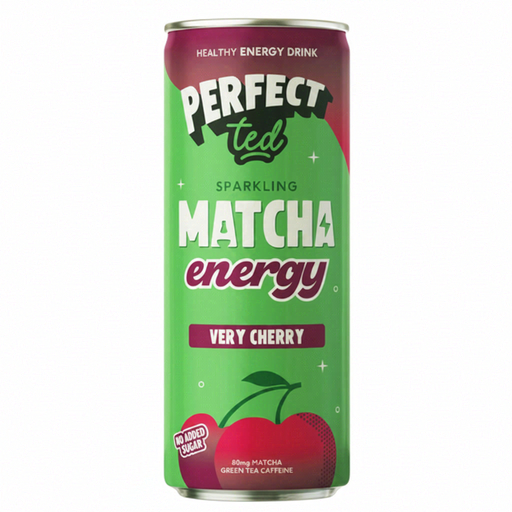
This four-can matcha energy-drink pack is an option for repeated journeys and for shoppers checking a ‘no added sugars’ description. It is not a zero-sugar alternative to the drinks discussed above.
 No image available
PerfectTed Matcha Energy Very Cherry 4x250ml
The four 250 ml cans may suit more than one journey if you want to keep extras. Joybuy’s description claims no added sugars, but check the current pack for that wording if it is essential to your choice. Do not treat this as a zero-sugar drink; read its nutrition panel and caffeine information before buying.
View on Joybuy
Questions about train-journey energy drinks
Does ‘zero sugar’ mean ‘no added sugar’?
No: the UK nutrition-claim conditions published by legislation.gov.uk distinguish ‘sugar-free’, which has a limit of 0.5 g sugars per 100 g or 100 ml, from ‘with no added sugar’, which concerns added sugars and other foods used for sweetening. Check the exact claim on the current pack if ‘no added sugar’ is your requirement.
Is a 250 ml or 500 ml can easier to plan around?
A 250 ml can gives you a smaller defined serving. Red Bull UK states 80 mg caffeine per 250 ml Sugarfree can, while Monster Energy UK states 150 mg per 500 ml Ultra can and Tesco lists 160 mg for Monster Ultra. If you prefer a larger drink, check the caffeine amount on the exact 500 ml can rather than assuming it matches another listing.
Is a sugar-free energy drink caffeine-free?
No. Red Bull Sugarfree, Monster Ultra, Lucozade Alert Zero Sugar and Relentless Raspberry Zero are described in their manufacturer or retailer product information as containing caffeine. Check the amount per whole can, including when you have also chosen coffee or tea for the journey.
Do product warnings still matter when a drink has no sugar?
Yes. Tesco’s Lucozade Alert Zero Sugar listing carries a high-caffeine warning and says it is not recommended for children, pregnant or breast-feeding women, or people sensitive to caffeine. Read the warning on the specific can; its sugar description does not replace that check.
Is there already a UK-wide ban on selling high-caffeine energy drinks to under-16s?
The Department of Health and Social Care and Department for Education announced in July 2026 an intended England-only ban from April 2027 on sales to under-16s of energy drinks containing more than 150 mg caffeine per litre, subject to Parliamentary approval. That announcement does not establish a current UK-wide ban. Check the rules and retailer requirements applicable when and where you buy.


