Travellers cutting back on sugar
If you want an energy drink while waiting to board, check the sugar statement on the exact variant. A brand name alone does not tell you whether a can is sugar-free or makes a no-added-sugar claim.


For a zero-sugar energy drink, compare caffeine per whole can as well as the sugar claim: Red Bull states that its 250 ml Sugarfree can contains 80 mg, while Monster states that its 500 ml Ultra Watermelon and Zero Sugar cans contain 150 mg and 160 mg respectively. If you specifically require a ‘no added sugar’ claim, check the exact can label rather than treating it as interchangeable with ‘zero sugar’. GOV.UK says drinks in containers over 100 ml cannot pass through security at most UK airports, so check your departure airport’s rules before buying a can landside.
If you want an energy drink while waiting to board, check the sugar statement on the exact variant. A brand name alone does not tell you whether a can is sugar-free or makes a no-added-sugar claim.
Can size matters alongside the caffeine figure. Red Bull states that Sugarfree contains 80 mg per 250 ml can; Monster states 150 mg per 500 ml Ultra Watermelon can and 160 mg per 500 ml Zero Sugar can.
Check whether you can take your drink through the departure airport’s security checkpoint. GOV.UK says containers over 100 ml are not permitted through security at most UK airports, though airport rules differ.
Start with the claim on the can, then compare caffeine for the full serving and decide where to buy it.
| Priority | What to check | Your needs |
|---|---|---|
| Sugar claim | Read the exact variant’s sugar statement and nutrition label. If ‘no added sugar’ is essential, check that wording and the ingredient list rather than relying on a ‘zero sugar’ or ‘sugar-free’ name. | I want an energy drink with a clear sugar claim, not an assumption based on the brand or a similar-looking can. |
| Caffeine | Compare mg of caffeine per complete can and the can volume. Red Bull states 80 mg per 250 ml Sugarfree can; Monster states 150 mg per 500 ml Ultra Watermelon can and 160 mg per 500 ml Zero Sugar can. | I want to know how much caffeine the whole can adds alongside any coffee, tea, cola or other energy drinks I have already had. |
| Ingredients | Check the ingredient list if particular sweeteners matter to you. Red Bull identifies sucralose and acesulfame K in Sugarfree; do not assume another variant has the same formulation. | If I prefer or avoid a particular sweetener, I need the ingredients for the can I am actually buying. |
| Purchase point | Check the departure airport’s current liquid rules before taking a drink to security. GOV.UK says containers larger than 100 ml cannot pass through security at most UK airports. | If I am travelling with hand luggage, I would rather buy after security when a standard can cannot be taken through. |
Red Bull’s 250 ml Sugarfree can contains 80 mg caffeine, while Monster states 150 mg or 160 mg per can for the two 500 ml zero-sugar variants compared here.
Read the caffeine amount for the whole can and account for other caffeinated drinks you have had that day.
GOV.UK says drinks in containers over 100 ml cannot pass through security at most UK airports. Both 250 ml and 500 ml cans exceed that container size.
Check your departure airport’s current rules, and any transfer-airport rules, before deciding whether to buy landside or after security.
Where the container limit applies, you may have to leave a landside purchase behind at security.
Those words do not establish the same thing about a particular formulation. A zero-sugar product name alone does not confirm that its label makes a no-added-sugar claim.
If no added sugar is your requirement, check the precise wording and ingredient list on the can.
Relentless lists sucrose and glucose in its Cherry drink. Lucozade describes Zero as a zero-sugar range and Alert as a high-caffeine range; those separate range descriptions do not establish both characteristics for one can.
Check the sugar claim, ingredients and caffeine statement for the exact variant before buying.
Red Bull Sugarfree is a 250 ml option for comparing a smaller can with a stated caffeine amount.
Monster lists 500 ml zero-sugar cans in different flavours; compare the caffeine amount for each variant.
Lucozade describes Zero as a zero-sugar range and Alert as a high-caffeine range.
Relentless is an energy-drink range where the exact flavour’s ingredients matter to a sugar-focused choice.
These Joybuy multipacks offer smaller Red Bull Sugarfree cans and larger Monster zero-sugar cans to compare for travel planning. Check the exact label if ‘no added sugar’ is your requirement, and check airport rules before carrying a can to security.
 Image unavailable
The 250 ml can is a smaller serving to consider when comparing caffeine per can. Red Bull states 80 mg caffeine per 250 ml Sugarfree can; check the pack label if you specifically need a no-added-sugar claim. A 250 ml can exceeds the container limit at most UK airport security checkpoints, according to GOV.UK.
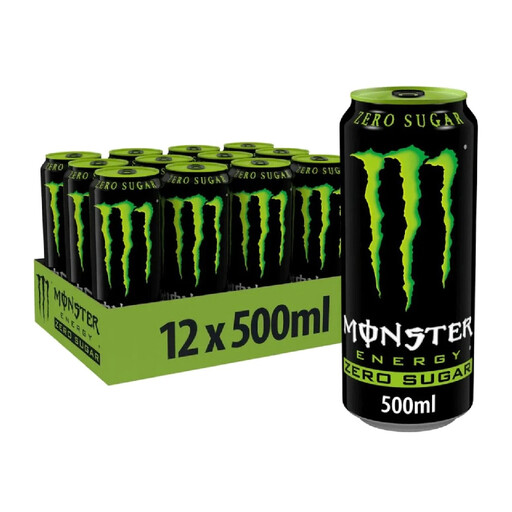 Image unavailable
Consider this multipack if you want the Green zero-sugar variant and are comparing caffeine for a full can. Its listing describes 500 ml cans with 160 mg caffeine each; check the exact can for a no-added-sugar claim. GOV.UK says a 500 ml container cannot pass through security at most UK airports.
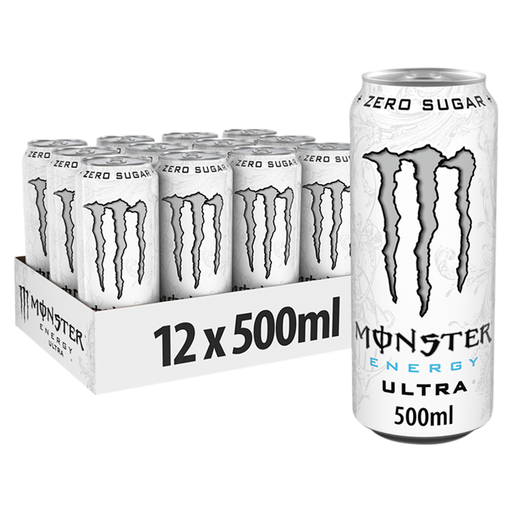 Image unavailable
This is a 500 ml can option for shoppers considering the Ultra White variant. Its listing describes 0 g sugars and 160 mg caffeine per can; check the label if you require a no-added-sugar claim. GOV.UK says a 500 ml container cannot pass through security at most UK airports.
At most UK airports, no: GOV.UK says drinks in containers larger than 100 ml cannot pass through security, even if partly full. Rules differ by airport, so check your departure and any transfer airport before buying landside; buying after security avoids that pre-security container-size issue.
No. Red Bull states 80 mg caffeine per 250 ml Sugarfree can, while Monster states 150 mg per 500 ml Ultra Watermelon can and 160 mg per 500 ml Zero Sugar can. Read the amount for the whole can rather than judging caffeine by its sugar claim.
Do not treat the phrases as interchangeable for a particular can. If ‘no added sugar’ is your requirement, read that exact product’s label and ingredient list rather than relying on its zero-sugar name.
Consider the amount in the whole can alongside caffeine you have already had from drinks or other sources that day. The European Food Safety Authority’s caffeine assessment considers intake from all sources, so a zero-sugar can should not be assessed in isolation.