
24/7 Customer Support

Free returns

Same-day & Next-day Delivery

Quality Guaranteed

Unlock Your Welcome Offers: FREE Delivery | Up to 80% OFF | Free 30-day JoyPlus trial
Download the APP
Whether you're tackling your first half-marathon, pushing for a new personal best on the bike or deep into a triathlon, every endurance athlete understands the moment the tank runs empty. That sudden drop in energy, often called "hitting the wall," can turn a promising performance into a gruelling slog. This is where a well-timed sports nutrition strategy, featuring high-quality energy gels, can make all the difference.
As a Joybuy Product Recommendation Officer, my role is to help you navigate the options and find the right endurance fuel for your needs. This guide breaks down what to look for in running gels and cycling gels and highlights a few standout options to consider for your training and race day.
With so many choices available, selecting the right gel can feel overwhelming. Here are a few key factors to consider to help you make an informed decision.
Here are a few carefully selected energy gels, each offering distinct features to suit different types of athletes and activities.
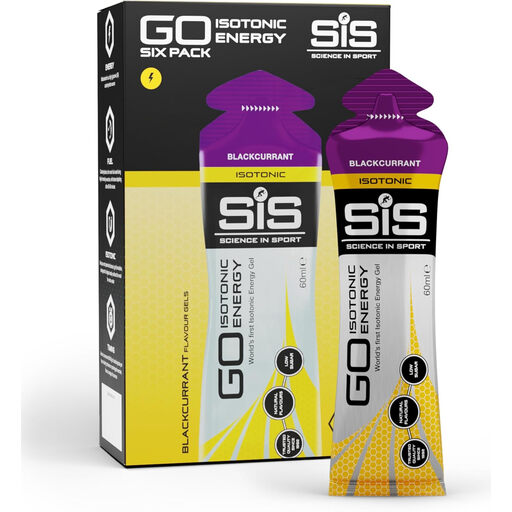
Why It Stands Out: The key feature of the SiS GO Isotonic Gel is its formulation. It's designed to be absorbed rapidly without causing the bloating or stomach discomfort that can sometimes occur with thicker, more concentrated gels. Its light consistency and the fact that it doesn't require extra water make it exceptionally practical for use mid-run or ride.
Pros:
Who is it for? Athletes of all levels who prioritise convenience and digestive comfort. It's an excellent choice for runners and cyclists looking for a reliable, no-fuss energy source that can be taken easily during exercise.
View SiS Gel Go Isotonic Energy
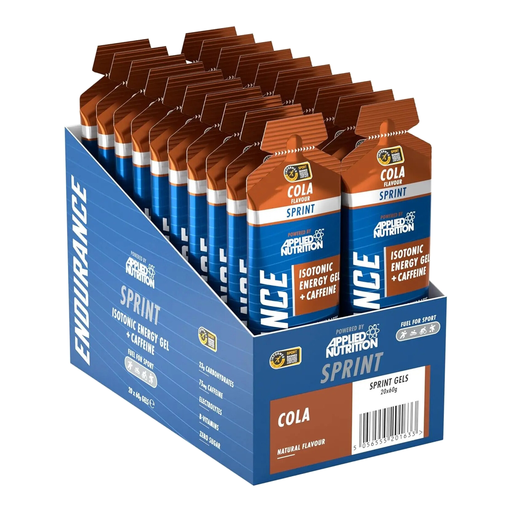
Why It Stands Out: This gel is engineered for athletes seeking both a physical and mental edge. The combination of 23g of fast-acting carbohydrates with 75mg of caffeine delivers a noticeable boost to focus and energy. Furthermore, its zero-sugar formula and the inclusion of electrolytes and B-vitamins make it a well-rounded option for high-intensity efforts. Every batch is tested under the Informed-Sport programme, providing confidence for competitive athletes.
Pros:
Who is it for? Competitive athletes and individuals engaged in high-intensity training or racing who benefit from the stimulating effects of caffeine. It's well-suited for short, sharp efforts or for use in the final stages of an endurance event.
View Applied Nutrition Sprint Energy Gel
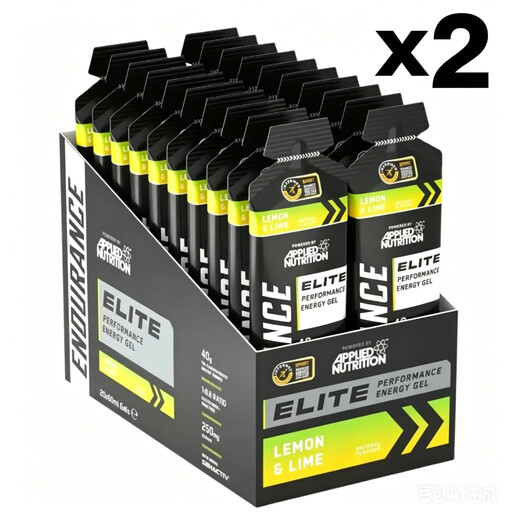
Why It Stands Out: This is a high-carbohydrate gel designed specifically for the demands of ultra-endurance. It packs a substantial 40g of carbohydrates from three different sources (Maltodextrin, Fructose and Highly Branched Cyclic Dextrin). This tri-source blend is formulated in a 1:0.8 ratio, which is intended to maximise carbohydrate uptake while minimising gastrointestinal distress. The addition of 250mg of sodium helps replenish electrolytes lost during long sessions.
Pros:
Who is it for? Endurance athletes tackling long-distance events like marathons, ultra-marathons and long-course triathlons. Its high-carb formula is built to provide the substantial fuel needed to perform over several hours.
View Applied Nutrition Endurance Elite Gel
The right energy gel is a personal choice, often depending on flavour preference, texture and your specific training needs. If these selections aren't quite what you're looking for, there are many other formulations to discover.
[Explore our full range of Electrolytes & Energy Gels](https://www.joybuy.co.uk/explore/electrolytes-energy-gel/sG9C3Gcp)
For endurance activities lasting over 60-90 minutes, a common strategy is to start fuelling around 45-60 minutes into the activity and then consume one gel every 45-60 minutes thereafter. For shorter, high-intensity efforts, taking a gel 15 minutes before the start can be beneficial. It's always advisable to practise your fuelling strategy in training.
Not always. Isotonic gels are formulated to be absorbed without additional water. However, for more concentrated, hypotonic gels, drinking water is recommended to help with digestion and absorption. Regardless of the gel type, maintaining overall hydration during exercise is crucial for performance.
This depends on the individual, the specific gel's carbohydrate content and your target finish time. A general guideline is to aim for 30-60g of carbohydrates per hour, which could mean taking 1-3 gels per hour. For higher-carb gels like the Applied Nutrition Endurance Elite, you might need fewer. Always test your marathon gels and fuelling plan during your long training runs to see what works for you.