
24/7 Customer Support

Free returns

Same-day & Next-day Delivery

Quality Guaranteed

Unlock Your Welcome Offers: FREE Delivery | Up to 80% OFF | Free 30-day JoyPlus trial
Download the APP
Whether you are posting invoices, sending online orders, preparing office correspondence or making handmade cards, the right envelopes and mailing bags can prevent avoidable damage and postage problems. However, product descriptions often focus on appearance or pack size while leaving out the details that affect everyday use.
Three common buying traps are worth checking before you order:
UK paper sizes provide a useful starting point:
Allow room for multiple pages, card stock or protective inserts. Overfilling can put pressure on the flap and cause a self-seal envelope to open during handling.
For certificates, photographs and artwork, ordinary paper envelopes may not provide enough rigidity. Board-backed envelopes use a rigid panel to help keep flat contents from bending. The Triplast C5 and C4 manilla options use a 120gsm kraft paper front and 1000-micron board back, with a printed “Please Do Not Bend” instruction.
Paper weight is usually expressed in gsm, or grams per square metre. A 90gsm envelope is suitable for routine letters and statements, while 120gsm kraft paper offers a more substantial outer layer for flat items.
Closure types include:
For e-commerce, poly mailers are lightweight and resistant to rain, dust and routine handling. Look for the film thickness and construction rather than relying only on colour. The Triplast mailing bags listed here use 55-micron, three-layer co-extruded recycled LDPE, with an opaque black inner layer and a 40mm peel-and-seal strip.
A small pack may suit occasional home use, card making or a new online seller. Larger quantities can reduce the per-unit cost for offices and fulfilment teams, but only if the size is used regularly.
Do not assume that a coloured mailing bag has different protective properties from a grey one. Check the same specifications: dimensions, thickness, closure and material. Also distinguish between:
For example, the Triplast grey and pink mailing bags are described as made from recycled LDPE and recyclable under Code 4 LDPE. Local collection rules can vary, so remove labels and check your council’s guidance where required.
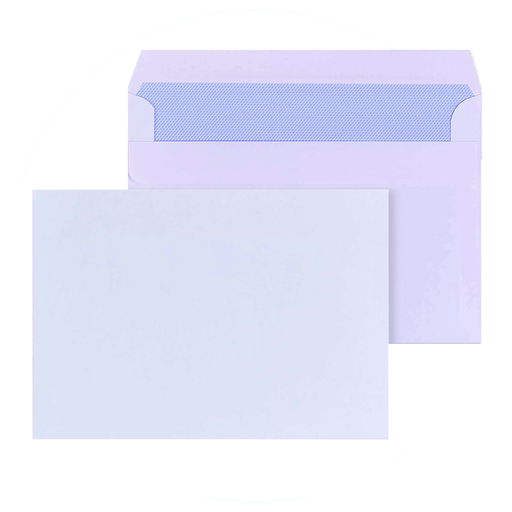
Why This Fits Their Persona: A manageable 20-pack suits home users, occasional correspondence and small batches of invitations without committing to a bulk box.
The C6 dimensions are clearly stated, helping buyers avoid selecting an envelope that is unnecessarily large for A6 or folded A5 contents.
90gsm paper, self-seal closure, blue internal security pattern and recyclable, PEFC-certified paper.
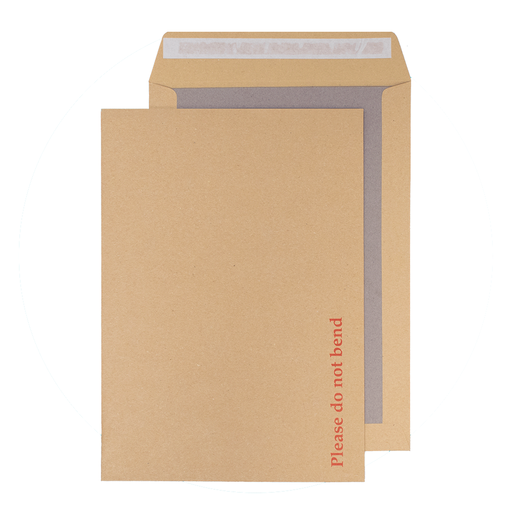
Why This Fits Their Persona: Suitable for sending certificates, photographs, artwork and contracts when keeping an A4 document flat is more important than using the smallest envelope.
The rigid board back and visible “Please Do Not Bend” message address the risk of creasing that ordinary paper envelopes cannot prevent.
C4 format, 120gsm kraft front, 1000-micron board back, peel-and-seal strip and 100% recycled material.
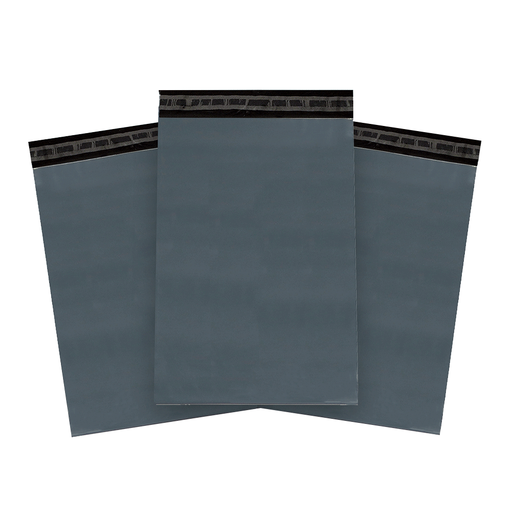
Why This Fits Their Persona: The 1,000-pack is suited to online sellers, retailers and postal fulfilment teams sending clothing or other soft goods regularly.
The stated 55-micron, three-layer film and opaque black interior provide more useful information than colour or vague strength wording alone.
Approximate 250 × 350mm size, waterproof recycled LDPE, tamper-evident peel seal and Code 4 recycling classification.
We have compiled a complete, real-time list of products that fully satisfy these strict selection criteria and UK safety regulations.
They can be suitable when the envelope has an internal security tint or pattern and is correctly sealed. For invoices, statements and personal correspondence, look for features such as a blue security interior and a suitable paper weight. Do not overfill the envelope, and store it away from moisture before use.
Measure the item when packed, including tissue paper, bubble wrap or other protective material. Choose a bag with enough width and depth for the contents to enter without forcing the seams. The Triplast range includes approximately 10 × 14-inch, 12 × 16-inch, 14 × 16-inch and 17 × 24-inch formats. Larger bags may suit bulky clothing or soft goods, while smaller sizes can reduce excess material.
Keep them flat or upright in a cool, dry place, away from direct sunlight and humidity. Moisture can affect paper strength and adhesive performance. Mailing bags should also be kept away from young children because plastic packaging can present a suffocation hazard.