
24/7 Customer Support

Free returns

Same-day & Next-day Delivery

Quality Guaranteed

Unlock Your Welcome Offers: FREE Delivery | Up to 80% OFF | Free 30-day JoyPlus trial
Download the APP
An ergonomic baby carrier can make nursery drop-offs, supermarket trips and travel around the UK easier, but the wrong design may quickly become uncomfortable or impractical. Marketing often focuses on phrases such as “all-day comfort” or “one-size-fits-all” without explaining how the carrier supports different body shapes, baby sizes and weather conditions.
Before buying, watch for three common pitfalls:
The right choice depends on the baby’s current weight, head and neck control, the wearer’s build and how often the carrier will be used.
Check the manufacturer’s stated weight range rather than relying only on an age guide. Several carriers listed here accommodate babies from approximately 3–20 kg, but the starting weight differs between models.
A carrier advertised for 3–20 kg may not automatically be suitable for a very young baby. The product information should explain whether the baby must be able to hold their head up unaided and whether an infant insert is required. The mesh models described here specify use from approximately three months and advise against use for babies who cannot hold their head up independently.
For a baby carrier for infants and toddlers, look for:
The phrase newborn and toddler carrier should be treated carefully. Confirm the actual minimum weight and fitting instructions, as “newborn” can mean different things between manufacturers.
A genuinely practical adjustable baby carrier should allow the wearer to alter the shoulder straps, waist support and baby seat area. Three sizing positions can be useful when sharing the carrier between adults or accommodating growth.
For the wearer, examine:
A lumbar support baby carrier should not cause pain, numbness or excessive pressure. If discomfort continues after adjustment, stop using it and review the fit.
For warmer rooms, holidays or summer walks, a breathable baby carrier with an Air Mesh panel can allow more airflow than a fully cotton design. Cooling neck-contact fabric may also reduce heat where the baby and wearer meet.
Cotton has other practical advantages. A machine-washable cotton carrier can be convenient for everyday use, particularly when dealing with food spills or outdoor dirt. However, fabric thickness, drying time and padding also matter.
A lightweight baby carrier can reduce the amount of bulk carried in a changing bag, but product weight is only one consideration. A 771 g carrier, for example, may still feel manageable if its waist and shoulder systems distribute the baby’s weight effectively.
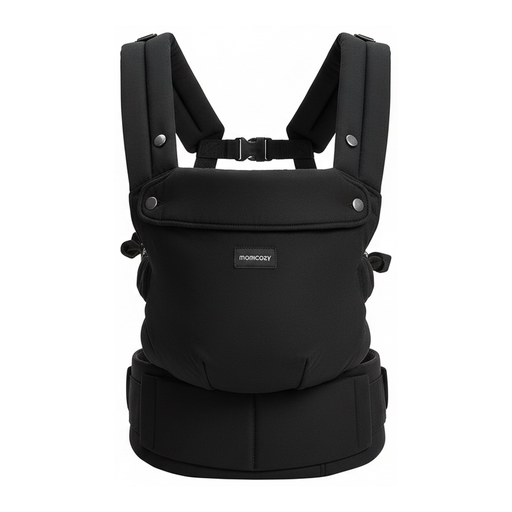
Why This Fits Their Persona: A practical cotton option for parents beginning to use a hands-free baby carrier for errands, short walks and everyday bonding.
The specification gives a defined 3–20 kg range, three adjustable sizing positions and fitting guidance rather than relying only on a broad age statement.
Machine-washable 100% cotton, EVA waist support, padded straps and three carrying positions.
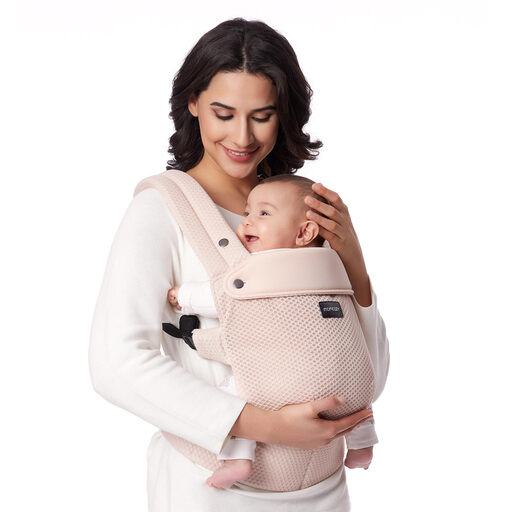
Why This Fits Their Persona: Suitable for parents who prioritise airflow, fabric feel and a more refined fit during warmer indoor and outdoor conditions.
The Air Mesh panel and cooling neck-contact fabric are clearly identified, while the product still specifies adjustment and airway checks.
Air Mesh construction, cooling neck fabric, EVA waist support and a stated 3.2–20 kg capacity.
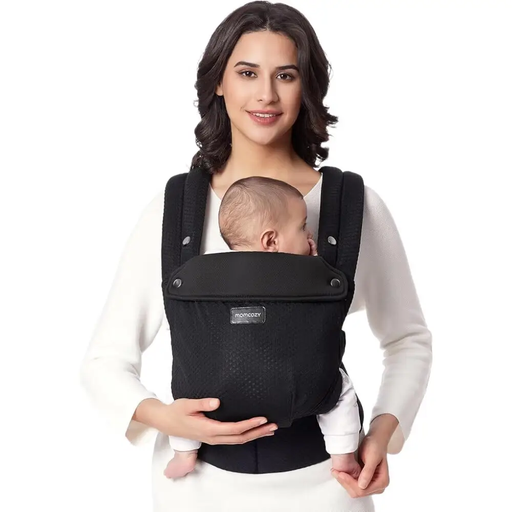
Why This Fits Their Persona: A useful match for frequent users managing commutes, household tasks and longer low-intensity outings where ventilation and weight distribution matter.
It combines airflow features with an X-shaped back, padded straps and an EVA waist panel rather than presenting ventilation as the only comfort feature.
Air Mesh panel, cooling neck fabric, three sizing positions and padded leg openings for front-facing carrying.
Before each use, inspect the buckles, seams, straps and fabric for damage. Fasten every buckle securely and check that it has engaged correctly. Adjust the carrier so the baby is held upright and close to the wearer without being compressed.
The baby’s face should remain visible, with the airway clear at all times. Do not cover the face with a scarf, coat or muslin cloth. Follow the supplied weight and age guidance and avoid activities with a fall risk, including running and cycling. Cooking near an open flame is also unsuitable while wearing a carrier.
A carrier is not protective equipment in the event of a fall or collision. If the wearer experiences persistent back pain or the baby appears uncomfortable, stop and reassess the fit.
We have compiled a complete, real-time list of products that fully satisfy these strict selection criteria and UK safety regulations.
It depends on the carrier’s stated minimum weight and age guidance. Some models listed here begin at approximately three months, while the mesh versions specify that the baby should be able to hold their head up unaided. Always follow the individual product instructions.
There is no single duration suitable for every baby or wearer. Start with short periods, monitor the baby’s breathing, position and comfort and take regular breaks. The carrier should never be used as a reason to ignore feeding, changing or sleep needs.
An air mesh baby carrier can improve airflow compared with heavier fabric, but it will not prevent overheating in every condition. Dress the baby appropriately, check their temperature regularly and avoid prolonged exposure to direct sun. A breathable design is one factor; correct positioning and supervision remain essential.