
24/7 Customer Support

Free returns

Same-day & Next-day Delivery

Quality Guaranteed

Unlock Your Welcome Offers: FREE Delivery | Up to 80% OFF | Free 30-day JoyPlus trial
Download the APP
An ergonomic baby carrier can make nursery runs, public transport, gentle walks and household tasks easier. However, a carrier that looks supportive in a product photograph may feel uncomfortable once your baby grows, while a fabric marketed as “breathable” may still become warm during a summer walk.
The practical choice depends on more than appearance. Before buying, check the weight range, baby’s developmental stage, carrying position, adjustment system and the support offered to the wearer.
Age recommendations are only a guide. A carrier listed for babies from around 3 months may not be suitable for a younger baby who cannot yet hold their head steadily. Always prioritise the manufacturer’s weight range, minimum age guidance and head-support instructions.
For example, several carriers listed for 3.2–20 kg are recommended from approximately 3 months, while the Chicco Easy Fit Carrier From Birth Black Night is specifically described as suitable from birth in a parent-facing position.
A hands-free baby carrier still requires careful fitting. Loose shoulder straps, an unsupported head or an incorrectly positioned seat can affect both comfort and security. The baby should sit upright, close to the wearer, with their face visible and airway clear.
Look for practical adjustment features such as clearly marked straps, accessible buckles, multiple sizing positions and a waist panel that sits securely around the wearer.
A carrier weighing less than 1 kg may be easier to pack, but weight alone does not determine warmth. For hot or humid journeys, check for Air Mesh panels, cooling-contact fabric or ventilated sections. Cotton can feel soft and comfortable, but a breathable mesh baby carrier may provide more airflow in summer.
A carrier should fit your baby now, not only at the top of the advertised range. Common products in this category support approximately 3.2–20 kg, but the minimum weight and recommended age vary.
The seat should support a natural M-position, with the baby’s knees higher than their bottom and the thighs supported. This is different from simply placing the baby in a wide seat. Follow the product instructions and stop using the carrier if the baby’s position cannot be maintained comfortably.
Also check whether “front-facing” means front carry with the baby facing the wearer or outward-facing. Outward-facing carrying should only be used when the product instructions and the baby’s development allow it. The Chicco model, for instance, is described as parent-facing from birth and forward-facing from 4 months.
Longer carrying sessions can expose weak strap and waist designs. Useful features include:
These features do not remove the need for correct fitting, and comfort will vary between body shapes. If you feel persistent pain or pressure, remove the carrier and reassess the adjustment.
A cotton baby carrier may suit families looking for a soft, machine-washable everyday option. A mesh model may be more suitable for warmer homes, summer holidays or outdoor use. Check the washing instructions carefully: some products allow machine washing, while the Waterland carrier specifies hand washing or a delicate cool cycle and natural drying.
For a carrier used frequently, machine-washable fabric can be a meaningful practical advantage. Consider whether the product can be cleaned without damaging buckles, padding or structural panels.
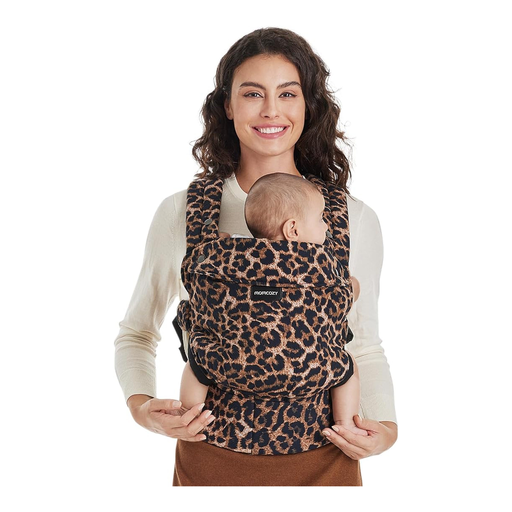
Why This Fits Their Persona: A practical cotton option for new parents wanting one front-carry carrier for everyday errands and short trips around the UK.
Its stated 7–44 lb range, three adjustable positions and visible M-position guidance make the selection criteria clearer than relying on age alone.
100% cotton, machine washable, 771 g product weight and built-in EVA lumbar support.
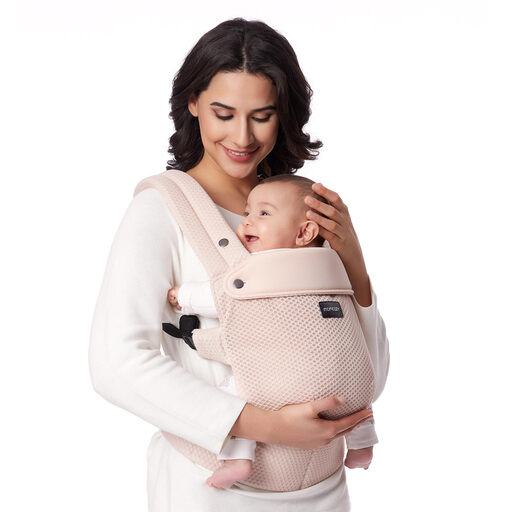
Why This Fits Their Persona: Suitable for caregivers who prioritise fabric airflow, lumbar support and a closer-fitting design for regular use.
The Air Mesh panel addresses the common mistake of choosing a carrier based only on low weight when warmth is the real concern.
Air Mesh and cooling neck-contact fabric, padded straps, EVA waist support and a stated 3.2–20 kg capacity.
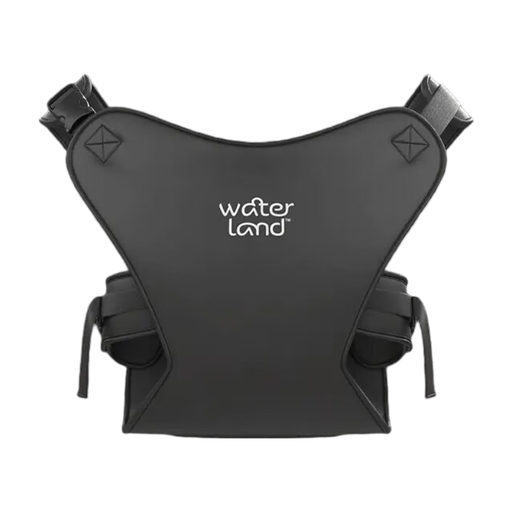
Why This Fits Their Persona: A niche option for families planning water-based outings as well as land-based carrying, rather than a general newborn carrier.
Its instructions specify cool delicate washing, natural drying and buckle checks, helping avoid treating a specialist carrier like an ordinary cotton sling.
Neoprene construction, inward- and outward-facing options, 6–15 kg range and stated compliance with EN 13209-2:2015 + AC:2016.
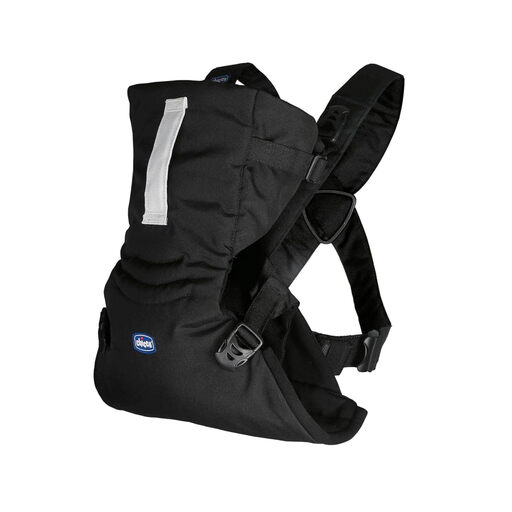
Why This Fits Their Persona: Parents specifically looking for a baby carrier for newborns with a stated from-birth parent-facing position.
The product description separates parent-facing use from forward-facing use, reducing confusion around when to change position.
T-shirt-style fitting, padded adjustable shoulder straps, M-position design and a stated forward-facing option from 4 months.
We have compiled a complete, real-time list of products that fully satisfy these strict selection criteria and UK safety regulations.
Before every use:
Only if the specific product is labelled as suitable from birth and provides the required support. Many carriers in the 3.2–20 kg category are recommended from approximately 3 months rather than from birth. Check the minimum weight, head control guidance and approved carrying position before purchase.
The usable period depends on the carrier’s weight range, fit and your child’s comfort. Models supporting up to around 20 kg may be used from infancy into toddlerhood, but the carrier should be retired if straps, buckles or fabric show damage. A child’s changing size may also make a previously comfortable carrier unsuitable before the maximum weight is reached.
Neither product has a fixed running cost, but cleaning and replacement needs affect value. A machine-washable baby sling or carrier can be convenient for frequent use. Check whether it needs a cool wash, air drying or special care, and inspect the fabric and fasteners regularly. A sling may also require more practice to adjust, while a structured carrier generally offers more defined buckles and waist support.