
24/7 Customer Support

Free returns

Same-day & Next-day Delivery

Quality Guaranteed

Unlock Your Welcome Offers: FREE Delivery | Up to 80% OFF | Free 30-day JoyPlus trial
Download the APP
Keeping your baby close is one of the great joys of parenthood. But juggling daily tasks with a little one in your arms can be a challenge. An ergonomic baby carrier offers a practical solution, allowing you to keep your baby snug and secure while freeing up your hands.
Navigating the market for the right carrier can feel overwhelming. The priority is always your baby's safety and comfort, as well as your own. This guide is designed to help you understand the key features of a quality ergonomic carrier and to present some carefully considered options available in the UK.
Before diving into specific products, it’s helpful to know what features make a carrier both safe and comfortable for you and your baby.
One of the most critical aspects of an ergonomic carrier is how it supports your baby's posture. A hip healthy baby carrier should allow your baby to sit in the natural 'M' position, also known as the 'froggy' or 'spread-squat' position. This means their knees are spread apart and sit slightly higher than their bottom, forming an 'M' shape. This posture supports healthy hip socket development and is widely recommended by paediatric health professionals. Look for carriers with a wide, supportive seat base that extends from knee to knee.
Carrying a growing baby can put a strain on your back, neck and shoulders if their weight isn't distributed correctly. A quality carrier should be as comfortable for the wearer as it is for the baby. Key features to look for include a baby carrier with lumbar support, often in the form of a wide, padded waistband that helps shift the baby's weight to your hips. Padded shoulder straps and an adjustable back panel, such as an X-shaped design, also help to spread the load evenly and prevent discomfort during longer periods of wear.
The material of your carrier can significantly impact comfort, especially with the UK's variable weather. A breathable baby carrier, often made with mesh panels, is ideal for warmer months or for parents who tend to run warm. For all-season use, soft, natural fabrics like cotton are a popular choice. A lightweight baby carrier is also a great advantage for travel or for parents who want to avoid unnecessary bulk. Finally, consider ease of use—a carrier that is simple to put on and adjust by yourself is a major plus for busy parents.
Based on features that prioritise safety, comfort and practicality, here are our recommendations.
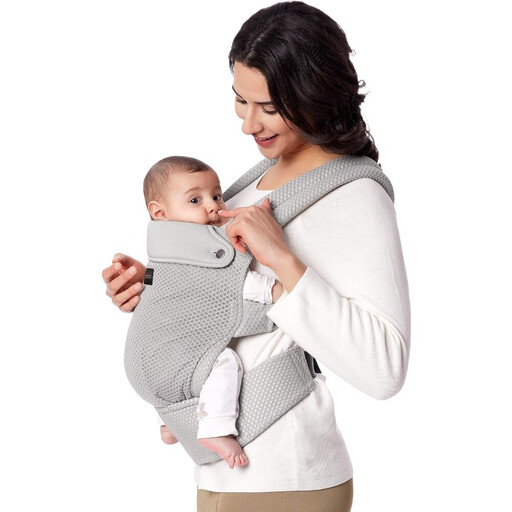
Why It Stands Out: This carrier is specifically designed with ventilation in mind. The large Air Mesh panel and cooling neck fabric make it an excellent choice for staying comfortable in warmer weather or during active days out. It combines this breathability with strong ergonomic credentials, including an X-shaped back design and built-in EVA waist support to distribute weight effectively.
Pros:
Who is it for? Parents who are concerned about overheating, live in warmer areas, or plan to use the carrier during active outings in the spring and summer.
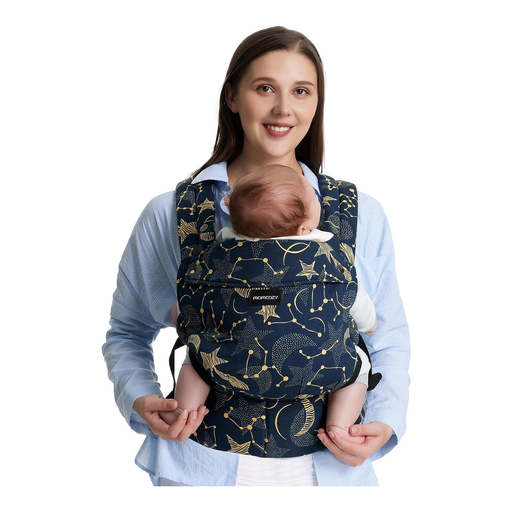
Why It Stands Out: For those who prefer the feel of natural fibres, this carrier is made from 100% cotton, offering a soft and gentle environment for the baby. The stylish "Starry Sky" pattern adds a touch of personality without compromising on function. It features the same reliable ergonomic support system as other Momcozy models, including the crucial 'M' position support and an X-shaped back for the parent's comfort.
Pros:
Who is it for? Parents looking for a comfortable, all-season carrier made from natural materials, with a design that is both elegant and practical for everyday use.
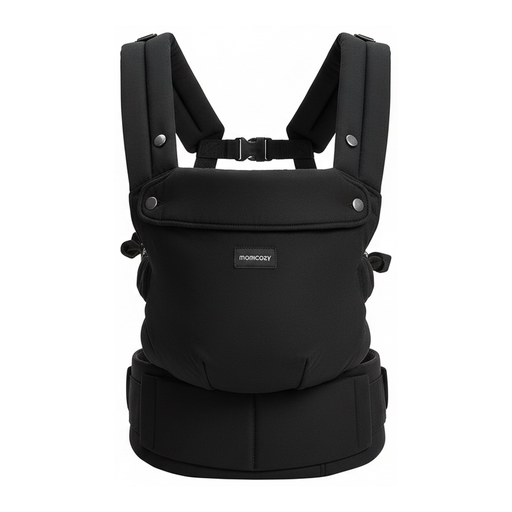
Why It Stands Out: This model is a versatile workhorse, designed to be a long-lasting solution for your baby-wearing journey. Its three-stage adjustability makes it suitable for infants and toddlers alike, accommodating a weight range from 3 kg to 20 kg. The classic black colour and durable 100% cotton fabric make it a practical choice for any occasion. It provides enhanced lumbar support through its structured EVA waist belt, making it a solid option for parents who prioritise back comfort.
Pros:
Who is it for? Parents seeking a single, highly adjustable carrier that will serve them from the newborn stage well into toddlerhood, with a strong emphasis on back support.
If you haven't found the exact style or feature set you're looking for, there are many other baby-wearing solutions to consider. From wraps to slings and other structured carriers, finding the right fit is a personal choice.
Explore our full range of travel accessories for babies to find the perfect fit for your family.
1. What is the safest position for a baby in a carrier? The safest position is upright, with the baby held snugly against your chest. Their chin should be off their chest to ensure their airway is always clear and you should be able to see their face. For hip health, the carrier must support the 'M' position, where their bottom is seated lower than their knees.
2. Can I use an ergonomic baby carrier for a newborn? Many ergonomic carriers are designed to be used from the newborn stage, typically starting from a weight of around 7 lbs or 3.2 kg. However, it is crucial to check the manufacturer's specific guidelines. For a baby carrier for newborn use, ensure it provides adequate head and neck support, as newborns cannot hold their heads up independently. Some carriers may require a separate infant insert for the first few months.
3. How long can a baby stay in a carrier? There is no strict time limit, but it's generally recommended to take breaks every one to two hours. This gives you and your baby a chance to stretch, reposition and have a nappy check. Pay attention to your baby's cues; if they seem fussy or uncomfortable, it's time for a break. Always ensure they are not overheating and that the carrier remains properly adjusted.