
24/7 Customer Support

Free returns

Same-day & Next-day Delivery

Quality Guaranteed

Unlock Your Welcome Offers: FREE Delivery | Up to 80% OFF | Free 30-day JoyPlus trial
Download the APP
Juggling the demands of daily life while keeping your little one close and secure is a familiar challenge for any parent. An ergonomic baby carrier can be a game-changer, offering a hands-free solution that supports both your comfort and your baby's healthy development. But with so many options on the market, choosing the right one can feel overwhelming.
As the Joybuy Product Recommendation Officer, my role is to help you navigate these choices. This guide cuts through the clutter, focusing on practical features and objective information to help you find a carrier that fits your family's active lifestyle in the UK. We will explore key considerations and highlight a few standout options for 2026.
Making an informed decision comes down to a few key factors. Focusing on these will ensure you select a carrier that is safe, comfortable and practical for your needs.
A true ergonomic baby carrier is designed with the anatomy of both the wearer and the child in mind. For your baby, look for a carrier that supports their hips in a natural, spread-squat 'M' position, where their knees are slightly higher than their bottom. This is widely recognised as important for healthy hip development.
For you, the parent, a good baby carrier for back support is essential. Features like wide, padded shoulder straps, often in an 'X' configuration to distribute weight, and a supportive, adjustable waistbelt can significantly reduce strain on your back, shoulders and abdomen, making longer carrying sessions more comfortable.
Carriers are not one-size-fits-all. Some are designed as a baby carrier for newborn infants, often with specific inserts or adjustments for smaller bodies. Others are built to accommodate older babies and toddlers, functioning as a robust toddler carrier with higher weight limits. For maximum value, consider an adjustable carrier that can grow with your child, supporting them from their first few months through to their toddler years. Always check the manufacturer's recommended age and weight range before purchasing.
Think about when and where you will use the carrier most. If you plan on being active during warmer months or live in a well-heated home, a breathable baby carrier made from mesh or lightweight fabrics can prevent you and your baby from overheating. If you need ultimate versatility, a multi-position carrier or a hip seat baby carrier can offer different ways to carry your child as they grow and become more curious about the world.
Based on features that prioritise comfort, versatility and ergonomic design, here are our recommendations.
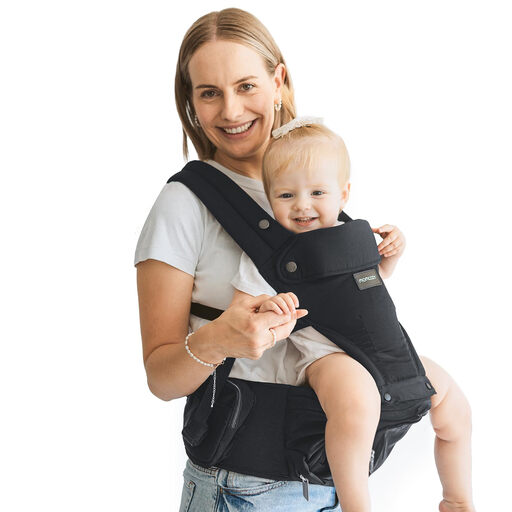
Why It Stands Out: This carrier's main advantage is its 2-in-1 versatility. It functions as a complete structured carrier or a standalone hip seat, providing a supportive perch for your toddler. This adaptability makes it a long-lasting investment.
Pros:
Who is it for? Parents seeking a single, highly adaptable carrier that will see them through from the early months to the toddler years, offering multiple carrying options for different situations.
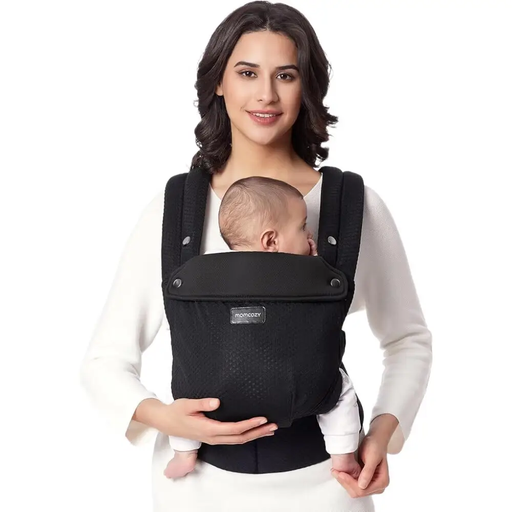
Why It Stands Out: This model is purpose-built for activity and warm weather. The use of Air Mesh fabric and a cooling neck panel makes it an exceptionally breathable baby carrier, helping to keep both you and your baby comfortable on the move.
Pros:
Who is it for? Active families, parents living in warmer areas, or anyone who prioritises a lightweight, cool and comfortable hands-free baby carrier for daily errands and outdoor adventures.
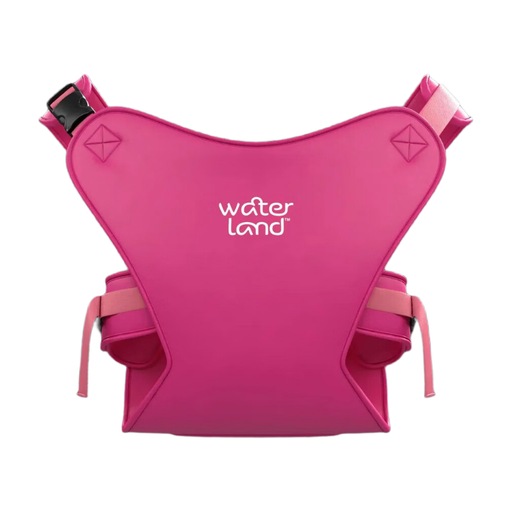
Why It Stands Out: This carrier fills a unique niche with its water-friendly construction. Made from high-quality neoprene—the same material used for wetsuits—it is designed for use both on land and in the water.
Pros:
Who is it for? Adventurous parents who love swimming and water-based activities and want a safe, specialised carrier to share those experiences with their child (from 4 months+).
These recommendations cover a range of needs, but every family is unique. If you're still exploring or have different requirements, you can find more styles and features in our complete collection.
Browse our full range of soft baby carriers to find the perfect match for you.
Many carriers are suitable from birth, typically for babies weighing over 3.2 kg (7 lbs). However, some may require a separate newborn insert for proper head and neck support. It is crucial to always read and follow the manufacturer's specific guidelines for age and weight to ensure your baby's safety.
To check for the 'M' position, ensure your baby's bottom is seated deep in the carrier panel, with their knees bent and positioned higher than their hips. Their legs should be spread naturally around your torso, creating a shape that resembles the letter 'M'. This posture supports their developing hips and spine.
Ergonomic carriers are designed to make carrying comfortable for extended durations. Features like padded straps and lumbar support help distribute the baby's weight effectively. However, it is always a good idea to listen to your body and take breaks as needed. Also, ensure your baby has room to move slightly and that their airway is always clear and unobstructed.