
24/7 Customer Support

Free returns

Same-day & Next-day Delivery

Quality Guaranteed

Unlock Your Welcome Offers: FREE Delivery | Up to 80% OFF | Free 30-day JoyPlus trial
Download the APP
An ergonomic baby carrier can be a game-changer for new parents in the UK, offering the freedom of a hands-free lifestyle while keeping your little one close. However, the market is flooded with options, and it's easy to choose a carrier that ends up being uncomfortable for you or, more importantly, isn't supportive for your baby. As a Joybuy Product Recommendation Officer, my role is to help you see past the marketing and focus on what truly matters for safety, comfort and practicality.
Before you decide, let's look at some common pitfalls that lead to disappointing purchases.
To find a carrier that you'll love and use for months or even years, focus on these key technical aspects.
The single most important ergonomic feature is how the carrier supports your baby's hips and spine. A quality carrier should hold your baby in a natural, spread-squat position known as the "M-shape". This means their bottom is seated lower than their knees, creating an 'M' with their legs. This posture is widely recognised as supporting healthy hip development.
A well-designed carrier works with your body, not against it. Look for features that distribute your baby's weight across your hips and shoulders, rather than concentrating it on your back.
A carrier is a significant purchase, so you want it to last. Look for models that offer multiple adjustment points. This includes the width of the seat to accommodate a growing baby, the height of the back panel for head support and the length of the shoulder and waist straps to fit different parents or carers.
Based on these practical criteria, here are a few options that match different parental needs and lifestyles.
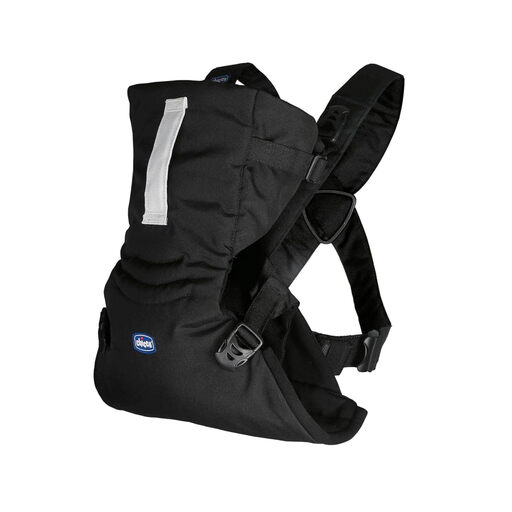
Why This Fits Their Persona: Ideal for new parents who feel overwhelmed by complex straps and buckles. Its design is intuitive—you wear it like a t-shirt, making it quick and simple for those early months when you need a secure, hands-free baby sling for quick trips or settling a fussy baby at home.
It sidesteps the "one-size-fits-all" trap by focusing on being an excellent newborn carrier. Its simplicity is its strength, avoiding the confusing adjustments of more complex models.
Extremely easy to put on and adjust. It is designed to ensure the baby is held in the recommended ergonomic M-position from birth.
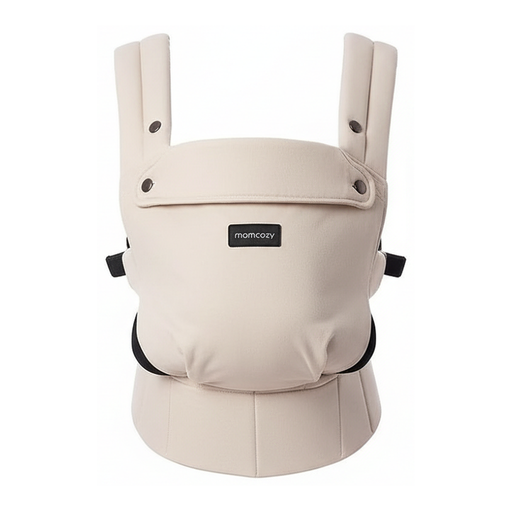
Why This Fits Their Persona: For the parent who plans to wear their baby on daily walks, during errands or around the house. This user prioritises their own comfort for extended wear, knowing that a sore back means the carrier won't get used.
This carrier directly counters the "forgetting the parent's comfort" pitfall. Its design focuses on weight distribution with an X-shaped back and a built-in EVA waist support panel to reduce strain.
Features enhanced lumbar support and effective weight distribution for the wearer. It also has three adjustable sizing positions to grow with your baby from 7-44 lbs.
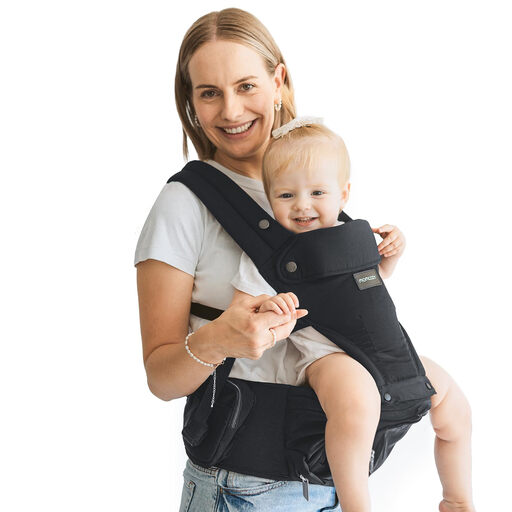
Why This Fits Their Persona: This is for the parent seeking a long-term investment. The 2-in-1 system provides a full carrier for younger babies and a separate hip seat for quick 'up-and-downs' with a curious toddler, making it a highly adaptable choice for a growing child.
It solves the "one-size-fits-all" problem with a modular design. Instead of one carrier trying to do everything, it offers two distinct modes (full carrier and hip seat) to provide appropriate support for different ages and use cases.
Offers six carrying positions and a detachable hip seat, providing excellent value and longevity as a baby carrier for toddlers up to 20kg.
We have compiled a complete, real-time list of products that fully satisfy these strict selection criteria and UK safety regulations.
The simplest check is the "M-shape". Your baby's bottom should be sitting in the deepest part of the carrier fabric, with their knees bent and positioned slightly higher than their bottom. Their back should be gently curved in a 'C' shape. You should also be able to see their face and ensure their chin is not pressed against their chest.
Yes, many ergonomic carriers are suitable from birth, often with a specified minimum weight (e.g., 3.2kg or 7lbs). For newborns, it is crucial to ensure the carrier provides adequate head and neck support and that the seat base is not too wide for their little legs. Some carriers have built-in adjustments or inserts for this purpose. Always check the manufacturer's guidelines for the specific model.
This depends entirely on the quality of the carrier's support system and your own physical comfort. A carrier with excellent lumbar support and well-padded, distributed straps can be worn for several hours. However, it's always a good idea to take breaks to allow both you and your baby to stretch and reposition. Listen to your body; if you start to feel strain, it's time for a break.