
24/7 Customer Support

Free returns

Same-day & Next-day Delivery

Quality Guaranteed

Unlock Your Welcome Offers: FREE Delivery | Up to 80% OFF | Free 30-day JoyPlus trial
Download the APP
Keeping your little one close while navigating daily life is a balancing act many new parents in the UK know well. You want the comfort and bonding of babywearing, but not at the expense of your back or your baby's healthy development. An ergonomic baby carrier is designed to solve this, offering a secure, comfortable and hands-free way to carry your child, from their first few weeks to their curious toddler years.
Choosing the right one can feel overwhelming with so many options available. This guide is here to help you understand the key features to look for and to share some of our top recommendations for 2026, focusing on safety, comfort and practicality for UK families.
Before diving into specific products, let's cover what makes a carrier truly ergonomic and suitable for your needs.
The most critical feature of an ergonomic baby carrier is how it supports both you and your baby.
The UK weather is nothing if not unpredictable. The right material ensures comfort for both you and your baby, year-round.
Babies grow quickly. A carrier that adapts to their changing size offers better value and usability.
Here are a few standout options that balance ergonomic design, comfort and practical features for everyday use.
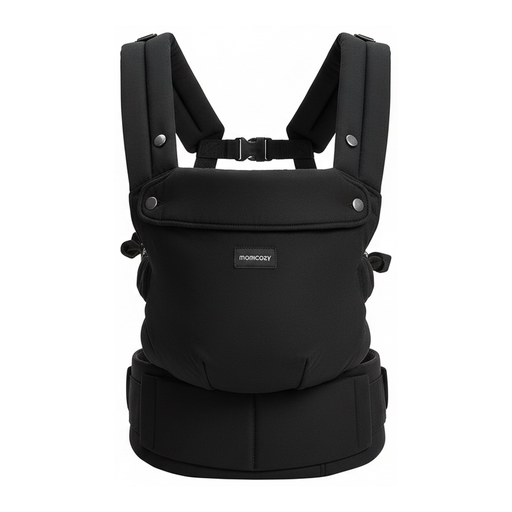
Why It Stands Out: This carrier is a fantastic all-rounder, made from 100% soft cotton. Its design focuses heavily on the wearer's comfort, featuring an X-shaped back support system that distributes weight more evenly than traditional H-straps. The built-in EVA waist support provides noticeable relief for the lower back.
Pros:
Who is it for? Parents looking for a straightforward, comfortable and supportive cotton carrier for daily activities, from school runs to trips to the shops.
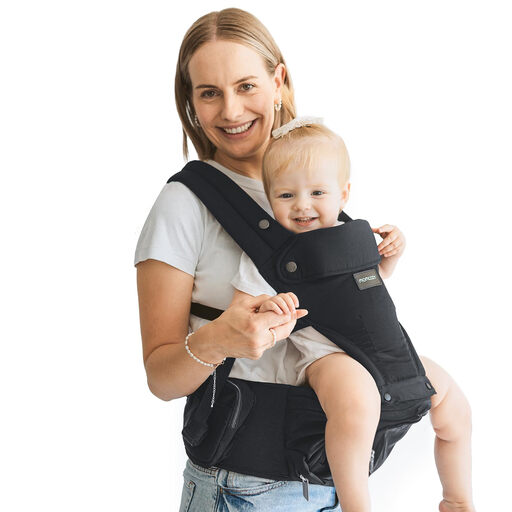
Why It Stands Out: This carrier offers exceptional versatility with its 2-in-1 design. It functions as a full structured baby carrier or a standalone hip seat. The hip seat provides a firm, wide base for your baby to sit on, which is excellent for promoting the M-position and taking weight off your arms during quick up-and-downs. With six different carrying positions, it adapts to nearly any situation.
Pros:
Who is it for? Families who want a single, highly adaptable carrier that can be used in multiple ways as their child grows from a baby into a heavy toddler.
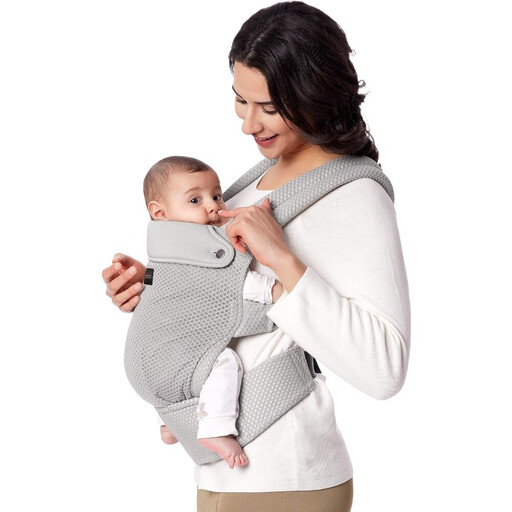
Why It Stands Out: Specifically designed for warmer weather and active parents, this breathable baby carrier features a large Air Mesh panel and cooling fabric around the neck area. It maintains all the ergonomic benefits of the other models, including the X-shaped back and EVA waist support, but in a lightweight package that helps keep both parent and baby cool.
Pros:
Who is it for? Active parents, those living in warmer climates or anyone planning a summer holiday who needs a carrier that won't cause overheating.
While these are our top recommendations, every family's needs are unique. If you're looking for different styles, materials or features, we invite you to browse our complete collection.
Explore our full range of ergonomic baby carriers to find the perfect match for your family.
Most ergonomic carriers are designed to be used from the newborn stage, typically starting from a weight of around 3.2 kg (7 lbs). However, it is essential to check the manufacturer's specific guidelines for weight and age. Some models may require a separate infant insert for the smallest babies to ensure they are positioned correctly and safely.
To check for the correct 'M' position, ensure your baby's bottom is seated deeply in the carrier panel, lower than their knees. Their legs should be spread naturally around your torso, with their thighs fully supported from one knee to the other. This creates a visible 'M' shape and supports a healthy, gently curved 'C' shape for their spine.
A well-designed structured baby carrier for back pain can make a significant difference. Models that feature wide, padded waistbands with integrated lumbar support are specifically engineered to distribute your baby's weight across your hips and core, rather than concentrating it on your shoulders and upper back. This even distribution can substantially reduce strain and improve comfort during babywearing.