
24/7 Customer Support

Free returns

Same-day & Next-day Delivery

Quality Guaranteed

Unlock Your Welcome Offers: FREE Delivery | Up to 80% OFF | Free 30-day JoyPlus trial
Download the APP
Choosing an ergonomic baby carrier can feel overwhelming. The market is filled with promises of hands-free freedom and blissful bonding, but the reality for many UK parents is a carrier that gathers dust after a few uncomfortable outings. The right carrier can be a game-changer for navigating daily life with your little one, but falling into common purchasing traps can lead to wasted money and a sore back.
As the Joybuy Product Recommendation Officer, my role is to help you see past the marketing clutter. Before you buy, be aware of these frequent pitfalls:
To make a confident choice, focus on a few core features that determine comfort, safety and usability. These are the non-negotiables that separate a well-designed carrier from a disappointing one.
The single most important feature of an ergonomic baby carrier is its ability to support your baby in the natural "M" position. This means your baby's bottom sits lower than their knees, with their thighs supported from one knee to the other. This posture is widely recognised for promoting healthy hip and spine development. When assessing a carrier, look for an adjustable seat that can be widened as your baby grows to maintain this crucial knee-to-knee support.
True relief from back pain comes from effective weight distribution, not just padding. A high-quality baby carrier with lumbar support will have a system designed to shift the load from your shoulders and back to your hips, which are much better equipped to carry weight. Look for two key features:
The right fabric makes all the difference to comfort. For all-season use, 100% cotton is a reliable choice, offering softness and a good degree of breathability. For parents with a more active lifestyle or for use during warmer months, a breathable baby carrier featuring Air Mesh panels is an excellent option. This technical fabric allows for significantly better airflow, keeping both you and your baby cooler and more comfortable. As a practical bonus, always check if the carrier is machine washable for easy cleaning.
Based on these essential criteria, here are a few recommendations matched to different parenting needs.
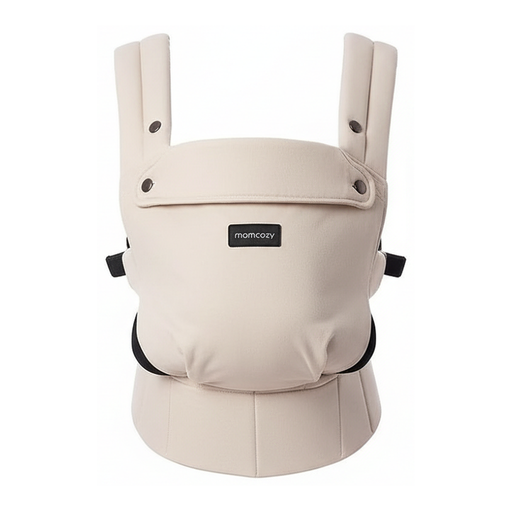
Why This Fits Their Persona: This is a dependable workhorse for daily life. It's ideal for school runs, trips to the supermarket and walks in the park. The neutral colour and soft cotton fabric make it a practical choice for any parent needing a reliable, hands-free solution.
It features a genuine weight distribution system with an X-shaped back and a structured EVA waist support panel, directly countering the "fake support" pitfall and helping to prevent back pain.
Made from 100% cotton for year-round comfort. It's an adjustable baby carrier for infants and toddlers, accommodating weights from 7-44 lbs (3.2-20 kg).
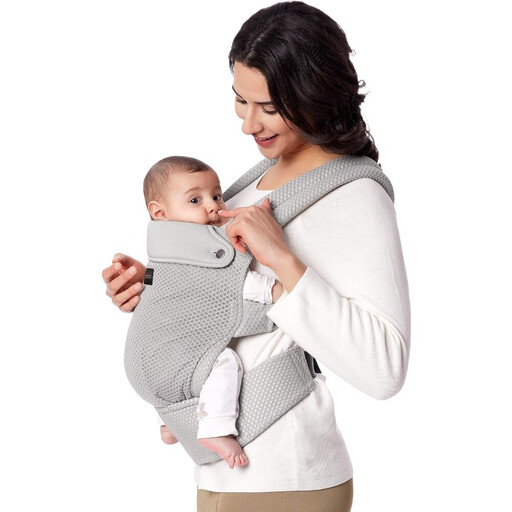
Why This Fits Their Persona: Perfect for parents who love getting outdoors, travelling or simply run warm. The mesh construction is a must-have for staying comfortable on hikes, navigating the London Underground in summer or holidaying abroad.
This carrier directly solves the "unsuitable material" pitfall. Its Air Mesh panel and cooling neck fabric provide excellent ventilation, preventing overheating for both parent and child.
A truly lightweight baby carrier that is purpose-built for airflow and warm-weather comfort, without compromising on the essential ergonomic M-position or back support.
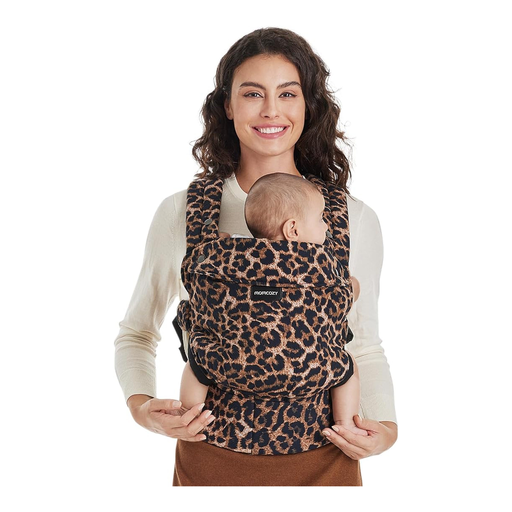
Why This Fits Their Persona: For the parent who sees baby gear as an extension of their personal style. This carrier delivers all the critical ergonomic and comfort features in a fashionable leopard print. It also makes for one of the most popular gifts for new mums.
It proves that you don't have to sacrifice safety for style. It fully supports the M-position and has the same robust back support system, avoiding both the "dangling legs" and "fake support" traps.
Combines a bold, stylish design with the full suite of ergonomic features. The 100% cotton material ensures it remains comfortable and practical for everyday wear.
We have compiled a complete, real-time list of products that fully satisfy these strict selection criteria and UK safety regulations.
To check for the correct M-position, look at your baby in the carrier from the side. Their bottom should be sitting at a lower level than their knees and the carrier's fabric panel should comfortably support their thighs from one knee to the other. Their back should have a gentle 'C' curve. A well-fitted carrier will hold them securely against your body.
Many structured carriers are designed to be used from the newborn stage, but you must always check the manufacturer's minimum weight requirement. For example, the carriers featured here are suitable from 7 lbs (approx. 3.2 kg). For a newborn baby carrier, it is vital to ensure the baby has adequate head and neck support and that their airway is always clear and visible. Never use a carrier if your baby is below the specified weight limit.
Most modern fabric carriers are designed for convenience and are machine washable. However, always refer to the specific care label on your product. Generally, it is advisable to use a mild detergent on a gentle, cool cycle. Fasten all buckles and straps before washing to prevent them from getting damaged. Air drying is often recommended to help the carrier maintain its shape and structural integrity.