
24/7 Customer Support

Free returns

Same-day & Next-day Delivery

Quality Guaranteed

Unlock Your Welcome Offers: FREE Delivery | Up to 80% OFF | Free 30-day JoyPlus trial
Download the APP
Choosing ergonomic children’s writing tools involves more than picking a colourful pen or pencil case filler. The right shape, grip and writing resistance can make practice more comfortable for pre-school and primary-school children, while the wrong design may encourage an awkward hold or become unusable once the child’s hand becomes tired.
Parents, guardians, teachers and schools should also be cautious of product descriptions that use broad claims without explaining the practical details. Here are the common pitfalls and the specifications worth checking before buying.
A thick barrel does not automatically guide the fingers into a useful position. Check for a moulded, non-slip grip zone, rather than relying on the overall diameter. Recessed areas or a triangular shape may make finger placement clearer for children who are still developing their handwriting grip.
Some handwriting tools are shaped specifically for left- or right-handed users. A left-handed writing pen may have a different grip profile from a right-handed writing pen, so confirm the orientation before ordering. If several children will share the stationery, consider tools explicitly designed for both hand types.
A low purchase price can become less attractive if the pen needs replacing frequently or uses difficult-to-find refills. Check whether cartridges or leads are available, whether a sharpener is included and whether the product requires a particular refill format.
Writing feel depends on paper quality, ink flow, pressure and the child’s technique. Rollerball pens can offer a fluid line, but younger children may press heavily. A sturdy nib and a suitable grip are therefore important practical details, rather than simply relying on phrases such as “effortless writing”.
For early handwriting, look for a non-slip ergonomic grip that supports a relaxed hold without forcing the child’s fingers into an uncomfortable position. A dynamic tripod grip is commonly encouraged during handwriting development, but every child’s hand and learning needs differ. Tools should support practice rather than replace guidance from a teacher or occupational therapist.
A STABILO ergonomic pen, for example, may be available in left- and right-handed versions. The product listing should clearly state the intended orientation. This is particularly important when buying classroom quantities.
For an ergonomic mechanical pencil for children, lead diameter affects durability and the amount of pressure needed. A 3.15mm HB pencil uses a thicker lead than a standard mechanical pencil and is intended for early writing practice. HB provides a familiar balance between visible marks and a relatively firm line.
Check whether the lead is refillable and whether compatible refills are sold separately. A thick, break-resistant lead can reduce interruptions for children who press firmly, although no pencil lead should be described as impossible to break.
A children’s rollerball pen should have a nib that writes consistently without requiring excessive pressure. Look for refill information, nib protection and warnings about ink contact. Rollerball ink can feel smooth on ordinary school paper, but allow time for ink to dry before closing notebooks if smudging is a concern.
For colouring, choose pencils with a shape that remains useful after sharpening. Moulded grip zones along the shaft can be more practical than a smooth barrel that loses its original shape.
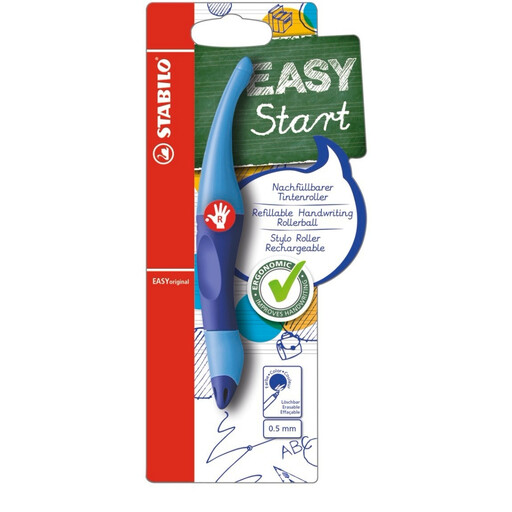
Why This Fits Their Persona: A practical starting point for a right-handed child moving from pencil practice to ink handwriting at home or school.
The listing identifies the right-handed design, moulded non-slip grip and replaceable medium-tip cartridges, making key ownership details clear.
Rollerball writing system; refillable design; sturdy metal nib and soft rubber grip zone.
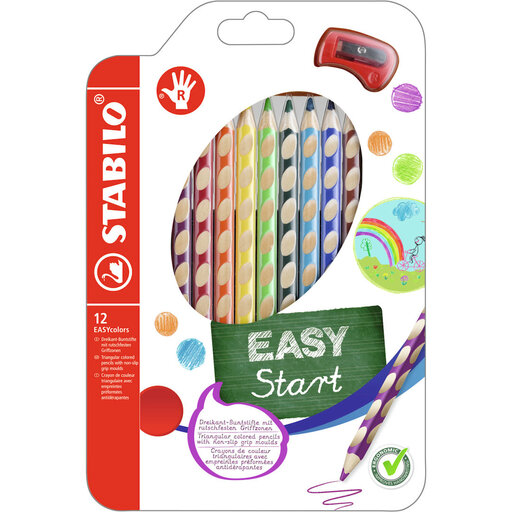
Why This Fits Their Persona: Suitable for families wanting a coordinated set for drawing, colouring and early pencil-control activities.
The triangular barrel and grip zones continue along the shaft, so sharpening does not remove the shaped holding areas.
Pack of 12 assorted colours; includes a sharpener; made from PEFC-certified wood according to the listing.
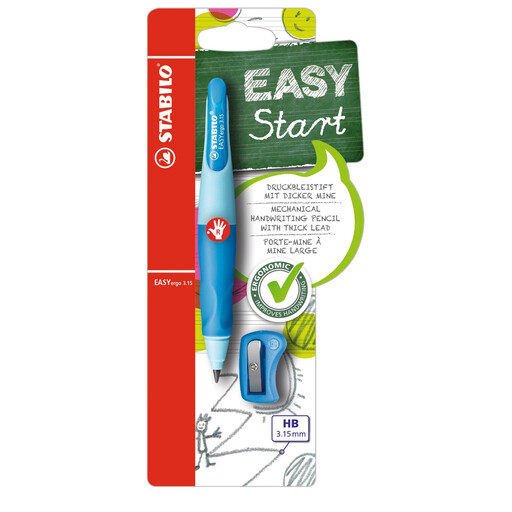
Why This Fits Their Persona: Designed for children who press firmly or complete regular handwriting practice and need a thicker, refillable lead.
Its 3.15mm HB lead, cushioned tip and refillable mechanism address common concerns around breakage and repeated replacement.
Right-handed grip profile; extra-thick HB lead; ergonomic sharpener included.
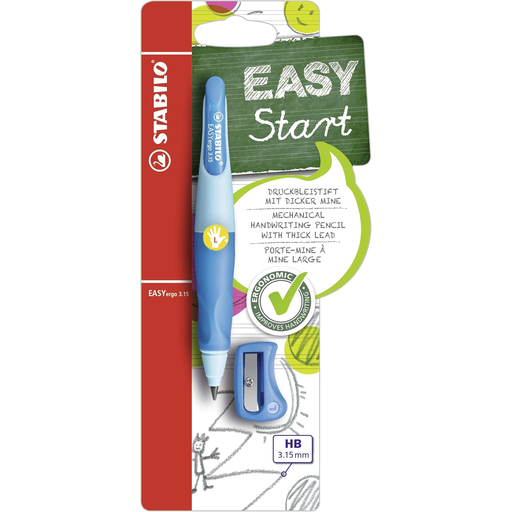
Why This Fits Their Persona: A focused option for a left-handed pre-school or primary-school learner beginning structured writing practice.
The left-handed orientation is stated clearly, while the shaped grip helps avoid buying a right-handed tool by mistake.
3.15mm HB lead; two-part child-friendly construction; supplied with an ergonomic sharpener.
They can be useful for children learning pencil control, but comfort and grip preferences vary. Teachers, guardians or occupational therapists should observe how the child holds and uses the tool rather than assuming one design suits everyone.
A mechanical pencil body or rollerball pen can remain usable for a considerable period when kept clean and stored safely. Lifespan depends on pressure, chewing, drops, sharpening and refill availability. Replace consumable leads, cartridges and damaged components as needed.
Some initial prices may be higher than basic stationery, but refillable rollerball pens and mechanical pencils can reduce full-item replacements. Before buying, compare the cost and availability of compatible cartridges or 3.15mm HB lead refills.