
24/7 Customer Support

Free returns

Same-day & Next-day Delivery

Quality Guaranteed

Unlock Your Welcome Offers: FREE Delivery | Up to 80% OFF | Free 30-day JoyPlus trial
Download the APP
The shift towards remote and hybrid work has made one thing clear: the standard dining chair is not a substitute for a proper office chair. If long hours at your desk are resulting in persistent backache, neck strain or general discomfort, it might be time to consider an upgrade. An ergonomic office chair is not just a piece of furniture; it is an investment in your daily comfort, posture and productivity.
This guide is designed to help you understand the key features to look for in an ergonomic chair. We will walk you through essential considerations and present some of our top recommendations to help you find a model that suits your needs and supports your well-being.
Navigating the market for an ergonomic chair can be overwhelming. To simplify your search, focus on these practical aspects that make a significant difference in day-to-day use.
A truly ergonomic chair adapts to you, not the other way around. Look for a highly adjustable office chair with multiple points of customisation. Key features to check for include:
The material of your chair affects both comfort and maintenance. A mesh office chair is a popular choice in the UK for its breathability, which helps regulate temperature during long work sessions. The tension of the mesh also provides firm, consistent support. Fabric and leather chairs offer a different feel, often with more cushioning, but may retain more heat.
For peace of mind, look for chairs that meet recognised industry standards. Certifications like BIFMA (Business and Institutional Furniture Manufacturers Association) and T?V indicate that the chair has undergone testing for safety, durability and structural integrity. This is a good indicator that the swivel chair with armrests and its components are built to last.
Here are a few standout options that offer a strong combination of ergonomics, adjustability and build quality.
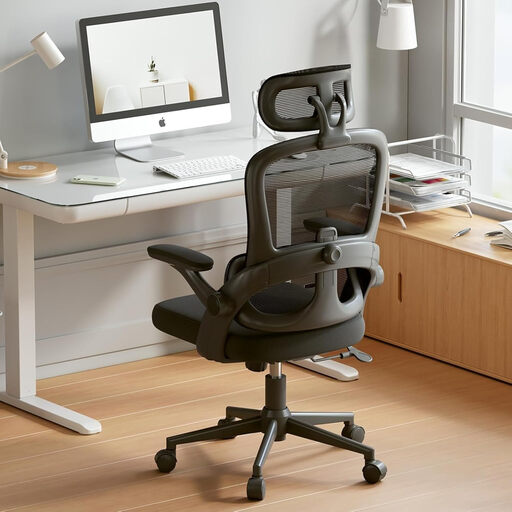
Why It Stands Out: The SIHOO M102C is a versatile home office chair that balances comprehensive support with space-saving features. Its key strength lies in the separately adjustable lumbar support, which can be moved vertically by 6 cm to provide targeted relief to the lower back.
Pros:
Who is it for? This chair is an excellent choice for individuals in a multi-use space, such as a home office, who need a functional work chair that can be stored neatly. Its specific lumbar adjustment also makes it a strong contender for those seeking an ergonomic chair for back pain.
View Details for the SIHOO M102C

Why It Stands Out: The M57S model from SIHOO office chair range focuses on dynamic support with its S-shaped backrest that mimics the human spine. The inclusion of 3D armrests—which adjust up/down, forward/back and rotate—provides exceptional support for your arms and shoulders during various tasks.
Pros:
Who is it for? Professionals who spend the majority of their day at a computer will appreciate the multi-angle support from the 3D armrests and the spinal alignment offered by the S-shaped back. It is a solid all-rounder for a dedicated office environment.
View Details for the Sihoo M57S
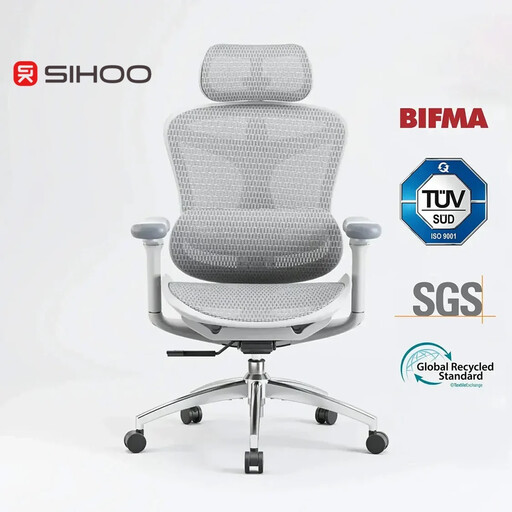
Why It Stands Out: The Doro C300 incorporates several advanced technologies, including a self-adaptive lumbar support system that moves with your body to provide continuous support. Its intelligent weight-sensitive mechanism automatically adjusts the recline tension, creating a balanced and effortless experience.
Pros:
Who is it for? This chair is geared towards users who want a highly responsive and intuitive seating experience without constant manual adjustments. Its dynamic support systems make it ideal for those who shift and move frequently throughout the day.
View Details for the SIHOO Doro C300
Finding the right ergonomic office chair is a great first step towards a more comfortable and productive workspace. To complete your setup, you might also consider an adjustable desk or other innovative furniture.
Explore our collection of 3D Tables to build an environment that fully supports your health and focus.
1. What is the most important feature in an ergonomic chair for back pain? While all adjustments are important, the most critical feature for back pain is the lumbar support. A chair with adjustable lumbar support allows you to position the cushion perfectly to support the natural inward curve of your lower spine, which helps reduce strain and encourages better posture.
2. Is a mesh office chair a better choice than a fabric one? This often comes down to personal preference. Mesh chairs offer superior breathability, which is a significant advantage for anyone who tends to feel warm while working. The firm support of the mesh can also be beneficial for posture. Fabric chairs, on the other hand, typically have thicker cushioning, which some users find more comfortable for extended periods.
3. How long should a good ergonomic office chair last? A well-made ergonomic chair should last between 7 to 10 years with regular use. Durability depends on the quality of the materials, the construction and the certifications it holds (like BIFMA). Chairs with robust warranties, often covering parts like the gas lift and armrests for several years, are generally a reliable indicator of longevity.