
24/7 Customer Support

Free returns

Same-day & Next-day Delivery

Quality Guaranteed

Unlock Your Welcome Offers: FREE Delivery | Up to 80% OFF | Free 30-day JoyPlus trial
Download the APP
Spending hours at a desk, whether for work or study, can take a toll on your body. The familiar aches in your lower back, the strain in your neck and the general discomfort can disrupt focus and productivity. A standard chair often isn't designed for prolonged use, which is why selecting the right ergonomic office chair is not a luxury, but a practical necessity for a comfortable and supportive workspace.
This guide is designed to help you navigate the key features of ergonomic chairs and highlight some recommended options, so you can make an informed choice for your home office chair or workplace setup.
Choosing a chair can feel overwhelming with all the features and specifications available. Here are a few key considerations to simplify your decision-making process.
A truly ergonomic chair adapts to you, not the other way around. Look for an adjustable office chair that allows you to customise several key areas. Essential adjustments include:
Persistent lower back pain is one of the most common complaints from desk workers. A computer chair with lumbar support is designed to help maintain the natural curve of your spine. The support should fit snugly into the small of your back. For personalised comfort, consider chairs with height-adjustable lumbar support, allowing you to position it exactly where you need it most.
The materials of your chair affect both comfort and durability. A mesh office chair is a popular choice in the UK for its breathability, which helps regulate temperature during long sessions. The frame and base are equally important. Look for chairs that meet recognised safety and durability standards, such as TUV certification or BIFMA (Business and Institutional Furniture Manufacturers Association) standards, which indicate the chair has been tested for performance and stability.
Based on features that prioritise support, adjustability and user comfort, here are our recommendations.
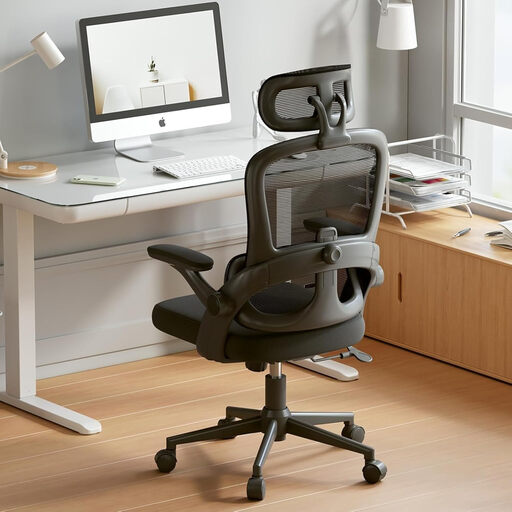
Why It Stands Out: The SIHOO office chair M102C model provides a comprehensive suite of ergonomic features. Its standout element is the separately adjustable lumbar support, which can be moved up and down by 6 cm to provide targeted relief for your lower back. Combined with a high back, adjustable headrest and versatile armrests, it offers full-body support.
Pros:
Who is it for? This chair is well-suited for professionals and students who spend long hours at their desks and require a highly customisable seating solution to alleviate back and neck strain.
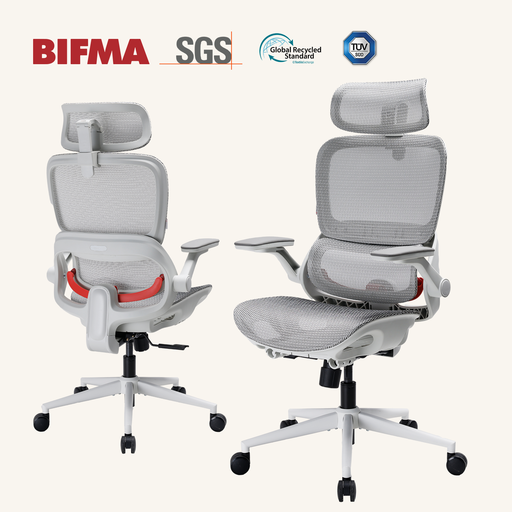
Why It Stands Out: The SIHOO B100 Ultra focuses on dynamic support with its adaptive lumbar support system, which automatically adjusts to your posture as you move. The 360° rotatable flip-up armrests offer exceptional flexibility, providing support when needed and moving completely out of the way when not. Its wide headrest provides ample neck and head support, making it a great swivel task chair for varied activities.
Pros:
Who is it for? Ideal for users in a dynamic work environment who frequently change tasks and postures. The advanced armrest and lumbar systems cater to those who value responsive, flexible support.
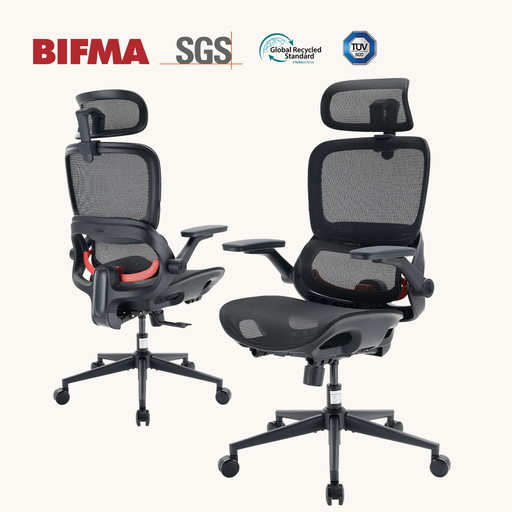
Why It Stands Out: This chair shares the same excellent features as its light grey counterpart—including the adaptive lumbar support and 360° rotatable flip-up armrests—but comes in a classic ebony finish. This colourway offers a sophisticated and professional look that fits seamlessly into a wide range of office and home study decors.
Pros:
Who is it for? This is a great option for those who appreciate the advanced features of the SIHOO B100 Ultra but prefer a darker, more traditional colour for their workspace.
If these recommendations aren't quite what you're looking for, or if you'd like to compare more styles, there are many other chairs available. Different designs offer unique combinations of materials, adjustments and aesthetics.
Explore our full range of mesh swivel chair options to find the ideal fit for your workspace.
While it depends on individual needs, adjustable lumbar support is arguably one of the most critical features. It directly addresses one of the most common issues of prolonged sitting—lower back pain—by helping to maintain the natural curvature of your spine. Overall adjustability is a close second, as a chair is only ergonomic if it can be tailored to your specific body shape and size.
Neither is definitively "better"; they simply serve different preferences. Mesh chairs offer superior breathability, which helps keep you cool and is ideal for warmer environments or for people who tend to overheat. Leather chairs often have a more traditional, executive look and can feel more plush, but they are less breathable and may require more maintenance.
A well-made ergonomic chair should last for several years. Durability often depends on the quality of the materials and construction. Look for chairs with a solid warranty (e.g., 3 years or more) and certifications like BIFMA, which tests for durability over a simulated 10-year period of use. Regular checks to tighten screws and components can also extend its lifespan.