
24/7 Customer Support

Free returns

Same-day & Next-day Delivery

Quality Guaranteed

Unlock Your Welcome Offers: FREE Delivery | Up to 80% OFF | Free 30-day JoyPlus trial
Download the APP
Spending hours at a desk is a modern reality for many of us, whether we're working from home, studying or gaming. The wrong chair can lead to nagging back pain, stiff shoulders and a general sense of discomfort that disrupts focus. An ergonomic office chair isn't a luxury; it's a fundamental tool for maintaining good posture and productivity.
But with so many options available, choosing the right one can feel overwhelming. This guide is designed to help you understand the key features to look for in a quality desk chair and to present a few carefully selected options that balance comfort, style and function for your home workspace.
Before diving into specific models, let's cover a few essential considerations. Understanding these will help you identify a chair that truly fits your needs.
A chair is only ergonomic if it can be adjusted to fit your body. Look for an adjustable office chair with key customisable features. At a minimum, this should include seat height adjustment to ensure your feet can rest flat on the floor with your knees at a 90-degree angle. Many models also offer tilt tension and lock functions, allowing you to recline comfortably or sit upright. An office chair with arms is also beneficial, but check if the armrests are fixed or adjustable, as this can impact shoulder and neck comfort.
The backrest is crucial for spinal support. A high back office chair provides support for your entire back, including the shoulders and neck, making it ideal for those who spend very long hours seated or enjoy leaning back to think. A mid-back chair, on the other hand, supports the lumbar and mid-spine region. It's often more compact and can be a great choice for smaller spaces or for users who don't require full upper-back support.
The material affects both comfort and maintenance. A faux leather office chair offers a professional look that is durable and easy to wipe clean. Fabric chairs provide more breathability, but may be harder to maintain. Also, consider the base and wheels. A sturdy swivel office chair with smooth-rolling casters allows for easy movement around your workspace, making it a practical choice for any dynamic home office or study area.
Here are a few recommendations that cater to different needs, from professional aesthetics to feature-rich comfort.

Why It Stands Out: This chair combines a sleek, minimalist design with essential ergonomic features. Its one-piece moulded seat and high backrest create a clean silhouette, while the horizontal stitching on the black faux leather adds a touch of modern executive style.
Pros:
Who is it for? Home-based professionals seeking a stylish and supportive desk chair that fits well within a contemporary or minimalist office aesthetic without compromising on comfort during long workdays.
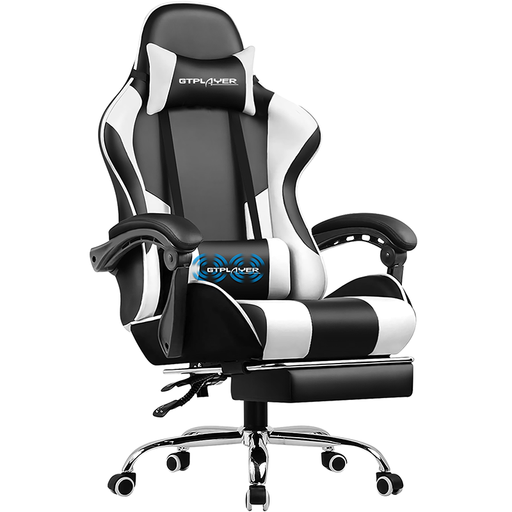
Why It Stands Out: For those who prioritise features and all-day comfort, this GTPLAYER model goes beyond a standard office chair. It includes a headrest, a vibrating lumbar massage cushion and a retractable footrest, making it a versatile seat for work, gaming and relaxation.
Pros:
Who is it for? Gamers, students or remote workers who spend extended periods at their desk and are looking for an ergonomic office chair with extra comfort features like massage, recline and leg support.
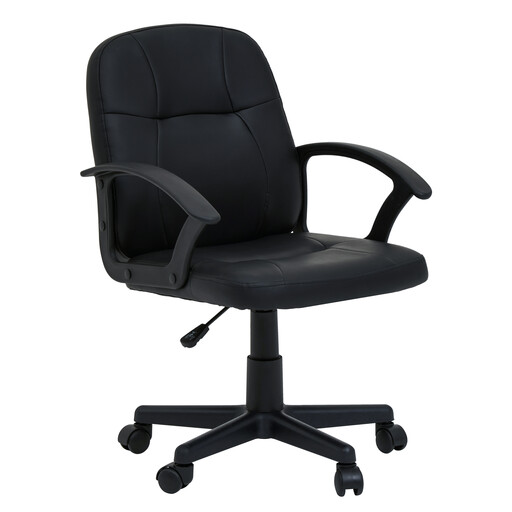
Why It Stands Out: This chair offers a practical and comfortable solution for smaller spaces. Its mid-back ergonomic design provides essential lumbar support without the larger footprint of a high-back model, making it an excellent choice for compact home offices or student rooms.
Pros:
Who is it for? Individuals with limited space who need a functional, comfortable and professional-looking home office chair that provides solid ergonomic support for daily tasks.
If these selections aren't quite what you had in mind, or if you'd like to explore different styles and materials, there are many other choices available.
Discover a wider selection of supportive and stylish seating in our Ergonomic Upholstered Chair category to find the perfect fit for your workspace.
An ergonomic chair is designed to support the human body and promote good posture. Key features typically include adjustable height, adequate lumbar support to maintain the natural curve of the spine and adjustable armrests. The goal is to reduce stress on the body and prevent discomfort during prolonged periods of sitting.
When sitting, your feet should be flat on the floor, with your thighs parallel to the ground and your knees at a roughly 90-degree angle. Your arms should also rest comfortably on the armrests, forming a similar 90-degree angle at the elbow when typing. Most quality office chairs offer seat height adjustment to help you achieve this position.
This depends on your needs. A high back office chair offers more comprehensive support for your entire spine, including your neck and shoulders, which is beneficial for long hours or for taller individuals. A mid-back chair provides excellent lumbar support and is often more compact and less visually imposing, making it a great fit for smaller rooms or for users with less intensive seating needs.