
24/7 Customer Support

Free returns

Same-day & Next-day Delivery

Quality Guaranteed

Unlock Your Welcome Offers: FREE Delivery | Up to 80% OFF | Free 30-day JoyPlus trial
Download the APP
Spending hours at a desk is a reality for many of us in the UK, whether we're in a corporate office or a makeshift home office. That familiar ache in your lower back or stiffness in your neck after a long day is a common complaint, but it doesn't have to be your normal. The right chair can make a significant difference to your comfort and focus.
As Joybuy's Product Recommendation Officer, my role is to sift through the options and present practical, effective solutions. This guide is designed to help you understand what truly matters in an ergonomic office chair and to highlight a few models that deliver on support and value, helping you make a confident choice for your workspace.
Navigating the market can be confusing. To simplify your search, focus on these key features that contribute most to comfort and good posture.
A truly ergonomic chair adapts to you, not the other way around. An adjustable desk chair is non-negotiable. Look for multiple points of adjustment to tailor the fit to your body shape and height. Key features include:
One of the most critical features is an office chair with lumbar support. This component is designed to fill the gap between the chair and the natural inward curve of your lower spine. Proper lumbar support helps maintain good posture, reducing strain and preventing the slouching that often leads to long-term back pain. Some chairs offer fixed support, while more advanced models provide height and depth adjustments for a more precise fit.
The material of your chair directly impacts your comfort during long work sessions. While leather and fabric have their place, a mesh computer chair offers superior breathability. The open-weave material allows for continuous airflow, which helps to dissipate heat and moisture, keeping you cool and comfortable, even on warmer days or during intense periods of focus.
Based on a balance of ergonomic features, adjustability and user-focused design, here are our recommendations for your home office chair setup.
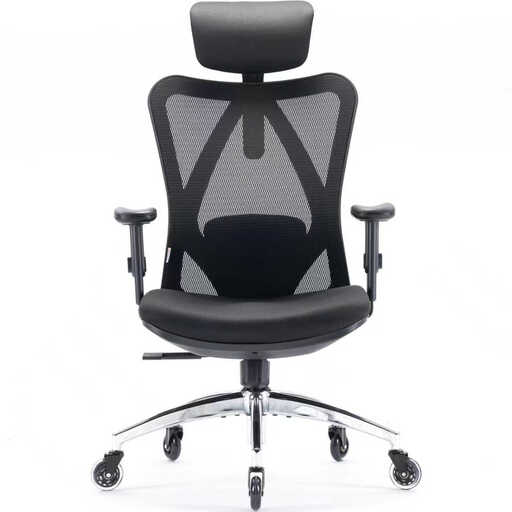
Why It Stands Out: The SIHOO M18 is a versatile all-rounder, offering five distinct ergonomic adjustment points. This allows for a highly personalised seating experience, from the headrest down to the seat height. The upgraded rollerblade-style wheels are a thoughtful touch, allowing for smooth, quiet movement across various floor types.
Pros:
Who is it for? This chair is an excellent choice for professionals and students who need a reliable and highly adjustable chair for daily, prolonged use. Its comprehensive customisation makes it suitable for a wide range of body types.

Why It Stands Out: The M59S distinguishes itself with an innovative dual-back design and adaptive lumbar support. This system moves with you, providing continuous support as you shift your posture. Another key feature is the 80° flip-up armrests, which allow the chair to be pushed neatly under a desk to save space.
Pros:
Who is it for? Ideal for those in smaller home offices or multi-use spaces where a small footprint is a priority. The dynamic back support also makes it a great option for active sitters who change positions frequently.
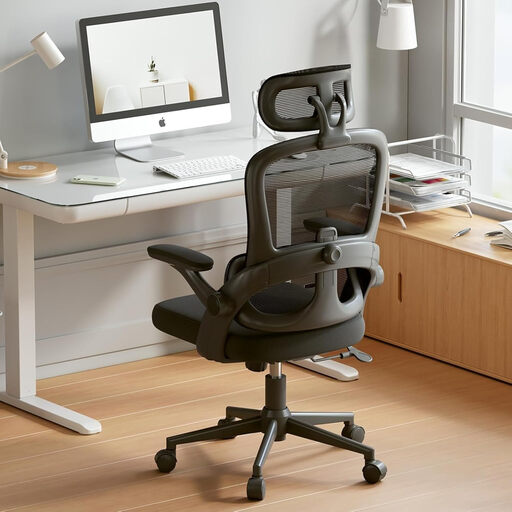
Why It Stands Out: The M102C focuses on targeted support, particularly with its separately adjustable lumbar support, which can be moved up or down by 6 cm to perfectly align with your lower back. It also features a wider and softer seat pad, designed to accommodate a broader range of body types and support up to 136 kg.
Pros:
Who is it for? This chair is particularly well-suited for individuals who need specific, targeted lower back support. The wider seat also makes it a comfortable choice for users with a larger frame.
While these recommendations offer excellent ergonomic features, your ideal chair also depends on personal preference and aesthetics. If you're still exploring or have a specific look in mind, our full collection offers a wider variety of styles and designs.
Discover more choices in our complete range of black computer chair options.
1. What is the most important feature of an ergonomic office chair? While overall adjustability is vital, dedicated and adjustable lumbar support is arguably the most critical feature. It directly addresses the lower back, which is one of the most common areas for pain and discomfort caused by prolonged sitting.
2. Is a mesh office chair better than a leather one? This often comes down to personal preference, but for functionality, a mesh computer chair generally offers better long-term comfort. Its breathability prevents heat and sweat build-up, which is a common issue with less breathable materials like leather or dense fabrics during long workdays.
3. How do I know if my office chair is set up correctly? A good starting point is the 90-degree rule: your knees should be bent at a 90-degree angle with your feet flat on the floor, and your elbows should be at a 90-degree angle when resting on the armrests. Your lower back should feel firmly supported by the lumbar cushion, and you should be able to sit all the way back in the chair.