
24/7 Customer Support

Free returns

Same-day & Next-day Delivery

Quality Guaranteed

Unlock Your Welcome Offers: FREE Delivery | Up to 80% OFF | Free 30-day JoyPlus trial
Download the APP
Spending long hours at a desk is a modern reality for many of us across the UK, whether we're in a corporate office, a home study, or a university library. This prolonged sitting can often lead to discomfort, back pain and poor posture. An ergonomic office chair isn't a luxury; it's a fundamental tool for maintaining comfort and well-being throughout your working day.
This guide is designed to help you navigate the options and understand what truly matters in a chair built for long hours of sitting. We'll break down the key features to look for and present some carefully selected recommendations to help you find a supportive and comfortable computer desk chair.
Choosing the right chair can feel overwhelming with all the technical terms and marketing jargon. Focusing on a few core principles can simplify the process and ensure you select a chair that genuinely meets your needs.
A one-size-fits-all approach doesn't work for seating. The core benefit of an ergonomic chair is its ability to adapt to your unique body shape and posture. Look for a range of adjustment points:
The materials of a chair affect both comfort and durability.
Based on their features, adjustability and user-focused design, here are our recommendations for 2026.

Why It Stands Out: The Dora S100's main strength lies in its highly adaptive support systems. The dual dynamic lumbar support uses a spring mechanism to automatically adjust to your posture as you move, providing constant and targeted support to the lower back. This is paired with 4D coordinated armrests that move in sync with the backrest when you recline, ensuring your arms and shoulders remain supported in any position.
Pros:
Who is it for?: Professionals and remote workers who value a chair that actively responds to their movements and require precise, dynamic support throughout the day.
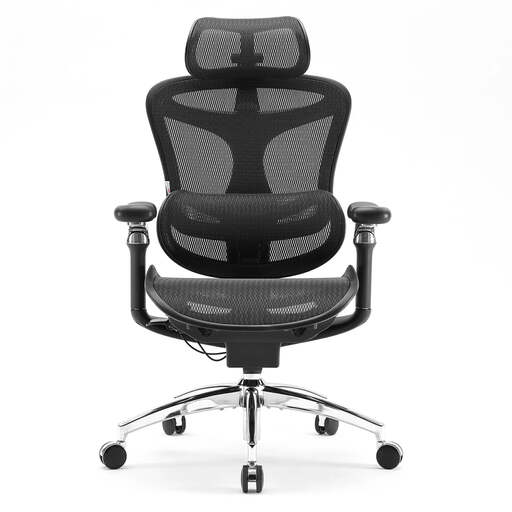
Why It Stands Out: The Doro C300 Pro elevates adjustability with its advanced 6D coordinated armrests, offering an exceptional range of motion to support your arms during various tasks, from typing to using a tablet. Its self-adaptive dynamic lumbar support provides responsive, flexible comfort, while the high-elasticity wave mesh ensures both breathability and even pressure distribution.
Pros:
Who is it for?: Demanding users and individuals who spend very long hours at their desk and need the highest level of arm, shoulder and back support. It's an excellent ergonomic chair for a home office where versatility is key.
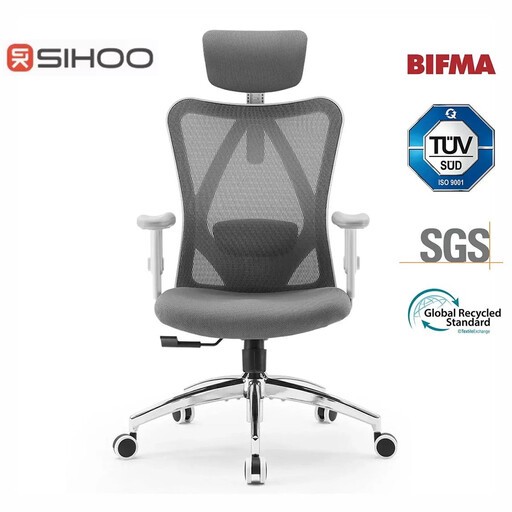
Why It Stands Out: The Sihoo M18 is a fantastic all-rounder that delivers the essential ergonomic features without being overly complex. It offers 5 key ergonomic adjustment points, including the backrest, headrest, lumbar support, seat height and armrests. Its W-shaped padded seat is designed to centre you comfortably, while the breathable mesh backrest maintains airflow.
Pros:
Who is it for?: Anyone seeking a reliable and highly functional Sihoo office chair that covers all the ergonomic bases. It's an ideal choice for a first-time buyer of an ergonomic chair or for outfitting a home office with a solid, comfortable seating solution.
These recommendations represent a fraction of the available choices. Every individual has unique needs when it comes to seating comfort and support. If you're looking for different styles, materials or feature sets, we invite you to browse our complete collection.
Explore our full range of ergonomic office chairs with lumbar support to find the perfect match for your workspace.
1. How many hours a day is it safe to sit in an ergonomic chair? While an ergonomic chair is specifically designed to provide support for long hours sitting, it's still advisable to stand up, stretch and move around for a few minutes every hour. The chair's function is to minimise strain and discomfort during the time you are seated, not to eliminate the need for regular movement.
2. Is a mesh or foam office chair better? This comes down to personal preference and environment. A mesh office chair provides excellent breathability, making it ideal for keeping cool. It offers firm, contouring support. A chair with a high-density foam cushion provides a softer, more padded feel, which some users prefer. The most important factor is that the material is high-quality and provides durable support.
3. What is the most important feature in an ergonomic chair for home office use? For a typical ergonomic chair for home office use, the most crucial feature is arguably adjustable lumbar support. Poor posture and lower back pain are common complaints from prolonged desk work, and having support that can be tailored to the specific curve of your spine makes a significant difference in comfort and long-term spinal health.