
24/7 Customer Support

Free returns

Same-day & Next-day Delivery

Quality Guaranteed

Unlock Your Welcome Offers: FREE Delivery | Up to 80% OFF | Free 30-day JoyPlus trial
Download the APP
For many of us in the UK, long hours spent at a desk are a daily reality. Whether you are working from a home office, studying or gaming, the chair you sit in has a significant impact on your comfort and well-being. An unsuitable chair can contribute to persistent back pain, poor posture and a general feeling of fatigue.
Finding a supportive and comfortable chair for long hours can feel overwhelming with all the marketing noise. This guide is designed to cut through the clutter, offering practical advice to help you select an ergonomic office chair that genuinely meets your needs. We will focus on key features, quality indicators and present a few carefully considered options to support your workday.
Before looking at specific models, it is helpful to understand what makes an office chair truly ergonomic. Here are a few key factors to consider during your search.
A one-size-fits-all approach does not work for seating. An adjustable office chair allows you to tailor the fit to your specific body shape and desk setup. Look for multiple points of adjustment, including:
desk chair with adjustable arms helps to reduce tension in your shoulders and neck. Look for height, pivot and forward/backward adjustments.high back computer chair with an adjustable backrest and computer chair with headrest provides full spinal support, which is particularly beneficial during long sessions.The material of your chair affects both comfort and maintenance. While leather and fabric have their place, a mesh office chair with lumbar support offers distinct advantages. The woven material allows for continuous airflow, which helps to keep you cool and comfortable, especially during warmer months or in a busy office environment. It is also durable and easy to clean.
Certifications from recognised bodies can be a reliable indicator of a chair's durability and safety. Look for mentions of BIFMA (Business and Institutional Furniture Manufacturers Association) or SGS certification. These standards involve rigorous testing for load capacity, stability and durability, ensuring the chair is built to withstand regular, long-term use.
Based on the principles of adjustability, support and quality, here are our recommendations for your home office chair setup.
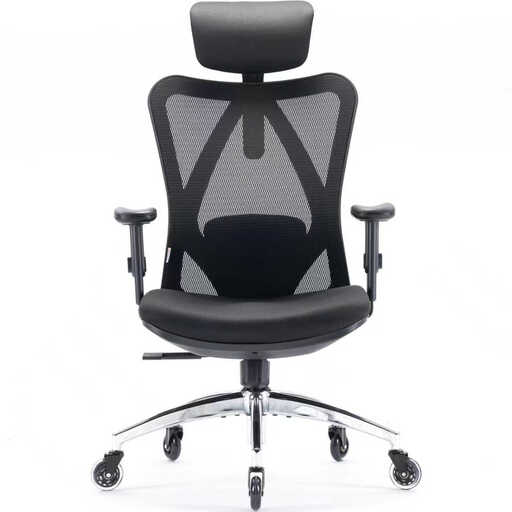
Why It Stands Out: The SIHOO M18 is a versatile all-rounder that balances a comprehensive feature set with practical design. It offers five distinct ergonomic adjustment points, including the headrest, backrest and armrests, allowing for a highly personalised fit. The high-quality breathable mesh backrest promotes excellent airflow, while the W-shaped padded seat is designed to encourage a central sitting position and reduce pressure on the legs.
Pros:
Who is it for? This is an excellent choice for professionals and students looking for a reliable and highly adjustable ergonomic desk chair for daily, prolonged use in a home or office setting.

Why It Stands Out: The Doro C300 incorporates several advanced technologies for a responsive seating experience. Its standout feature is the self-adaptive lumbar support, which moves with your body to provide continuous support as you shift positions. The chair also includes soft 3D armrests that adjust in three directions and an intelligent weight-sensitive mechanism that automatically balances the recline tension.
Pros:
Who is it for? Ideal for users who prioritise cutting-edge ergonomic technology and want a chair that actively adapts to their movements throughout the day. A strong contender for anyone seeking an office chair for back pain prevention.
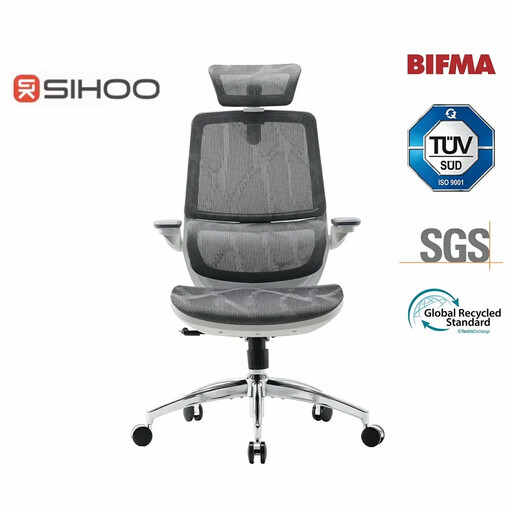
Why It Stands Out: The SIHOO M59S is designed with both comfort and spatial efficiency in mind. Its most notable feature is the 80° flip-up armrests, which allow the chair to be pushed neatly under a desk to save space. The dual-back design and adaptive lumbar support work together to conform to your back's natural curve. The wide, saddle-shaped seat cushion helps distribute weight evenly, enhancing comfort during long periods of sitting.
Pros:
Who is it for? A great option for those with limited space in their home office who do not want to compromise on ergonomic features. The flip-up arms also offer greater freedom of movement for tasks that require it.
While these SIHOO office chair models represent excellent choices for different needs, we understand that everyone's preferences are unique. If you are looking for different styles, materials or feature combinations, there are many other possibilities to consider.
For a wider selection of seating solutions, explore our full range of Desk Chair with Arms.
1. How long should an ergonomic office chair last? The lifespan of an ergonomic chair depends on its build quality, materials and frequency of use. A chair with a sturdy frame and high-quality components, especially one that is BIFMA certified, can be expected to last for many years with proper care. Regularly checking and tightening screws will also help maintain its stability and longevity.
2. Is a mesh office chair better for back pain? A mesh office chair with lumbar support can be an excellent choice for managing or preventing back pain. The key factor is not the mesh itself, but the quality and adjustability of the lumbar support system. Mesh provides the added benefit of breathability, which enhances overall comfort, but the chair's ability to support the natural curve of your spine is what truly matters for back health.
3. Can an ergonomic chair really improve posture? Yes, a well-designed ergonomic office chair can significantly help improve posture. By providing proper support for your spine, particularly the lumbar region, it encourages you to sit upright and reduces the tendency to slouch. When adjusted correctly to your body and desk height, it helps align your spine, neck and shoulders, promoting a healthier posture over time.