
24/7 Customer Support

Free returns

Same-day & Next-day Delivery

Quality Guaranteed

Unlock Your Welcome Offers: FREE Delivery | Up to 80% OFF | Free 30-day JoyPlus trial
Download the APP
As many of us continue to spend a significant portion of our day seated, the conversation around the right home office chair for back pain has shifted from a luxury to a necessity. Yet, the market is flooded with options that promise comfort but often fail to deliver. Choosing the right ergonomic office chair with lumbar support is about understanding a few key principles, not just falling for marketing buzzwords.
Before you invest, it's crucial to recognise the common pitfalls that lead to buyer's remorse. Many chairs are labelled "ergonomic" without meeting any certified standards and others feature design flaws that can worsen discomfort over time.
To find a computer chair for long hours that genuinely supports your well-being, you need to look past the surface-level features. Focus on the engineering and adjustability that define a high-quality ergonomic chair.
The most critical feature is a lumbar support system that does more than just exist. Look for a system that is dynamic, meaning it adapts and moves with you as you shift your posture throughout the day. Furthermore, it must be adjustable. At a minimum, you should be able to change the height of the support to match the curve of your lower back. Advanced systems also allow for depth adjustment, letting you control the amount of pressure applied. This ensures the support is tailored to your body, providing consistent contact and relief.
A chair is only as good as its ability to conform to your body and this goes beyond the lower back. Key areas of adjustability are non-negotiable for long-term comfort:
adjustable armrest office chair helps reduce strain on your shoulders and neck by allowing your arms to rest comfortably at a 90-degree angle while you type or work.high back mesh office chair should offer adjustable height to support your entire spine, including the thoracic and cervical regions. A quality recline mechanism, with tension control and multiple locking positions, allows you to change your posture safely throughout the day, relieving pressure from your spinal discs.We have identified products that align with these core principles, matching them to different user needs and priorities.
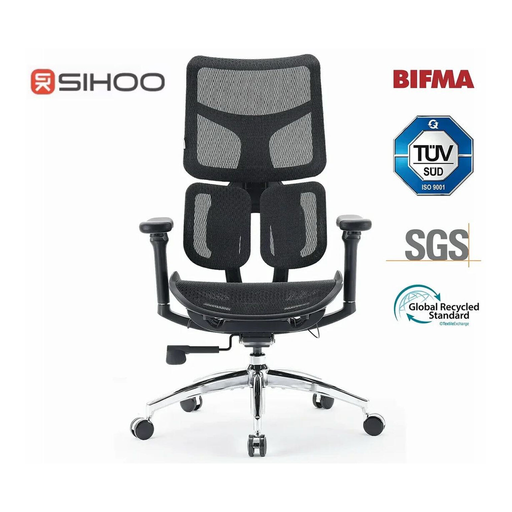
Why This Fits Their Persona: This user prioritises advanced engineering and long-term durability. The Doro S100 is built for those who spend over 8 hours a day at their desk and require a highly responsive, fully adjustable seating solution to prevent chronic discomfort.
It directly counters the "fixed support" fallacy with its dual dynamic lumbar system that automatically adjusts to your posture. Its BIFMA and SGS certifications prove it is more than just a marketing claim of "ergonomic".
The 4D coordinated armrests move with the backrest during recline, providing continuous shoulder and arm support. The breathable mesh and adjustable backrest height accommodate a wide range of body types (150cm-190cm).
Why This Fits Their Persona: This user needs a reliable chair for a new home office or study setup without a premium budget. They are looking for the essential ergonomic features that provide a significant upgrade over a standard dining chair.
Even at a lower price point, you can avoid the "ergonomic illusion" by prioritising chairs that list BIFMA certification. This ensures the gas lift, castors and base have passed safety and durability tests.
Focus on finding a chair with, at minimum, adjustable lumbar support height and a synchronous-tilt mechanism. This provides foundational ergonomic comfort and encourages healthy movement.
We have compiled a complete, real-time list of products that fully satisfy these strict selection criteria and UK safety regulations.
The lifespan of an ergonomic chair depends on its build quality and materials. A chair with a sturdy aluminium frame and high-quality components certified by BIFMA is typically tested for durability and should last for many years. Look for warranties that cover key parts like the gas lift, mechanism and frame for at least 3-5 years as an indicator of the manufacturer's confidence in their product.
Both materials have their benefits. A high back mesh office chair offers superior breathability, which is ideal for keeping you cool during long hours of sitting. The tension of the mesh can also provide firm, conforming support. Fabric chairs, on the other hand, can offer more plush cushioning. For back pain, the most important factor is not the material itself, but the underlying support structure and adjustability of the chair.
First, sit back in the chair so your spine is flush against the backrest. Adjust the height of the lumbar support so it fits comfortably into the natural curve of your lower back (the lordotic curve). It should feel supportive, not forceful. If your chair has depth adjustment, set it so you feel gentle pressure that encourages an upright posture without pushing you forward off the seat. Your feet should be flat on the floor and your knees at a roughly 90-degree angle.