
24/7 Customer Support

Free returns

Same-day & Next-day Delivery

Quality Guaranteed

Unlock Your Welcome Offers: FREE Delivery | Up to 80% OFF | Free 30-day JoyPlus trial
Download the APP
Spending hours at a desk is a reality for many of us across the UK, whether in a corporate setting or a carefully arranged home office. The consequence is often a familiar collection of aches: a nagging lower back, tense shoulders and a stiff neck. An unsuitable chair is frequently the culprit, failing to provide the support needed for prolonged periods of sitting.
This guide is designed to help you navigate the features that truly matter in an ergonomic office chair. We will break down the essential elements to look for and present a few carefully selected options that cater to different needs and preferences, helping you make an informed choice for your comfort and well-being.
Choosing the right chair involves more than just picking one that looks comfortable. Here are a few key considerations to guide your purchase.
The core principle of ergonomics is adaptability. A one-size-fits-all approach rarely works. Look for a chair with multiple adjustment points, including:
A quality computer chair with lumbar support is non-negotiable for anyone sitting for long hours. The ideal support is not just a static cushion but is adjustable in height and depth to match the natural curve of your spine. Some advanced models offer dynamic support that moves with you.
The durability of a chair is determined by its materials and construction. For a long-term investment, consider the following:
While not essential for everyone, certain features can significantly enhance comfort. A high back office chair provides full-spinal support, including the shoulders and neck, which is particularly beneficial for taller individuals or those who enjoy reclining.
For ultimate relaxation during breaks, a reclining desk chair with footrest allows you to fully stretch out. This feature transforms your workspace chair into a multi-purpose seat for work and rest, helping to reduce fatigue during a long day.
Based on the criteria above, here are our recommendations for individuals seeking to upgrade their seating for a more comfortable workday.
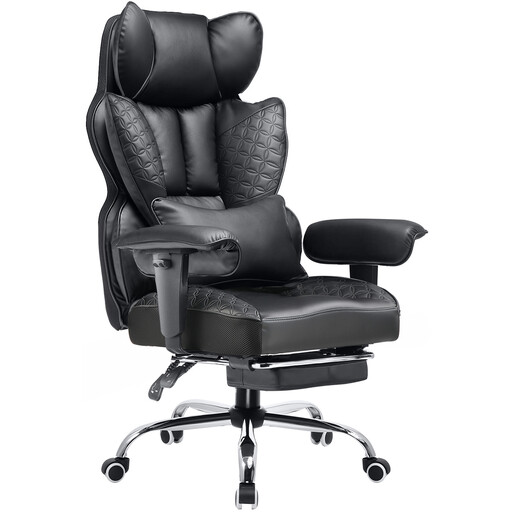
Why It Stands Out This chair is built with comfort and durability at its core. Its heavy-duty construction and generous proportions make it an excellent choice for taller or heavier users. The smooth PU leather gives it a classic executive feel, while the integrated footrest and deep recline function (up to 155 degrees) offer a level of relaxation not found in standard office chairs. It’s a true workhorse designed for both productivity and restorative breaks.
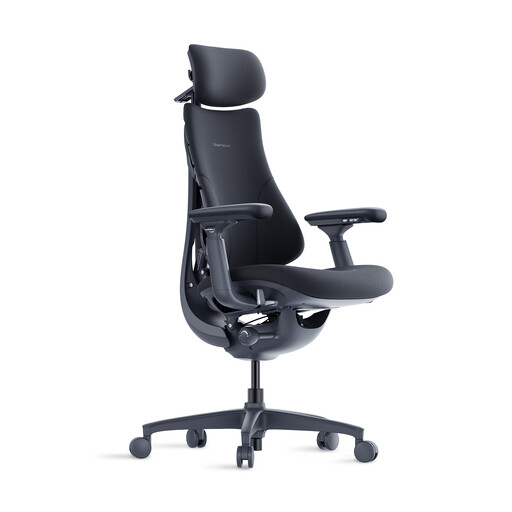
Why It Stands Out The LiberNovo Omni is engineered for the modern professional who spends an office chair for long hours in front of a screen. Its design prioritises responsive, dynamic support. The breathable mesh back adapts to your movements, while the advanced lumbar system provides targeted support right where you need it. With a full suite of adjustments, this chair can be fine-tuned to fit your body, promoting a healthy posture throughout the day.
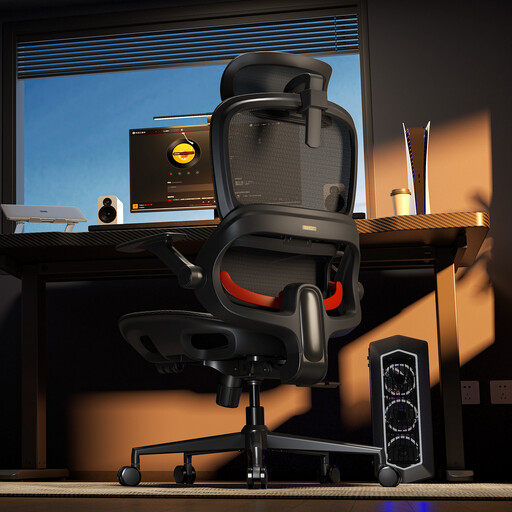
Why It Stands Out The SIHOO B100JT strikes an impressive balance between comprehensive features and practical design. It includes key ergonomic elements like an adaptive lumbar support system and a wide, adjustable headrest. A standout feature is its flip-up armrests, which allow the chair to be pushed neatly under a desk to save space. This model also offers the versatility of a retractable footrest, making it a fantastic all-in-one solution for work and relaxation.
While these chairs offer excellent support, the perfect setup is highly personal. If you already have a chair you like but want to enhance its comfort for relaxation, a dedicated footrest can be a great addition.
Explore our curated selection of footrests to find the perfect companion for your workspace.
1. How many hours a day is an ergonomic chair designed for? Ergonomic chairs are specifically designed to provide support for long hours of sitting, often 8 hours or more. However, the chair is only part of the solution. It is still vital to take regular breaks to stand, stretch and move around at least once an hour to promote circulation and prevent stiffness.
2. Is a high back office chair better? A high back office chair is generally better for taller individuals (over 6 feet) as it provides support for the entire spine, including the upper back, shoulders and neck. It is also beneficial for anyone who frequently uses the recline function. For users of average height or those who sit upright for most of the day, a mid-back chair can be perfectly adequate.
3. What is the most important feature in a computer chair with lumbar support? The single most important feature is adjustability. A fixed lumbar cushion may not align with your spine's natural curve. Look for support that can be adjusted for both height and depth. This allows you to position the support precisely in the small of your back, providing effective and personalised comfort. Dynamic support that moves with your body is an even more advanced option.