
24/7 Customer Support

Free returns

Same-day & Next-day Delivery

Quality Guaranteed

Unlock Your Welcome Offers: FREE Delivery | Up to 80% OFF | Free 30-day JoyPlus trial
Download the APP
As many of us in the UK spend an increasing number of hours at a desk, the familiar aches in the neck, shoulders and lower back have become an unwelcome part of the workday. An unsupportive chair can negatively impact not only your posture and physical well-being but also your focus and productivity.
Navigating the market for an ergonomic office chair can feel overwhelming. With so many features and technical terms, it’s hard to know what truly matters. As the Joybuy Product Recommendation Officer, my role is to help you understand the key features to look for, so you can make an informed choice for your home or office. This guide will walk you through essential considerations and highlight a few recommended models that prioritise comfort and support.
Before diving into specific products, it’s helpful to understand the core components that define a quality ergonomic chair. Focussing on these three areas will help you find a chair that adapts to you, not the other way around.
A truly adjustable office chair allows you to tailor it to your unique body shape and desk setup. Look for multiple points of adjustment beyond simple height control. Key features include:
A primary cause of desk-related discomfort is inadequate back support. A good office chair with lumbar support is crucial for maintaining the natural curve of your spine.
Consider a high back computer chair with an S-shaped backrest that mimics the human spine. Some chairs feature adjustable lumbar support that can be moved up or down to target the precise area of your lower back. More advanced models offer dynamic or self-adaptive lumbar systems that move with you, providing continuous support as you shift your posture.
The material of your chair affects both comfort and longevity. While leather and fabric have their place, a mesh office chair offers distinct advantages for long-term use. High-quality mesh provides firm, flexible support while promoting airflow. This breathability is particularly beneficial for staying cool and comfortable during long work sessions or in warmer environments. When assessing quality, look for chairs that meet industry standards like BIFMA (Business and Institutional Furniture Manufacturers Association), which certifies safety, durability and performance.
Based on the criteria of adjustability, support and quality construction, here are our recommendations for individuals seeking a long-term solution for their workspace.

Why It Stands Out: The Sihoo M57S is a well-rounded option that delivers a comprehensive set of ergonomic features. Its design focuses on providing full-body support, from the adjustable headrest down to the S-shaped backrest with adjustable lumbar support. The use of breathable polyester mesh makes it a practical choice for all-day comfort.
Pros:
Who is it for? This chair is an excellent fit for professionals and students looking for a versatile and highly adjustable home office chair. It provides a significant upgrade in comfort and support without venturing into the highest price bracket.

Why It Stands Out: The Doro C300 Pro represents a step up in ergonomic innovation, particularly with its ultra-soft 6D coordinated armrests that offer an exceptional range of motion for tailored arm support. Its self-adaptive dynamic lumbar support automatically adjusts to your posture, providing constant and responsive back relief.
Pros:
Who is it for? This model is designed for individuals who spend the majority of their day seated and demand the highest level of customisation. If you are looking to invest in a chair with cutting-edge adjustment capabilities to maximise comfort and minimise strain, the C300 Pro is a strong contender.
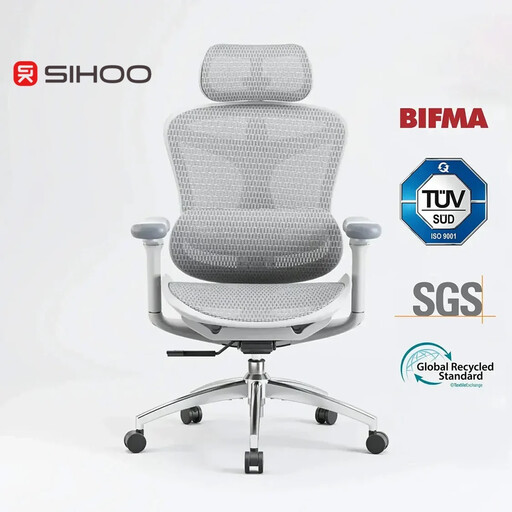
Why It Stands Out: The Doro C300 offers many of the advanced features found in the Pro model, including the self-adaptive lumbar support and intelligent weight-sensing mechanism. It provides a premium experience by balancing innovative technology with practical design, making it an excellent SIHOO office chair that bridges the gap between mid-range and top-tier models.
Pros:
Who is it for? This chair is ideal for users who prioritise the dynamic back support of the Doro series but do not require the extensive 6D armrest adjustability of the Pro version. It offers a sophisticated support system for a focused and comfortable workday.
Sometimes, a full chair replacement isn't necessary or you may be looking to enhance an existing seat. If you need more targeted relief for your lower back, an add-on support cushion can be an effective and affordable solution.
Explore our range of chair back supports to find a solution that fits your current setup.
The lifespan of an ergonomic chair depends on its build quality, materials and frequency of use. A well-constructed chair, particularly one with certifications like BIFMA, is tested for durability and can be considered a long-term investment, often lasting between 5 and 10 years. Manufacturer warranties, such as the 3-year warranty offered on the SIHOO models mentioned, are a good indicator of the brand's confidence in its product's longevity.
Neither is definitively "better," as the choice depends on personal preference and environment. A mesh office chair excels in breathability, preventing heat and moisture build-up during long hours of sitting. It also offers flexible, contouring support. Leather chairs provide a classic aesthetic and a plush feel but can feel warm and may require more maintenance over time. For most office and home-office environments in the UK, mesh is a very practical choice.
While it's difficult to name a single "most important" feature, adjustability is the foundation of good ergonomics. The ability to customise the chair to your body is paramount. Within that, the most critical areas for adjustment are typically the lumbar support, seat height and depth and armrests. A chair that allows you to fine-tune these three elements is most likely to provide a comfortable and supportive seating experience.