
24/7 Customer Support

Free returns

Same-day & Next-day Delivery

Quality Guaranteed

Unlock Your Welcome Offers: FREE Delivery | Up to 80% OFF | Free 30-day JoyPlus trial
Download the APP
Spending hours at a desk, whether in a home office or a traditional workplace, can take a toll on your body. An unsuitable chair often leads to back discomfort, neck strain and reduced productivity. An ergonomic office chair is not a luxury; it's a fundamental tool for maintaining comfort and focus throughout your workday.
This guide is designed to help you navigate the features that matter. We will outline key considerations for choosing the right home office chair and present a selection of models that prioritise support and adjustability, helping you make an informed decision for your well-being.
Choosing a computer chair for long hours involves more than just picking one that looks comfortable. Here are a few practical factors to consider to ensure you get the support you need.
A truly ergonomic chair adapts to you, not the other way around. Look for an adjustable desk chair with multiple points of customisation. Key features include:
The material of your chair affects both comfort and durability. A mesh office chair with lumbar support is a popular choice in the UK for its excellent breathability. The open weave allows for continuous air circulation, which helps regulate body temperature and prevent discomfort during long sessions. Padded fabric or leather chairs can offer a plusher feel, but ensure the foam is high-density to avoid it compressing and losing its shape over time.
A chair's frame and base provide its stability and longevity. A high back office chair offers full support for your spine, shoulders and neck, which is particularly beneficial for taller individuals or those who recline frequently. Pay attention to certifications like BIFMA (Business and Institutional Furniture Manufacturers Association), which indicate that the chair has passed rigorous tests for safety, durability and performance.
Based on features that promote comfort and support, here are our recommendations for 2026.
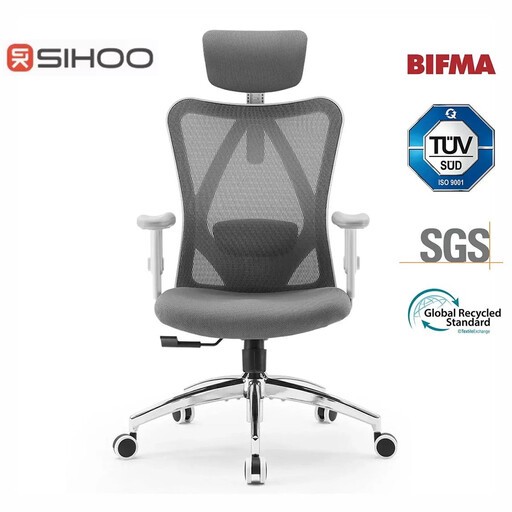
Why It Stands Out: The Sihoo M18 is a versatile all-rounder that provides a solid foundation of ergonomic features. It offers five key adjustment points, including the headrest, backrest and armrests, allowing for a highly personalised fit. Its full-mesh back is designed for excellent air circulation, making it a practical choice for all-day use.
Pros:
Who is it for? This chair is well-suited for professionals and students looking for a reliable and highly adjustable ergonomic office chair for a home or corporate office without an overly complex setup.

Why It Stands Out: The Doro S100 model from SIHOO elevates support with its dual dynamic lumbar support system. This mechanism automatically adjusts to your posture, providing continuous support as you shift and move. Combined with 4D coordinated armrests that move with the backrest as you recline, it offers a comprehensive support system that adapts to your body in real-time.
Pros:
Who is it for? Ideal for users who prioritise advanced lumbar support and experience discomfort from static seating. Its dynamic features make it an excellent computer chair for long hours of focused work.
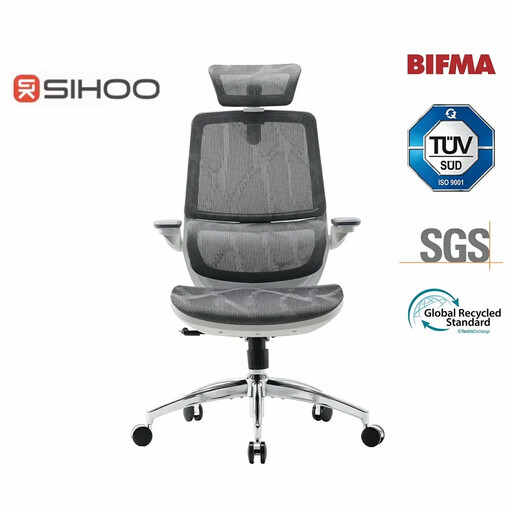
Why It Stands Out: The SIHOO M59S is designed with both comfort and practicality in mind. Its most notable feature is the 80° flip-up armrests, which allow the chair to be pushed neatly under a desk to save space. The dual-back design includes an adaptive lumbar support system that moves with you, while the wide, saddle-shaped seat cushion helps distribute weight evenly.
Pros:
Who is it for? This chair is an excellent choice for those working in compact spaces or multi-use rooms where maximising floor space is a priority. It offers strong ergonomic features without compromising on flexibility.
While a traditional ergonomic office chair is designed for productivity and posture, some users prefer a different aesthetic that still offers robust support. Gaming chairs, for instance, often feature high backs, deep cushioning and a distinct style that can be a great fit for a multi-purpose desk setup.
If you are curious about alternatives, you might want to explore our curated selection of grey gaming chairs for more options.
How long should an ergonomic office chair last? The lifespan of an ergonomic office chair depends on its build quality, materials and usage. A well-made chair with certifications like BIFMA, constructed from durable materials like a metal frame and high-density foam, can reasonably be expected to last between 5 to 10 years with proper care.
Is a mesh office chair better for back pain? A mesh chair can be beneficial for back pain because it conforms to the shape of your spine and offers excellent breathability. However, the most critical factor for back pain is the quality and adjustability of the lumbar support system. A chair with dedicated, adjustable lumbar support—whether mesh or padded—will provide the most effective relief.
How do I set up my ergonomic chair correctly? For an optimal setup, adjust your chair so your feet are flat on the floor and your knees are at a 90-degree angle. The lumbar support should fit snugly into the curve of your lower back. Your armrests should be positioned so your elbows are also at a 90-degree angle, allowing your shoulders to relax. Finally, ensure your monitor is at eye level to avoid straining your neck.