
24/7 Customer Support

Free returns

Same-day & Next-day Delivery

Quality Guaranteed

Unlock Your Welcome Offers: FREE Delivery | Up to 80% OFF | Free 30-day JoyPlus trial
Download the APP
Spending hours at a desk is a modern reality for many of us, whether in a corporate building or a home office. If your workday often ends with a stiff neck, an aching lower back or general discomfort, your chair could be the primary cause. An ergonomic office chair is more than just a piece of furniture; it's a tool designed to support your body, improve posture and enhance focus throughout the day.
As the Joybuy Product Recommendation Officer, my role is to help you navigate the options. This guide cuts through the marketing clutter to highlight key features and present practical choices, helping you find a chair that genuinely fits your needs and supports your well-being.
Before diving into specific models, it’s useful to understand what makes a chair truly ergonomic. Here are a few key considerations to guide your search.
A one-size-fits-all approach rarely works for office seating. A quality ergonomic chair should adapt to your unique body shape and size. Look for multiple adjustment points, including:
The material of your chair affects both comfort and durability. A mesh office chair is a popular choice because it allows for excellent air circulation, keeping you cool during long sessions. Padded fabric or leather seats can offer a plusher feel, but ensure the foam is high-density to prevent it from flattening over time. The frame and base should be made of robust materials like steel or aluminium to ensure stability.
For peace of mind, check if the chair meets recognised industry standards. Certifications like BIFMA (Business and Institutional Furniture Manufacturers Association) and the EU's EN 1335 standard indicate that the chair has undergone testing for safety, durability and structural integrity. This is a reliable indicator of a well-made computer desk chair.
Based on features, user-focused design and certified quality, here are some standout ergonomic chairs to consider for your workspace.

Why It Stands Out: The Doro C300 is built around a dynamic system that adapts to your body. Its key feature is the self-adaptive lumbar support that moves with you, providing constant support as you shift your posture. Combined with an intelligent weight-sensitive mechanism, it automatically adjusts the recline tension, creating a balanced and responsive seating experience.
Pros:
Who is it for? Professionals and remote workers who want a sophisticated home office chair that provides automated, responsive support without needing constant manual adjustments.

Why It Stands Out: The Doro S100 focuses on highly detailed customisation. Its dual dynamic lumbar support uses a spring-based mechanism for 6D adjustment, conforming precisely to different body shapes. The 4D coordinated armrests offer an extensive range of motion and coordinate with the backrest's recline, providing exceptional shoulder and arm support.
Pros:
Who is it for? Individuals who require a high degree of personalisation to address specific comfort needs, particularly those looking for an office chair for back pain with comprehensive lumbar and shoulder support.
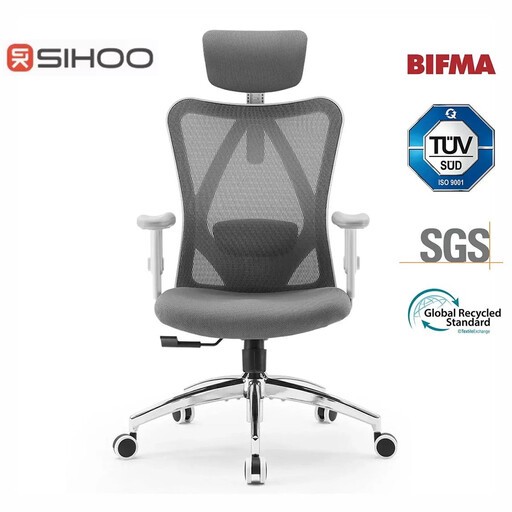
Why It Stands Out: The Sihoo M18 provides a solid foundation of essential ergonomic features in a straightforward package. It offers 5 key ergonomic settings, including an adjustable headrest, backrest and lumbar support, making it a versatile and accessible option for a wide range of users.
Pros:
Who is it for? Students, home office workers or anyone seeking a reliable and comfortable ergonomic chair that covers all the essential adjustments without a premium price tag.
While black and grey are classic choices for office furniture, your workspace aesthetic is also important. A chair's colour can influence the mood and look of a room. For those seeking a brighter, more modern feel, a different colour might be a better fit.
Explore our collection of white ergonomic office chairs to find a model that complements your personal style.
1. What is the most important feature in an office chair for back pain? While it depends on the individual, adjustable lumbar support is widely considered the most critical feature. It should be height-adjustable to fit the natural curve of your lower back. Dynamic support, which moves with you, can provide even greater relief by ensuring continuous contact and support as you change positions.
2. Is a mesh office chair better than a padded one? Neither is definitively "better," as it comes down to preference. A mesh office chair offers superior breathability, which is a significant benefit for those who tend to feel warm while sitting. A high-quality padded chair can provide a softer, more cushioned feel. The key is to ensure the padding is made of high-density foam that won't compress and lose its supportive qualities over time.
3. How long should a good ergonomic office chair last? A well-made ergonomic chair with quality components and certifications like BIFMA should last for many years. Most reputable manufacturers offer warranties ranging from three to ten years. The lifespan also depends on usage and maintenance. Regularly checking that all components are secure can help extend the life of your chair.