
24/7 Customer Support

Free returns

Same-day & Next-day Delivery

Quality Guaranteed

Unlock Your Welcome Offers: FREE Delivery | Up to 80% OFF | Free 30-day JoyPlus trial
Download the APP
Spending hours at a desk is a modern reality for many of us, whether we're in a dedicated home office or a corporate setting. If that time is spent in a chair that offers poor support, it can lead to persistent discomfort, particularly in the back and neck. A standard computer desk chair often isn't designed for prolonged use, which is why choosing a proper ergonomic office chair is less of a luxury and more of a necessity for maintaining comfort and focus.
This guide is designed to help you navigate the features that matter. We'll outline key considerations for selecting a chair that fits your body and work style and then present our top recommendations for 2026 to help you find a durable and supportive seating solution.
Before looking at specific models, it helps to understand what makes a chair truly ergonomic. Here are a few practical points to consider during your search.
A one-size-fits-all approach rarely works for office seating. The ability to tailor a chair to your specific body shape is crucial. Look for multiple adjustment points:
Certifications provide an objective measure of a chair's durability and safety. In the UK and Europe, look for chairs that meet standards like BIFMA (Business and Institutional Furniture Manufacturers Association) or SGS. These certifications indicate that the chair has passed rigorous tests for performance, safety and stability, including assessments of its casters, swivel mechanism and weight capacity. This is a reliable indicator that you are investing in a product built to last.
The material of your chair affects both comfort and maintenance. A high back office chair made from breathable mesh is a popular choice in modern offices. Mesh allows for better air circulation, which helps keep you cool during long work sessions. It also conforms well to the body, providing firm yet flexible support. Other options like fabric or leather have their own benefits, but for all-day use, the breathability of mesh is a significant advantage.
Based on features that promote comfort, support and durability, here are our recommendations for anyone seeking to upgrade their workspace.

Why It Stands Out: The Doro S100 is notable for its dual dynamic lumbar support, which uses a spring-based mechanism to automatically adjust to your posture. This provides continuous and responsive support to the lower back as you shift and move. Paired with 4D coordinated armrests that move with the backrest as you recline, it offers comprehensive support for the entire upper body.
Pros:
Who is it for? This Sihoo office chair is an excellent choice for individuals who spend the majority of their day seated and require a high degree of responsive support to combat back pain and maintain a healthy posture.
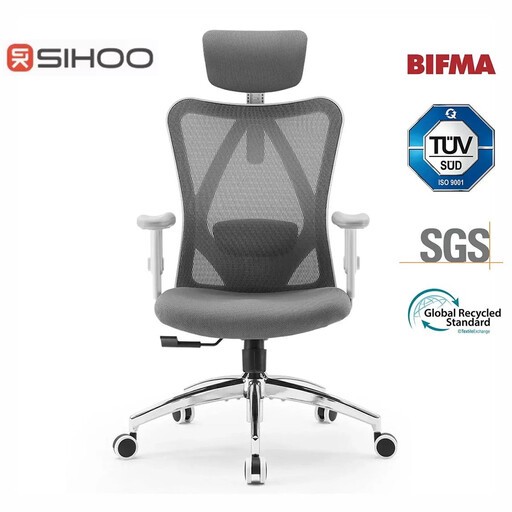
Why It Stands Out: The Sihoo M18 offers a fantastic balance of essential ergonomic features and value. It provides five key adjustment points, including the headrest, backrest, seat height, tilt and armrests. The W-shaped seat cushion is designed to centre your posture, while the waterfall edge reduces pressure on the back of your legs.
Pros:
Who is it for? A versatile home office chair suitable for a wide range of users looking for reliable ergonomic support without an overly complex setup. It's a solid all-rounder for daily work or study.
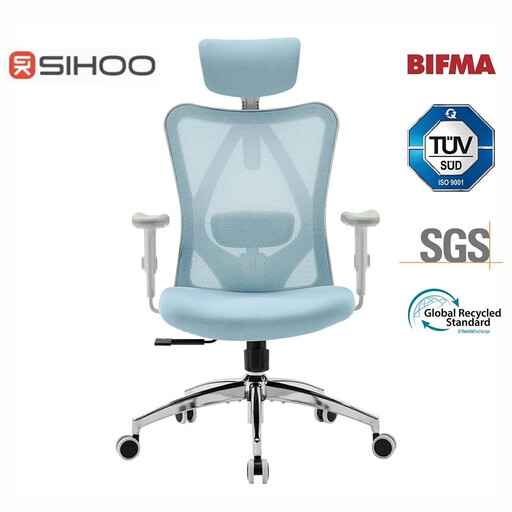
Why It Stands Out: This model shares the same robust, BIFMA-certified frame and comprehensive adjustability as the standard M18 but comes in a distinctive Morandi Blue colour. It proves that a functional chair for back pain doesn't have to compromise on aesthetics. It brings a touch of modern design to a home office while delivering the same dependable ergonomic performance.
Pros:
Who is it for? Perfect for the design-conscious remote worker or student who wants their computer desk chair to be both a functional tool and a stylish piece of furniture.
If a traditional office chair isn't quite what you're looking for, or if you need a more flexible seating option for collaborative work or short tasks, there are other styles to consider. For a pop of colour and a versatile addition to your space, explore our collection of blue stool options.
1. How long should an ergonomic office chair last? A high-quality ergonomic chair with certifications like BIFMA is built for longevity. With proper care, you can expect it to last for many years. Components like the gas lift, casters and armrests are tested for thousands of cycles, ensuring they withstand daily use.
2. Is a mesh office chair better for back pain? A mesh backrest can be very effective for back support. The material is taut and conforms to the shape of your spine, providing firm, consistent support. When combined with adjustable lumbar support, a mesh office chair can be an excellent tool for managing back pain, while also offering the benefit of breathability.
3. What is the most important feature in an ergonomic chair? While all adjustments are important, the most critical feature for most people is the lumbar support. Proper support for the lower back is fundamental to maintaining a healthy spinal posture during long periods of sitting. A chair with adjustable lumbar support that can be fine-tuned to your body is often the best starting point.