
24/7 Customer Support

Free returns

Same-day & Next-day Delivery

Quality Guaranteed

Unlock Your Welcome Offers: FREE Delivery | Up to 80% OFF | Free 30-day JoyPlus trial
Download the APP
Spending hours at a desk, whether in a corporate office or a home setup, has become a standard part of modern work life. With this comes the familiar discomfort: a stiff neck, an aching lower back and general fatigue. The right office chair isn't a luxury; it's a fundamental tool for maintaining comfort, focus and long-term well-being.
This guide is designed to help you navigate the features that matter. We'll break down what to look for in a quality ergonomic office chair and present some carefully selected options to help you make an informed decision for your workspace.
Choosing a chair can feel overwhelming with all the technical jargon. Let's simplify it by focusing on three key areas that make the most significant difference to your daily comfort.
A truly ergonomic chair adapts to you, not the other way around. Look for a highly adjustable desk chair that allows you to customise several key points to fit your body's unique dimensions. Essential adjustments include:
For anyone seeking an ergonomic chair for back pain, this is a non-negotiable feature. Static lumbar cushions offer some support, but a dynamic or self-adaptive office chair with lumbar support is designed to move with you. It continuously adjusts to the curve of your lower spine whether you are sitting upright, leaning forward or reclining, providing constant and targeted support where it's needed most.
The material of your chair directly impacts your comfort, especially during long work sessions or in warmer months. A mesh office chair is a popular choice for good reason. The woven material allows for excellent air circulation, preventing heat and moisture build-up. Modern high-elasticity mesh also provides firm yet flexible support that conforms to your body shape without creating pressure points.
Based on features that promote comfort and support, here are our recommendations for your home office chair or professional workspace.

Why It Stands Out: The Doro C300 Pro is notable for its extensive customisation options. The standout feature is the ultra-soft 6D coordinated armrests, which adjust in multiple directions and move in sync with the backrest as you recline. This, combined with a self-adaptive dynamic lumbar support system and three distinct recline angles (105°, 120° and 135°), provides a highly personalised seating experience.
Pros:
Who is it for? Professionals and remote workers who spend the majority of their day seated and require the highest level of adjustability to fine-tune their posture and comfort.
View the SIHOO Doro C300 Pro on Joybuy
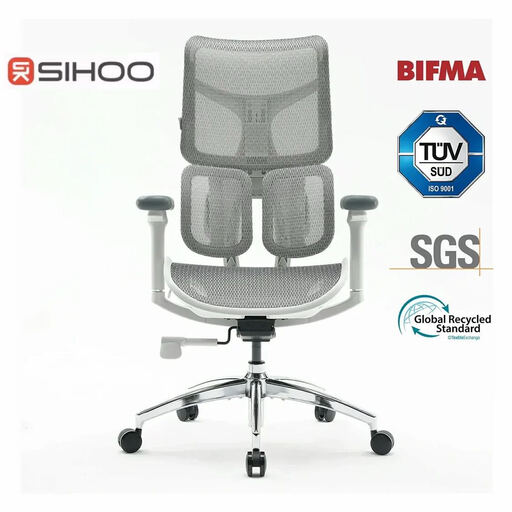
Why It Stands Out: The S100 places a strong emphasis on spinal health with its dual dynamic lumbar support system. This feature is designed to automatically adapt to different body shapes and postures. It also includes versatile 4D coordinated armrests and a seat cushion with a waterfall front edge and 5 cm depth adjustment, which helps to minimise pressure on the thighs and encourage healthy blood flow.
Pros:
Who is it for? Users who prioritise lower back health and leg comfort and those who appreciate a chair that automatically adjusts its core support features to their movements.
Explore the Sihoo Dora S100 on Joybuy
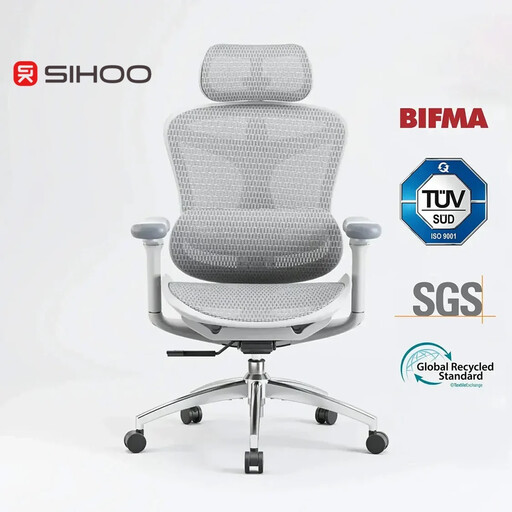
Why It Stands Out: The SIHOO C300 offers many of the advanced features found in premium models, making it a strong all-round performer. It incorporates a self-adaptive lumbar support system, 3D armrests and an intelligent weight-sensitive mechanism that automatically adjusts the recline tension. The backrest is also height-adjustable, making it suitable for a wider range of user heights.
Pros:
Who is it for? This is an excellent choice for the modern home office, providing a balanced combination of dynamic support, adjustability and intelligent features for all-day use.
Learn more about the SIHOO Doro C300 on Joybuy
The models highlighted here focus on advanced ergonomic features and a modern aesthetic. If you're seeking a different colour or a minimalist design, there are many other options to consider.
For a clean and contemporary look that complements any workspace, we invite you to explore our curated collection of white desk chairs for more styles.
An office chair is considered ergonomic when it is designed to support the human body in a neutral, healthy posture. This is achieved through a range of adjustable features, including seat height and depth, backrest angle and armrest position. The goal is to reduce stress on the spine, neck and joints, thereby improving comfort and reducing the risk of strain during long periods of sitting.
Lumbar support is one of the most critical features of an ergonomic chair. The lower part of your spine (the lumbar region) has a natural inward curve. Sitting for long periods without adequate support can cause this curve to flatten, leading to slouching, muscle strain and back pain. A good lumbar support system helps maintain this natural curve, promoting better posture and significantly reducing stress on the lower back.
Each material has its advantages. A mesh office chair excels in breathability, allowing air to circulate freely to keep you cool and comfortable. It's also flexible and conforms well to your body. Leather offers a premium look and feel but can retain heat and may require more maintenance. Fabric chairs provide a wide variety of colours and textures and can feel softer, but they may be less breathable and harder to clean than mesh. For long hours of continuous work, many people find the breathability of mesh to be a decisive advantage.