
24/7 Customer Support

Free returns

Same-day & Next-day Delivery

Quality Guaranteed

Unlock Your Welcome Offers: FREE Delivery | Up to 80% OFF | Free 30-day JoyPlus trial
Download the APP
Watching a child learn to write is a significant milestone, but it can also be a source of frustration for both them and you. Messy handwriting, complaints of a sore hand and a general reluctance to complete homework can often be traced back to the writing tool itself. An unsuitable pen can cause children to grip too tightly, leading to muscle fatigue and poor letter formation.
As the Joybuy Product Recommendation Officer, my role is to help you find practical solutions. This guide is designed to cut through the clutter and focus on what truly matters when selecting ergonomic pens for children. We will explore key features to look for and highlight a few options that are designed to make learning to write a more comfortable and positive experience.
Finding the right school handwriting pens goes beyond just picking a nice colour. The design of the pen plays a crucial role in a child's physical writing development. Here are a few key factors to consider.
A pen's grip is its most important feature for a young writer. Look for pens with a moulded, non-slip grip zone. These are specifically shaped to encourage the 'tripod grip'—where the pen is held by the thumb and index finger, resting on the middle finger. This is the standard grip taught in UK schools as it allows for fine motor control and prevents the hand from tiring quickly. A well-designed grip helps a child maintain a relaxed hand posture, making writing for longer periods much more comfortable.
Approximately 10% of the population is left-handed, and using a standard right-handed pen can put them at a disadvantage. Left-handed children's pens are engineered to accommodate their unique writing style. For fountain pens, the nib is cut differently to suit the 'pushing' motion of a left-hander, preventing the nib from digging into the paper. The grip may also be shaped to provide a better viewing angle of their writing, reducing the likelihood of smudging fresh ink.
The choice between a children's fountain pen UK and a rollerball often comes down to the child's stage of development and school policy.
Based on features that support handwriting development, here are our recommendations for ergonomic pens that are popular with parents, teachers and children.
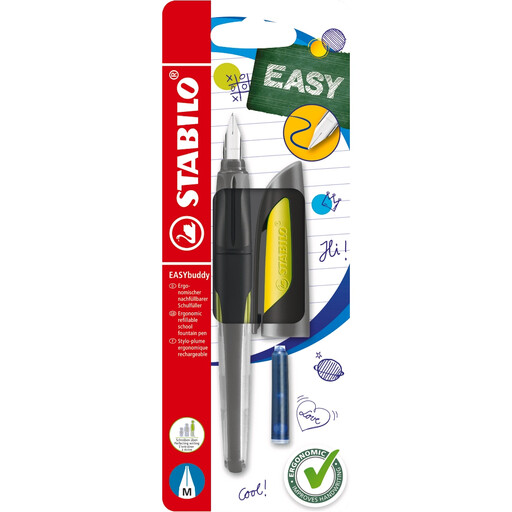
Why It Stands Out: The EASYbuddy combines the classic writing experience of a fountain pen with modern ergonomic design. Its universal, non-slip grip is soft to the touch and guides fingers into the correct position without being restrictive. The iridium-tipped M-Nib (medium) is robust enough for young writers, while the spring-loaded cap helps prevent ink leaks in a pencil case or school bag.
Pros:
Who is it for: Right-handed primary school children who are ready to transition to or are currently using a fountain pen. It is an excellent tool for developing neat, cursive handwriting while ensuring comfort during longer writing tasks.
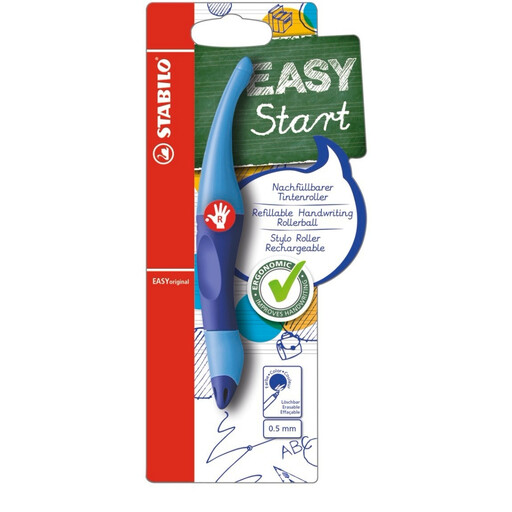
Why It Stands Out: This rollerball is a widely recognised teacher approved pen in many UK schools. Its key feature is the moulded grip zone, which is distinctly shaped to position a child's fingers correctly. The rollerball technology ensures a smooth and effortless writing experience, which helps build confidence as it produces neat, blotch-free lines with minimal effort. A clever feature is that each ink refill comes with a brand-new nib, so the pen always feels fresh.
Pros:
Who is it for: Children who are just beginning their handwriting journey or those who prefer the immediate ease of a rollerball. It is ideal for everyday use at school and at home.
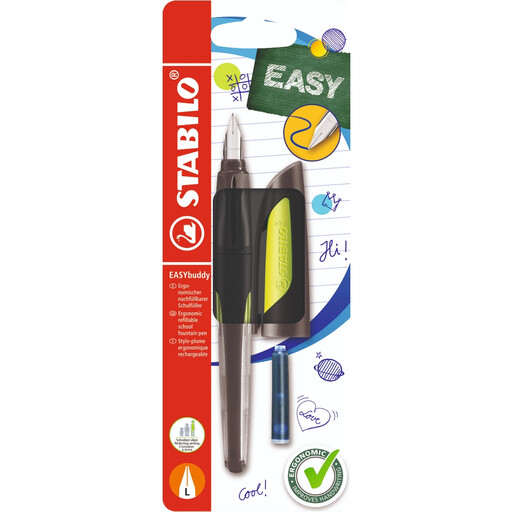
Why It Stands Out: This version of the EASYbuddy is identical in its core features to the right-handed model but comes with one critical difference: a specially designed L-Nib for left-handers. This nib is engineered to work with the pushing motion and unique writing angle of a left-handed child, allowing the ink to flow smoothly without scratching the paper or smudging. It provides left-handed writers with the same comfortable experience as their right-handed peers.
Pros:
Who is it for: Left-handed primary school children in need of a fountain pen that supports their natural writing style. It is an excellent choice for preventing the frustration that can come from using a standard pen.
Every child's hands and writing style are unique, so finding the perfect fit is key. If you are looking for different pen types, nib sizes or a wider range of colours, there are many other options available.
For a wider selection of writing tools designed for comfort and control, explore our full range of Easy Sketch Pens.
Ergonomic pens are designed to guide a child's fingers into an efficient tripod grip and reduce the physical strain of writing. By promoting a more relaxed hold, they can improve a child's control over the pen. This often leads to neater, more consistent handwriting and makes writing for longer periods more comfortable.
Ergonomic pens can be introduced as soon as a child starts learning to form letters, typically around ages 4 to 5. Models like the STABILO EASYoriginal rollerball are great for beginners, while fountain pens like the EASYbuddy are often introduced once a child has a basic grasp of letter formation, usually in Key Stage 1 or 2.
This depends on the child and their school's policy. A rollerball offers smooth, consistent lines with very little effort, which can be encouraging for a beginner. A fountain pen requires a lighter touch and can help refine motor skills, which is beneficial for developing cursive handwriting. It is always a good idea to check if your child's school has a preference.