
24/7 Customer Support

Free returns

Same-day & Next-day Delivery

Quality Guaranteed

Unlock Your Welcome Offers: FREE Delivery | Up to 80% OFF | Free 30-day JoyPlus trial
Download the APP
Waking up with a stiff, aching neck is a frustratingly common experience that can disrupt your day before it even begins. While many factors can contribute to neck pain, the pillow you use for a third of your life plays a significant role. An unsupportive pillow can force your neck into an unnatural position, leading to strain, discomfort and poor sleep quality.
The market is filled with options, all promising a perfect night's sleep. This guide is designed to help you understand what makes an effective ergonomic pillow and to highlight a few noteworthy options that could help you find more comfortable nights and brighter mornings.
Finding the right pillow is a personal journey, but a few key considerations can guide your decision. Focusing on these features will help you select a pillow that aligns with your body and sleeping habits.
The material inside your pillow determines its feel, support and breathability. Memory foam is a popular choice in the UK for its unique ability to contour to the shape of your head and neck, providing personalised support that helps maintain spinal alignment. Some memory foam pillows are also infused with cooling gels or designed with ventilation channels, making them a great option if you're looking for a cooling pillow for neck pain and tend to overheat at night. Shredded memory foam offers a more traditional pillow feel with the added benefit of being adjustable, allowing you to modify the loft and firmness.
The shape of a pillow is just as important as what’s inside it.
A good neck support pillow should be firm enough to hold your head at a healthy angle but soft enough to relieve pressure points. The goal is to keep your head, neck and spine in a straight, horizontal line. A pillow that is too high or too firm will bend your neck upwards, while one that is too soft or thin will let it sag. Look for descriptions that mention balanced or zoned support, which often indicates a design that is firmer where you need it (under the neck) and softer where you don't (under the head).
Here are a few ergonomic pillows that stand out for their design, materials and user-focused features.

Why It Stands Out: This pillow combines the contouring benefits of memory foam with the plush, adjustable feel of a traditional down pillow. The shredded foam filling can be moved around, fluffed or even partially removed to achieve a customised height and firmness level. The current "buy 1 get 1 free" offer also presents notable value.
Pros:
Who is it for? Individuals who appreciate the ability to customise their pillow's loft and firmness, or couples looking for a matching set. It's a flexible option for those new to memory foam.
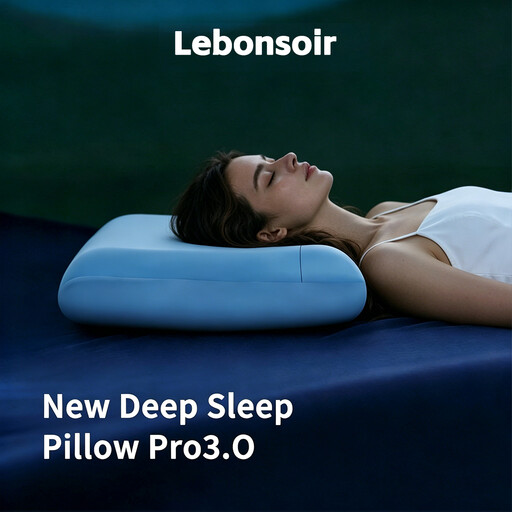
Why It Stands Out: This pillow features a sophisticated 3-layer foam construction designed for zoned support. The top layer provides soft, slow-rebound comfort, the middle layer prevents your head from sinking too deeply, and the base layer offers firm, stable support. Its ergonomic contour is specifically shaped to fit the natural curve of the neck and shoulders.
Pros:
Who is it for? Those seeking a highly structured neck support pillow to address specific discomfort in the neck and shoulders. It is well-suited for back and side sleepers who need precise contouring.
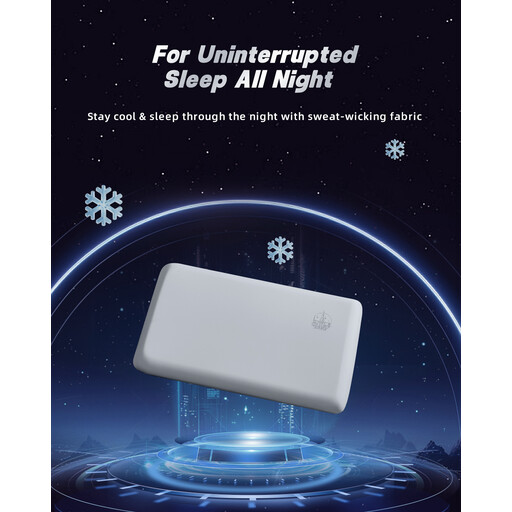
Why It Stands Out: This pillow directly addresses the issue of sleeping hot. It is a solid memory foam pillow UK option that incorporates cooling properties into its design to help dissipate heat throughout the night. The queen-size dimensions provide ample space for movement, while the ergonomic shape offers consistent support for the neck and head.
Pros:
Who is it for? Hot sleepers who need the contouring support of memory foam without the associated heat retention. Also ideal for those who prefer a larger pillow.
The pillows highlighted here represent just a few of the available solutions. If your specific needs call for a different shape, material or firmness level, we invite you to browse our wider selection.
Explore our full collection of sleeping pillows for neck pain to find your ideal match.
1. How long does it take to get used to an ergonomic pillow? There is often an adjustment period of a few days to a week when switching to a new ergonomic or cervical pillow. Your body needs time to adapt to the new, healthier sleeping posture. We recommend using the pillow for a few hours at first and gradually increasing the duration each night.
2. Can an orthopaedic pillow also help with shoulder pain? Yes, for many people, it can. Shoulder pain is often linked to sleeping position, especially for side sleepers. An orthopaedic pillow for side sleepers with the correct height and firmness helps maintain alignment, preventing the shoulder from collapsing forward and bearing the weight of the upper body. This can significantly reduce strain and discomfort.
3. How do I choose the right pillow height for a side sleeper? To find the right height (or loft), measure the distance from the base of your neck to the outside edge of your shoulder. This measurement is a good starting point for the pillow height you'll need to keep your spine straight. Look for pillows that specify their height or, better yet, choose an adjustable model like a shredded memory foam pillow.