
24/7 Customer Support

Free returns

Same-day & Next-day Delivery

Quality Guaranteed

Unlock Your Welcome Offers: FREE Delivery | Up to 80% OFF | Free 30-day JoyPlus trial
Download the APP
Choosing among espresso coffee machines can be harder than it first appears. Product listings often highlight 15-bar or 20-bar pumps, touch controls and café-style results, but these figures do not tell the whole story. The right machine depends on how much control you want, how often you make coffee, whether you use beans or pre-ground coffee and how much cleaning you are prepared to do.
This guide from the Joybuy Product Recommendation Officer focuses on practical buying decisions rather than marketing language, helping UK households, small offices and travellers avoid common purchasing mistakes.
A 15-bar espresso machine or 20-bar espresso machine may advertise its pump rating prominently. However, the pump’s maximum pressure is not the same as the pressure used throughout extraction. Temperature stability, grind size, coffee dose and tamping also affect the result.
A 20-bar specification can be useful, but it should be considered alongside features such as pre-infusion, temperature control and the ability to adjust the grind. Avoid paying more solely because a listing displays a larger number.
A fully automatic coffee machine can grind beans and prepare drinks with minimal effort, but it still needs regular care. Brew groups, milk systems, drip trays and coffee grounds containers may need rinsing or emptying. A bean-to-cup coffee machine is convenient, but its internal grinder and brewing components make maintenance particularly important.
For milk drinks, check whether the frother is removable, whether parts are dishwasher-safe and whether the steam wand must be wiped immediately after use.
A compact coffee machine may fit under kitchen cupboards but still require clearance above the bean hopper or water tank. Measure the available width, depth and height before ordering. Also consider the tank size: a 0.9-litre tank may suit one person, while a 1.5 or 1.8-litre tank is more practical for a household or small office.
A semi-automatic espresso machine generally uses a portafilter and requires you to dose, tamp and remove the coffee grounds. It offers more control but involves more preparation and cleaning. A fully automatic coffee machine handles grinding and brewing at the press of a button, making it suitable for users who value consistency and speed.
Machines that accept ground coffee, such as the HiBREW H13A, can be straightforward for beginners. Models compatible with both ground coffee and ESE pods offer additional flexibility. A coffee machine with built-in grinder reduces the need for a separate grinder, although grinder adjustment options vary considerably.
More grind settings allow finer adjustment when changing beans. The HiBREW H20, for example, has 20 grind adjustment levels, while the De’Longhi Magnifica Start has 13 settings and the Philips EP2220/10 has 12 ceramic grinder settings.
Temperature control is also relevant. The HiBREW H20 lists PID control at 92°C, while the Philips Series 2200 uses an Aroma Extract system designed to regulate temperature and water flow. These are objective design features, but they do not guarantee that every coffee will suit every taste.
For cappuccinos and lattes, choose either a coffee machine with milk frother or an espresso machine with steam wand. Automatic milk systems reduce manual work, while a manual wand gives you more control over foam texture.
Check the following before purchase:
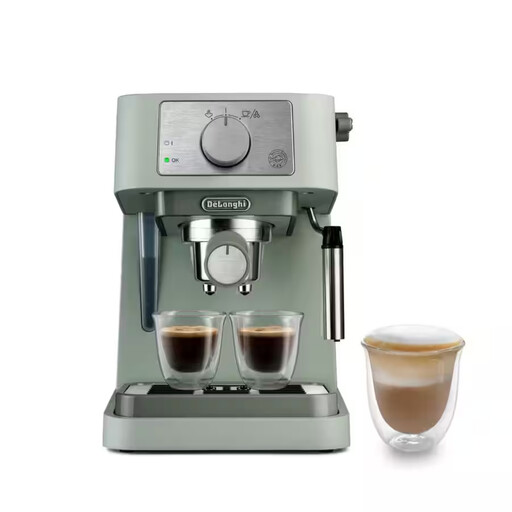
Why This Fits Their Persona: A practical choice for beginners who want espresso and milk drinks without investing in a bean-to-cup system. Its compact design suits smaller UK kitchens and flats.
It does not rely on pressure claims alone: it also includes a manual steam wand, two-tier drip tray and compatibility with ground coffee and ESE pods.
15-bar pump, 1.1L water capacity, manual steam wand and removable parts for routine cleaning.
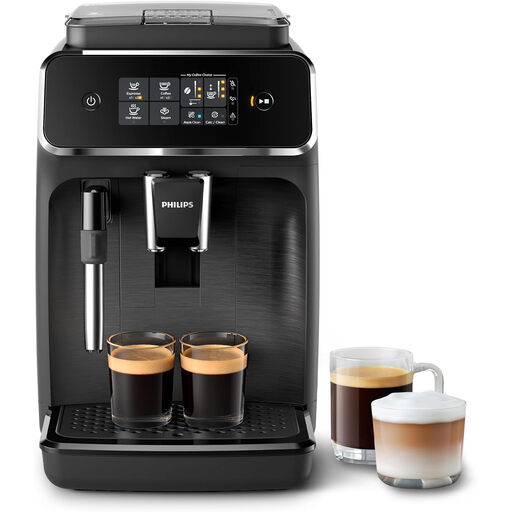
Why This Fits Their Persona: Suitable for households wanting fresh-bean coffee with touch controls and less manual preparation during busy mornings.
The removable brew group, dishwasher-safe parts and descaling alert address the maintenance demands often overlooked in automatic machines.
1.8L tank, 275g bean capacity, 12 grinder levels, touch display and classic milk frother.

Why This Fits Their Persona: Its one-touch recipes and 1.8L tank suit families, shared kitchens and small offices where several people want different drinks.
It combines automation with adjustable aroma, temperature and grind settings, rather than offering only fixed drink programmes.
15-bar pump, 13 grinder settings, four one-touch recipes and a manual steam wand.
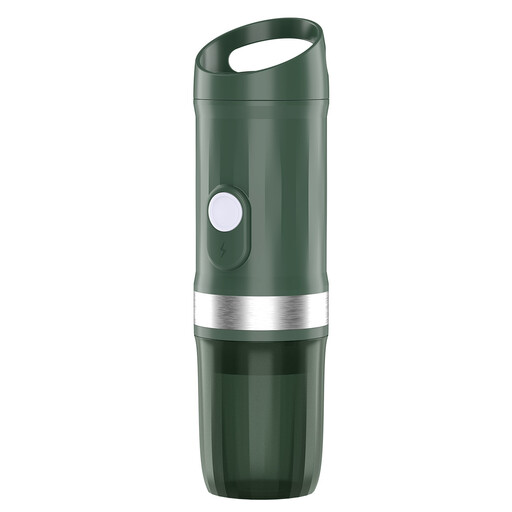
Why This Fits Their Persona: Designed for camping, road trips, offices and other situations where a full-size home coffee machine is impractical.
Its purpose is clear: it is a portable espresso machine with self-heating and USB-C charging, rather than a substitute for a high-capacity kitchen appliance.
0.97kg weight, USB-C charging and compatibility with ground coffee and NS capsules.
We have compiled a complete, real-time list of products that fully satisfy these strict selection criteria and UK safety regulations.
To control ongoing costs, use the machine according to its manual and avoid leaving it powered on unnecessarily. Automatic standby or shut-off features can reduce idle operation, while regular cleaning helps prevent blocked outlets and milk residue.
For a semi-automatic machine, budget for quality ground coffee or a separate grinder if you buy whole beans. For a fully automatic model, compare bean-hopper size, filter costs and descaling requirements. In hard-water areas, a suitable water filter may help reduce scale build-up, but it does not remove the need for cleaning.
Always place the appliance on a stable, heat-resistant surface. Steam wands, portafilters and cup warmers become hot, and the machine should be unplugged before cleaning or refilling.
Neither rating alone determines the finished drink. A 15-bar and a 20-bar model can both be suitable when they also provide appropriate temperature control, a suitable filter system and consistent water delivery. Compare the complete specification rather than the pump number in isolation.
Rinse the portafilter, drip tray and removable parts regularly, and wipe a steam wand immediately after every milk use. Fully automatic machines may require more structured maintenance, including cleaning the brew group and emptying the grounds container. Follow the manufacturer’s instructions for descaling and filter replacement.
Running cost depends mainly on coffee beans, milk, filters, electricity and cleaning products. A bean-to-cup machine can reduce preparation time, but its grinder, brew group and milk system still need care. Compare capacity and maintenance requirements before choosing one for a busy household or office.