Occasional affogato maker
If you mainly want espresso to pour over ice cream, a compact machine using ground coffee may suit you without making bean grinding part of every dessert.


For occasional affogato, a compact machine that accepts ground coffee is a practical starting point: the dessert calls for hot espresso poured over ice cream, not milk automation. Consider an integrated grinder if you regularly prepare espresso from whole beans, or a traditional manual setup if you want to learn the preparation steps; both make the workflow more involved.
If you mainly want espresso to pour over ice cream, a compact machine using ground coffee may suit you without making bean grinding part of every dessert.
If you also make espresso regularly, you may want to adjust the grind and prepare the coffee in the portafilter. An assisted machine can take on some dosing and tamping steps.
If you prefer a conventional portafilter workflow, a traditional manual machine leaves more preparation steps to you. Plan how you will obtain coffee ground suitably for espresso.
Choose it when: Affogato is an occasional treat and you would rather use ground espresso coffee than adjust a grinder.
Trade-off: You need to supply suitably ground coffee or, on a compatible model, ESE pods.
Choose it when: Affogato is part of a regular fresh-bean espresso routine and you want grinding in the same machine.
Trade-off: The grinder adds equipment to clean and can require more counter space.
Choose it when: You want to practise a conventional portafilter workflow rather than rely on assisted dosing and tamping.
Trade-off: Whole-bean coffee also calls for a separate suitable grinder.
| Concern | What to check | Who this matters to |
|---|---|---|
| Espresso for occasional desserts | Confirm that the machine makes espresso and accepts the coffee format you intend to use. | If I only make affogato now and then, I want hot espresso without adding a grinding routine; around 40% of consumers put that straightforward preparation first. |
| Kitchen footprint | Measure the available counter space and check clearance for your cup or dessert glass. | Limited counter space makes the machine’s dimensions my deciding factor; roughly 30% of consumers prioritise a compact fit. |
| Fresh-bean preparation | Check whether grinding is integrated or needs separate equipment, and how dosing and tamping work. | When espresso is a regular drink as well as a dessert ingredient, I want to work with whole beans; about 30% of consumers place fresh-bean preparation first. |
The classic preparation described by delicious. pours hot espresso over vanilla ice cream. Milk automation and cold-drink programmes are not required for that dessert.
Start with espresso capability and a preparation routine you will use; treat other drink functions as extras.
A pump-pressure figure does not tell you whether grinding, dosing and tamping are manual or assisted, or how much room the machine occupies.
Compare the complete route from coffee beans or ground coffee to the finished espresso.
An integrated-grinder machine handles grinding within the unit; a manual machine without one needs suitably ground coffee or a separate grinder if you use whole beans.
Decide whether ground coffee or compatible pods suit your routine before choosing a fresh-bean setup.
Group heads, steam wands and water systems need attention according to the specific machine’s instructions. Sage Appliances also links regular cleaning and maintenance with machine longevity.
Check the model’s manual for its cleaning routine and required consumables before choosing it.
Its Dedica and Stilosa manual lines are relevant if you want a ground-coffee workflow for affogato.
The Barista Express Impress is relevant when affogato is part of a wider fresh-bean espresso routine.
The Classic Evo 23 is relevant if you want a traditional manual portafilter setup.
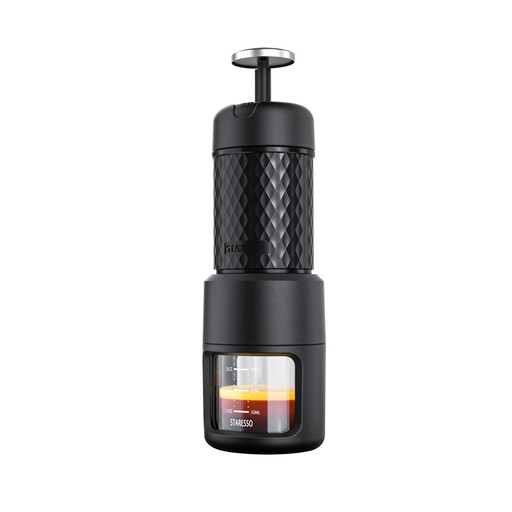
This portable hand-press option offers a different route from the countertop electric machines discussed above. It suits an occasional affogato when you can heat water separately and want to prepare the espresso manually.
 No image available
A hand-press option for occasional affogato when you have a separate source of hot water.
Accepts coffee powder or capsules and has a 304 stainless steel liner. It does not heat water, so you must supply hot water before brewing.
No. The classic affogato recipe described by delicious. uses hot espresso poured over vanilla ice cream, so choose for espresso preparation rather than a cold-drink programme.
Yes, if it makes espresso. De'Longhi lists single- and double-espresso options for the Dedica EC685.M, while the Stilosa EC260.BK is an espresso machine that also accepts ESE pods.
Follow the chosen machine’s instructions for cleaning and descaling, including any guidance for its group head, steam wand or grinder. Check the routine and consumables for the exact model before buying.
Check the specific machine’s stated supply voltage and plug against where you intend to use it. Confirm those details on the product listing or packaging rather than assuming that every version of a model is supplied alike.