
24/7 Customer Support

Free returns

Same-day & Next-day Delivery

Quality Guaranteed

Unlock Your Welcome Offers: FREE Delivery | Up to 80% OFF | Free 30-day JoyPlus trial
Download the APP
Tired of instant coffee and looking to bring the café experience into your kitchen? Choosing the right home espresso machine can feel overwhelming. With so many types, features and price points, it's easy to get lost in technical jargon. Our goal is to simplify your search, helping you understand the key differences so you can find a coffee machine that fits your lifestyle, budget and coffee preferences.
This guide breaks down what to look for in a modern espresso machine and presents our top recommendations for 2026, from hands-on models for aspiring baristas to convenient one-touch solutions.
Before diving into specific models, let's cover a few key considerations. Understanding these will help you narrow down your options and make a more informed decision.
The first major decision is how involved you want to be in the coffee-making process.
espresso machine like this is ideal for those who enjoy the craft of making coffee and want to experiment with variables like grind size and tamping pressure. Many also include a steam wand, turning them into a capable cappuccino maker.bean to cup coffee machine offers the ultimate convenience. At the press of a button, it grinds the beans, tamps the coffee, brews the espresso and often froths and dispenses milk automatically. These are perfect for busy households or anyone who wants consistently great coffee without the learning curve.coffee machine with milk frother is essential. Manual steam wands give you full control to texture the milk yourself, which is great for practising latte art. Automatic frothing systems, on the other hand, deliver perfectly frothed milk for various drinks with zero effort.Here are a few standout models that cater to different needs and preferences.
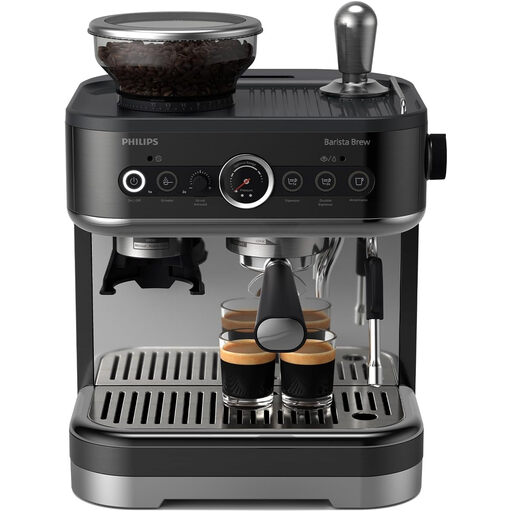
Why It Stands Out: This Philips machine bridges the gap between a beginner setup and a professional one. It combines the convenience of a built-in grinder with the control of a semi-automatic system, including a professional 58mm portafilter—the same size used in many cafés. The intuitive guidance and pressure gauge help you learn and perfect your technique.
Pros:
Who is it for? The aspiring home barista who wants to develop their skills. It offers hands-on control with helpful features that take the guesswork out of making great espresso.

Why It Stands Out: The De’Longhi Stilosa is a compact and straightforward home espresso machine that delivers on the fundamentals. Its 15-bar pump pressure ensures proper espresso extraction, and the manual stainless steel steam wand is perfect for learning to froth milk. Its small footprint makes it an excellent choice for kitchens where counter space is at a premium.
Pros:
Who is it for? Those new to espresso or anyone seeking a simple, affordable and compact machine that makes authentic-tasting coffee without taking up too much space.

Why It Stands Out: As a premium De'Longhi coffee machine, the Eletta Explore is all about variety and convenience. It offers over 50 hot and cold drink recipes at the touch of a button. Its standout feature is the Cold Extraction Technology, which can prepare a genuine cold brew in under five minutes. The dual LatteCrema Hot & Cool systems automatically prepare perfectly textured milk foam for any drink, hot or iced.
Pros:
bean to cup coffee machine for ultimate convenience.Who is it for? The coffee lover who wants endless variety without the effort. If you enjoy everything from a classic espresso to iced lattes and cold brew and value one-touch convenience above all, this machine is an excellent fit.
If our recommendations aren't quite what you're looking for, or if you have a specific aesthetic in mind, there are many other models to consider. For a timeless look that complements any kitchen décor, you can explore our wider collection.
? Explore our full range of black coffee maker models here.
A standard drip coffee machine slowly passes hot water through coffee grounds, producing a larger, less concentrated cup of coffee. An espresso machine uses high pressure to force a small amount of near-boiling water through finely-ground coffee, resulting in a concentrated shot of coffee with a rich crema on top. This espresso shot is the base for drinks like lattes and cappuccinos.
Prices can range from under ?100 for basic manual models to over ?1,000 for high-end bean-to-cup systems. A budget of ?150-?400 will get you a very capable semi-automatic machine that produces excellent espresso. For the convenience of a quality bean-to-cup model, expect to invest ?500 or more. The right amount depends on your desired level of convenience, features and drink variety.
A bean-to-cup machine is worth considering if you prioritise convenience, consistency and variety. They eliminate the manual steps of grinding, tamping and frothing, delivering café-quality drinks at the touch of a button. While the initial investment is higher, the long-term convenience and ability to use fresh beans for every cup make them a popular choice for busy coffee enthusiasts.