
24/7 Customer Support

Free returns

Same-day & Next-day Delivery

Quality Guaranteed

Unlock Your Welcome Offers: FREE Delivery | Up to 80% OFF | Free 30-day JoyPlus trial
Download the APP
Bringing the café experience home is an appealing thought, but the journey to finding the right espresso machine is often filled with confusing jargon and marketing promises that don't quite deliver. Many of us have been tempted by a sleek-looking machine, only to find it gathers dust after a few frustrating attempts at a decent coffee. As a Joybuy Product Recommendation Officer, my role is to help you see past the hype and focus on what truly matters for your daily brew.
Before you invest, let's look at a few common pitfalls that can lead to disappointment and a wasted purchase.
bean to cup coffee machine seems like the ultimate convenience. However, entry-level models often compromise on the most crucial component: the grinder. A non-adjustable or poor-quality grinder produces inconsistent grounds, making it impossible to achieve a good extraction, no matter how fancy the machine itself is.To make a confident choice, focus on the functional core of the machine. Understanding these three parameters will empower you to select a machine that fits your needs, rather than one that just looks good on the counter.
How a machine heats water is fundamental to the final taste. Most home machines use one of two systems:
Sage coffee machine models, can be ready to brew in mere seconds. According to Sage's internal testing, their ThermoJet system also uses significantly less energy compared to a traditional thermoblock. This is ideal for busy mornings when you don't want to wait.If you opt for a bean to cup coffee machine, the integrated grinder is non-negotiable. Look for hardened steel conical burrs and a wide range of adjustable grind settings (30 or more is a good sign). This gives you the control needed to "dial in" your beans—a process of adjusting the grind size to achieve the perfect extraction time and flavour.
The portafilter (the handle with a basket that holds the coffee grounds) is also important. A 54mm or 58mm portafilter is the standard for café machines, as this size allows for a more even water distribution and a fuller-bodied extraction.
Not all milk frothers are created equal. If you dream of making a flat white or a proper latte, you need a machine with a capable coffee machine with milk frother.
home barista kit should always include this type of wand.Instead of a one-size-fits-all list, we have matched our recommendations to specific user needs and lifestyles here in the UK.
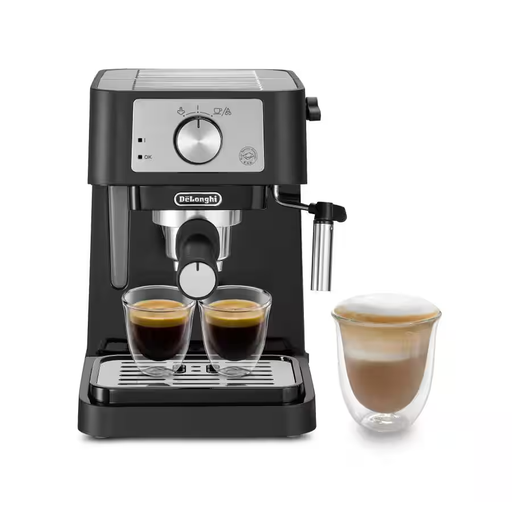
Why This Fits Their Persona: For those in the UK wanting to move beyond pods without a hefty initial investment. Its compact footprint is ideal for smaller kitchens and its straightforward manual operation is a great way to learn the basics of espresso making.
It's a manual machine that uses ground coffee or ESE pods, so you completely avoid the proprietary capsule trap and the risk of a poor-quality integrated grinder. You have the freedom to buy any coffee you like.
The stainless steel manual steam wand offers a genuine opportunity to learn milk texturing, a feature often missing at this price point. Its durable stainless steel boiler is built for consistency.
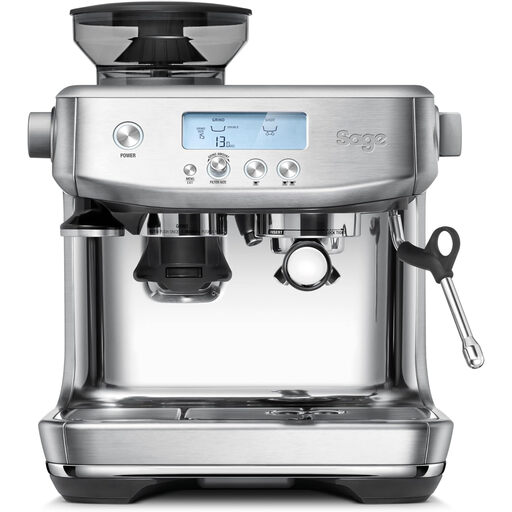
Why This Fits Their Persona: For the enthusiast who wants to master the craft. This machine provides all the tools—a precision grinder, manual steam wand and fast heat-up—in one integrated unit, forming a complete home barista setup.
It solves the "bad all-in-one" problem by including high-quality Baratza burrs with 30 grind settings, giving you the control of a separate grinder. The machine is engineered to deliver a 9-bar extraction, avoiding the high-pressure pitfall.
The ThermoJet heating system is ready in 3 seconds, eliminating the wait time. The intuitive LCD screen provides real-time feedback on grinding and extraction, helping you learn and improve your technique.
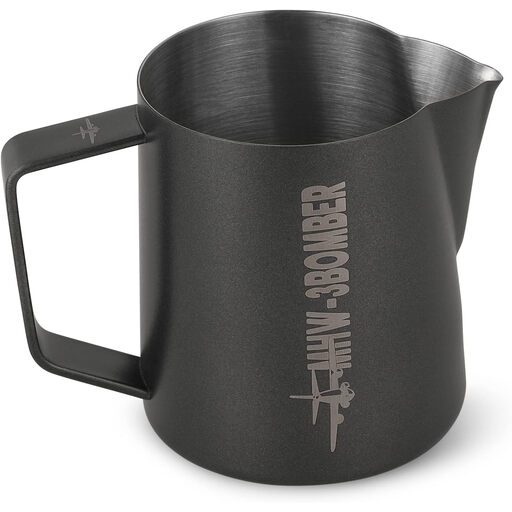
Why This Fits Their Persona: For the coffee lover who has a capable machine but struggles to pour detailed latte art. This is a specialised tool designed to elevate a specific skill, turning a good coffee into a great-looking one.
Many pitchers included with machines have generic, wide spouts that make controlled pouring difficult. This purpose-built latte art pitcher directly solves that problem with a precision-engineered spout for fine lines.
The patented spout design with dual curved flow channels provides superior control over the milk flow, which is essential for creating detailed patterns like rosettas and tulips. It's made from food-grade 304 stainless steel.
We have compiled a complete, real-time list of products that fully satisfy these strict selection criteria and UK safety regulations.
It can be a great choice if you value convenience, but it is crucial to choose a model with a high-quality, adjustable grinder. An entry-level bean to cup coffee machine with a poor grinder can be more frustrating than using a separate manual machine and a standalone grinder. Look for models that specify the type of burrs (e.g., conical steel burrs) and offer at least 15-20 grind settings to give you meaningful control.
Lifespan depends heavily on build quality and maintenance. An affordable machine with a mostly plastic construction might last 3-5 years with regular use. A more robust machine with a stainless steel body, a quality boiler or thermocoil and metal components can last from 5 to 10 years or more, provided you perform regular cleaning and descaling as recommended by the manufacturer.
The high number (15 or 20 bars) refers to the pump's maximum potential pressure. However, the ideal pressure for extracting a balanced shot of espresso is around 9 bars. Quality machines use the pump's power to first apply a gentle, low-pressure pre-infusion to saturate the coffee puck, before ramping up to a stable 9 bars for the main extraction. This two-stage process prevents channelling (where water finds a path of least resistance) and extracts flavour more evenly, avoiding the bitterness associated with overly high pressure.