What to check before buying
Start with the milk workflow you are willing to use every day, then decide how much help you want with grinding and espresso preparation. Check the space and cleaning steps for the complete setup, including a separate grinder if you plan to use one.
| Concern |
What to check |
Who this matters to |
| Milk texture and pouring |
Check for a manual steam wand or adjustable automatic milk texture, and whether manual steaming remains available. |
If I want to practise pouring a flat white, I need control over how I texture the milk. Around 33% of consumers put milk texture and pouring first. |
| Fresh-bean preparation |
Compare integrated grinding, grind adjustment and any dosing or tamping assistance. |
Fresh beans appeal to me, but I do not want dosing and tamping to dominate the routine; around 27% of consumers make preparation guidance their primary concern. |
| Speed and counter space |
Measure the space for the machine and any separate grinder; compare dimensions and stated heat-up time. |
When the worktop is limited or mornings are rushed, the whole setup has to fit the routine. About 20% of consumers prioritise space and speed. |
| Repeatability and cleaning |
Inspect the milk-system cleaning steps and the specific model’s drink and volume settings. |
I would rather make a consistent daily milk drink with fewer manual steps than practise steaming; around 20% of consumers put that convenience first. |
Joybuy product choices
These machines cover several ways to prepare espresso and milk for a flat white: manual steam-wand routines, fresh-bean machines with built-in grinders, and a model with automatic milk preparation. Check each model’s actual milk steps rather than assuming that “fully automatic” always includes automatic milk texturing.
 No image available
HiBREW H20 all-in-one coffee machine
Consider this if you want to grind beans in the machine and texture milk with a steam wand. Its listed configuration includes 20 grind levels, a 1.8 L water tank and hot and cold extraction; milk texturing remains part of the routine.
View on Joybuy
 No image available
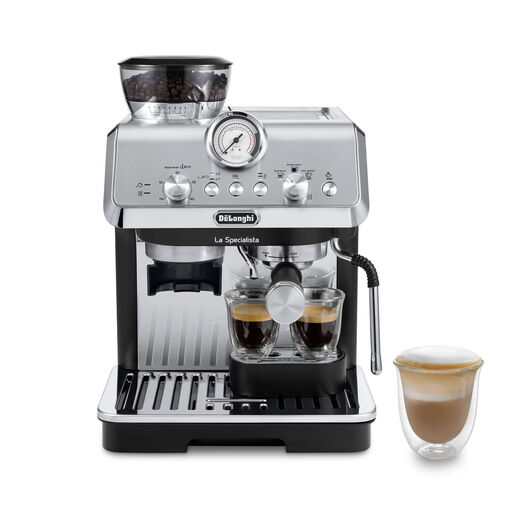
De’Longhi La Specialista Arte EC9155.MB
This manual bean-to-cup model suits a fresh-bean routine in which you also want to prepare the milk yourself. The silver-and-black EC9155.MB is listed with a milk frother; allow for hands-on preparation rather than a one-touch flat white.
View on Joybuy
 No image available
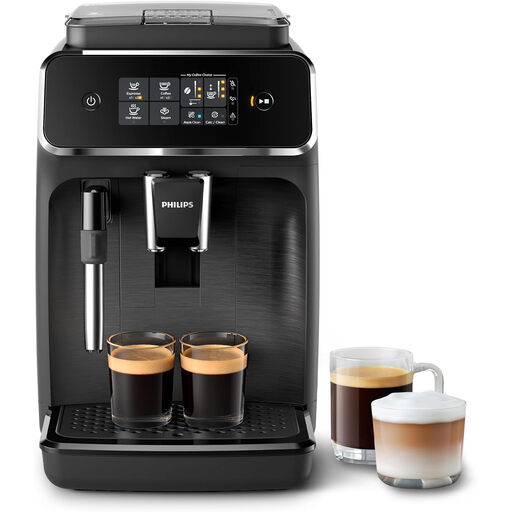
Philips EP2220/10 2200 Series
This is a choice for consumers who want automatic bean-to-cup coffee preparation but are willing to texture milk separately. The listing identifies two coffee drinks, a ceramic grinder and a milk frother; check the milk routine before choosing it for flat whites.
View on Joybuy
 No image available
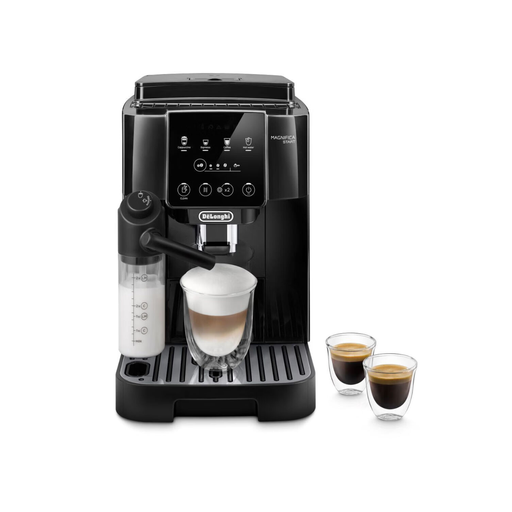
De’Longhi Magnifica Start ECAM220.60.B
Choose this route if automatic milk preparation matters more to you than steaming and pouring by hand. The ECAM220.60.B listing specifies automatic milk preparation and four one-touch recipes; confirm that its drink settings and milk texture suit the flat white you want.
View on Joybuy
 No image available
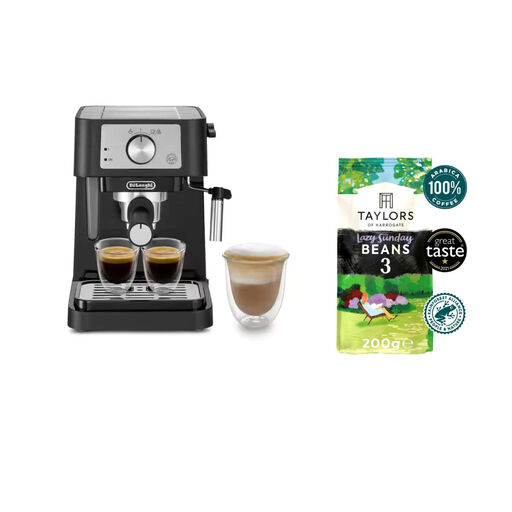
De’Longhi Stilosa EC260.BK with Taylors of Harrogate Lazy Sunday Coffee Beans 200g
This compact espresso machine suits a hands-on milk routine using its steam wand. The bundle includes 200 g of coffee beans; if you intend to use those beans, arrange a way to grind them suitably for espresso.
View on Joybuy
Flat-white machine questions
Should I choose a steam wand or automatic milk preparation?
Choose a manual steam wand if learning to texture and pour milk is central to your flat white; choose automatic milk preparation if fewer daily steps matter more. For an automatic model, check its specific drink settings, milk texture and cleaning routine before buying.
Do I need a built-in grinder for flat whites?
No: a machine can use suitably ground coffee or work alongside a separate grinder. A built-in grinder consolidates the setup, but on a manual or assisted-manual machine you may still need to adjust the grind and prepare the coffee.
What cleaning should I plan for?
Check the instructions for the exact machine’s milk parts, brewing components and descaling routine. Sage and De’Longhi provide model-specific maintenance guidance, while Philips describes LatteGo as a two-part, tube-free milk system; those descriptions do not replace checking the model you intend to buy.
What should I check for a UK electrical purchase?
Check the machine’s rating plate, voltage and plug against the supply where you will use it, along with its intended market and warranty territory. The Health and Safety Executive advises checking electrical-supply suitability; Department for Business and Trade guidance for Great Britain recognises CE marking alongside UKCA marking in relevant regimes, but Northern Ireland has different processes, so confirm which requirements apply to the specific product and destination.


