
24/7 Customer Support

Free returns

Same-day & Next-day Delivery

Quality Guaranteed

Unlock Your Welcome Offers: FREE Delivery | Up to 80% OFF | Free 30-day JoyPlus trial
Download the APP
Moving on from instant coffee or a simple filter pot is a big step. The promise of pulling a rich, aromatic shot of espresso in your own kitchen is tempting, but the sheer variety of machines can be overwhelming. If you're looking for a genuine upgrade to your morning routine, you've come to the right place.
As the Joybuy Product Recommendation Officer, my role is to help you navigate the options. This guide cuts through the marketing clutter to give you practical advice on selecting a home coffee machine, whether you're after push-button convenience or a hands-on barista experience. We will look at different types of machines and highlight a few recommendations to help you find the right fit for your home in the UK.
Before you choose, it helps to understand the main types of espresso machines and the features that really matter.
The first decision is about how involved you want to be in the coffee-making process.
cappuccino maker for busy mornings.Look for these key specifications to ensure your machine can deliver.
coffee machine with grinder is a significant advantage. Using freshly ground beans unlocks far more aroma and flavour than using pre-ground coffee. Ceramic burr grinders are often favoured for their durability and for producing less heat, which helps preserve the coffee's delicate oils.coffee machine with milk frother is essential. Manual steam wands give you precise control to create silky microfoam for latte art, while automatic frothers offer convenience by doing the work for you.Here are a few options that cater to different needs and skill levels, from simple operation to full barista control.
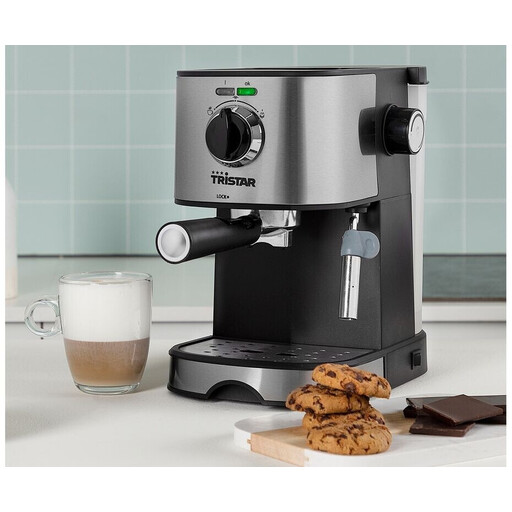
Why It Stands Out: The Tristar CM-2275BS is an excellent starting point for anyone new to making espresso at home. Its compact design is perfect for smaller UK kitchens, yet it packs a 15-bar pressure pump to extract a proper, full-bodied espresso from your favourite ground coffee. The simple rotary controls and manual steam wand make it easy to learn the basics of pulling shots and frothing milk.
Pros:
Who is it for? This pump espresso machine is ideal for beginners, students or anyone with limited counter space who wants an affordable, hands-on introduction to making real espresso and cappuccinos.
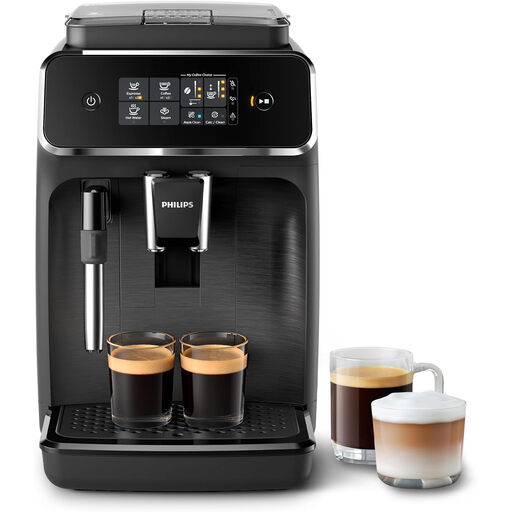
Why It Stands Out: This Philips model brings the convenience of a bean to cup coffee machine into your home. With an intuitive touch display, you can get freshly ground coffee or espresso at the press of a button. The durable ceramic grinder has 12 settings, and the 'My Coffee Choice' menu lets you easily adjust the strength and volume. Maintenance is also simplified, with dishwasher-safe parts and automatic descaling alerts.
Pros:
Who is it for? Perfect for busy individuals or families who want consistently great coffee from fresh beans without the learning curve or effort of a manual machine.
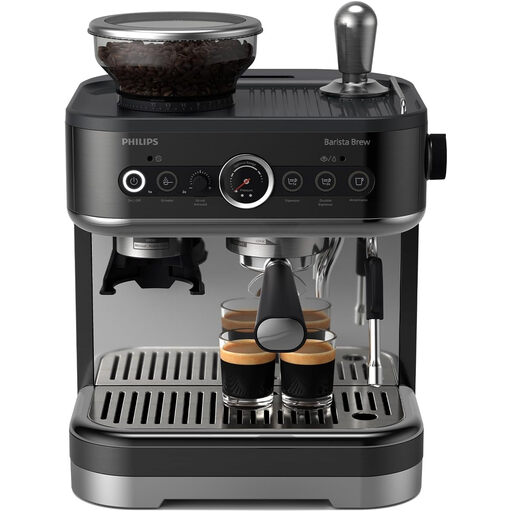
Why It Stands Out: The Philips Barista Brew is a barista coffee machine designed for the home enthusiast. It bridges the gap between automatic convenience and manual control by pairing an integrated conical burr grinder with a professional-style 58mm portafilter. Features like the built-in pressure gauge and PID temperature control provide the feedback needed to hone your skills and pull consistently excellent shots. The powerful steam wand is capable of producing fine microfoam suitable for latte art.
Pros:
Who is it for? This machine is for the aspiring home barista who enjoys the ritual of making coffee and wants precise control over every variable, from grind size to extraction pressure.
Once you've selected your ideal machine, the next step is finding the perfect vessel. The right cup can enhance the aroma and maintain the temperature of your drink, completing the café experience at home.
Explore our collection of coffee machine cups to find the perfect match for your new setup.
The key difference is pressure. A filter coffee machine drips hot water over coffee grounds using gravity, producing a larger, less intense cup of coffee. An espresso machine uses high pressure (typically 9 bars or more) to force a small amount of hot water through finely-ground, compacted coffee. This creates a highly concentrated shot of coffee with a rich layer of crema, which serves as the base for drinks like lattes, cappuccinos and flat whites.
While the golden standard for espresso extraction is 9 bars of pressure at the coffee puck, many home machines are equipped with a 15-bar pump. This higher rating ensures the machine can consistently deliver sufficient and stable pressure throughout the brewing process, even if your grind or tamp isn't perfect. It's a reliable specification that indicates the machine is capable of producing genuine espresso.
Yes, you can use any coffee beans, but for optimal results, it's a good idea to use beans that are labelled as an "espresso roast." These blends are typically roasted and blended to produce a balanced, rich and less acidic flavour when extracted under pressure. If you have a bean to cup coffee machine, it's advisable to avoid very dark, oily beans, as the excess oil can sometimes clog the internal grinding mechanism over time. Using a machine with an integrated grinder will always give you a fresher, more flavourful result than using pre-ground coffee.