Choose a compact manual espresso machine with a milk-frothing system if counter space and separate coffee preferences matter most. An integrated-grinder machine makes more sense when everyone can agree on beans, settings and who clears the grounds; either way, add honey to the cup and agree on a milk-wand cleaning routine.
Who is this for?
Shared-kitchen clean-up planners
People who want each user to empty coffee waste and clean milk-contact equipment after making a drink. Food Standards Agency guidance makes contamination control particularly relevant where a food business uses shared facilities.
Space-constrained honey-latte drinkers
People who need espresso and manually textured milk without giving a large machine a permanent place on the shared worktop. Separate portions of ground coffee, or pods accepted by the chosen model, may also suit different coffee preferences.
Fresh-bean routine owners
People willing to coordinate beans, grinding, used grounds and steam-wand cleaning in exchange for a more hands-on whole-bean espresso routine.
What matters when choosing?
Decide who will clean the machine after each drink, then measure its intended position. Only then is it worth deciding whether an integrated grinder suits the group’s coffee routine.
| Concern |
What to check |
Who this matters to |
| Cleaning and milk handling |
Check how to empty the drip tray and clean the steam wand; agree who does both after use. |
I need the next person to find a clean machine, with no milk residue left on shared equipment. Around 40% of consumers put clean-up and milk handling first. |
| Counter space and access |
Measure width, depth, height and the clearance needed to refill water and remove the tray. |
When worktop space is tight, I want to make a drink without blocking other kitchen tasks. Compactness and access come first for around 30% of consumers. |
| Whole-bean routine |
Decide whether users will share beans and grinder settings, and who will dispose of used grounds. |
If we all want to prepare espresso from whole beans, we need a routine everyone will follow. Around 30% of consumers prioritise that fresh-bean workflow. |
Shared-kitchen buying pitfalls
-
Choosing a built-in grinder before agreeing on beans
A shared hopper and adjustable grinder add decisions about beans, settings and grounds disposal. The Sage Barista Express BES875UK listing also describes a larger machine than the 15 cm-wide De’Longhi Dedica Style cited by De’Longhi GB.
Choose the integrated-grinder route if users can agree on those tasks. Otherwise, consider a manual machine that accepts each person’s separately prepared ground coffee.
-
Assuming the steam wand takes care of itself
A wand can prepare textured milk, but milk-contact equipment needs attention after use. In a food-business shared facility, Food Standards Agency guidance also calls for contamination controls.
Agree who cleans the wand after each drink and follow the chosen machine’s instructions. Decide how shared milk tools will be handled where different ingredients are used.
-
Measuring only the machine’s width
Users also need room to reach the water tank, portafilter, wand and drip tray. Height and depth can affect whether a machine works in its intended position.
Measure the available space in all three directions and check that routine refilling and emptying will be possible there.
-
Treating every shared kitchen as a household kitchen
A kitchen used to operate a food business has obligations beyond choosing and cleaning an appliance. The Food Standards Agency’s registration service states that a new food business must register with its local authority at least 28 days before trading or food operations begin.
If drinks are prepared as part of a food business, confirm the applicable registration and food-safety duties with the local authority.
Brands to consider for these machine types
De’Longhi
Its Dedica Style EC685.BK EX:4 is a reference point for a narrow manual machine with milk frothing.
- De’Longhi GB lists this model as 15 cm wide, with a 1.1 L tank and removable drip tray.
- Coffee preparation and milk frothing remain manual; check whether its tank capacity suits the number of shared users.
Sage
The Barista Express BES875UK represents the integrated-grinder route for a group prepared to manage whole beans.
- The listed specification covers an integrated burr grinder, steam wand, 2 L tank and removable drip tray.
- Its listed H40 × W33 × D31 cm dimensions call for a suitable worktop position and agreed cleaning responsibilities.
Gaggia
The Classic range is relevant to users seeking a traditional, hands-on manual espresso format.
- Gaggia UK describes a stainless-steel filter holder, brass group and professional steam arm for the cited Classic range.
- Users still need suitable coffee preparation and a shared cleaning routine; those machine features do not remove the manual work.
Smeg
The ECF12 is another compact manual-machine reference for users considering separate coffee portions.
- Smeg UK describes the cited ECF12 model as compatible with ground coffee or paper pods and lists a removable drip-tray base.
- Confirm that the exact model accepts the coffee format you intend to use; its styling alone says nothing about shared clean-up.
Joybuy product choices for shared-kitchen honey lattes
These machines cover manual espresso preparation with milk frothing and, for groups sharing a whole-bean routine, bean-to-cup options. Compare the space and clean-up each one requires before choosing a workflow.
 No image available
IAGREEA CM3050-2 espresso machine, silver
Consider this manual steam-wand machine if users are willing to prepare their own coffee and clean milk-contact equipment after use.
The product name specifies 20 bar pressure and a 1.5 L water capacity. Check its dimensions against the shared counter before buying.
View on Joybuy
 No image available
De’Longhi Stilosa EC260.BK espresso machine, black
This manual machine suits users prepared to make espresso and steam milk themselves rather than share a grinder routine.
Its product name specifies a steam wand and 15 bar pressure. Check its dimensions and water-tank access for the intended position.
View on Joybuy
 No image available
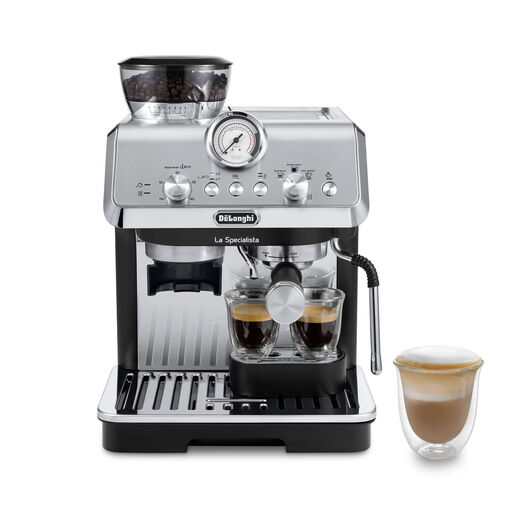
De’Longhi La Specialista Arte EC9155.MB, silver and black
Consider this manual bean-to-cup machine when users want a shared whole-bean routine and will take responsibility for grounds and milk-contact clean-up.
The product name specifies a milk frother. Check worktop clearance and how the drip tray is emptied before choosing it for a shared position.
View on Joybuy
 No image available
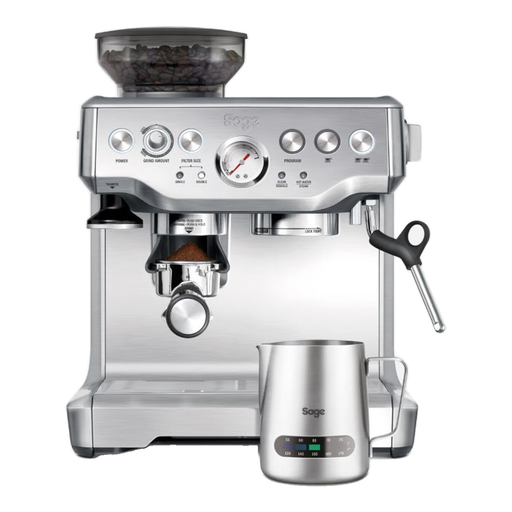
Sage The Barista Express BES875UK with Temp Control Milk Jug
This integrated-grinder option suits a group willing to agree on beans, used-grounds disposal and steam-wand cleaning.
The product name specifies 16 grind settings, PID temperature control and a steam wand. The BES875UK is listed with a 2 L tank and removable drip tray; measure the intended space and check refill access before buying.
View on Joybuy
 No image available
De’Longhi Dedica Duo EC890.G espresso machine, green
This manual option suits users who want steamed milk for honey lattes and may also use the model’s cold-brew function.
The product name specifies a milk steam wand. Confirm the machine’s dimensions, water-tank access and cleaning instructions for shared use.
View on Joybuy
Frequently asked questions
Does a honey latte need a special espresso-machine setting?
No honey-specific setting is needed for this choice. Select a machine for the espresso and milk preparation you want, then add honey separately to each cup so drinkers can adjust it themselves.
What if everyone prefers different coffee?
A manual machine that accepts ground coffee lets users prepare separate portions without agreeing on one hopper of beans. Paper pods are another option only where the exact model lists them as compatible.
Do I need a steam wand for a honey latte?
Choose a steam wand or milk-frothing system if you want hot, textured milk. In a shared kitchen, agree who cleans the milk-contact parts after each use.
Do food-business rules apply to a shared household kitchen?
Sharing a household kitchen does not by itself establish that it is operating as a food business. If drinks are prepared as part of a food business, the Food Standards Agency’s UK registration service states that a new business must register with its local authority at least 28 days before trading or food operations start; confirm the duties that apply to the actual operation.


