What matters when choosing
For piccolo lattes in a shared kitchen, decide who will make and clean each drink before choosing between automatic and manual milk preparation. Then measure the counter and check how coffee will be supplied.
Compact machine with automatic milk texturing
Choose when: Several users want selectable milk settings without each learning manual steaming; Sage lists an automatic wand for the Bambino Plus, and De'Longhi lists Auto LatteArt for the Dedica Maestro Plus.
Trade-off: Users still prepare the coffee, clear the portafilter and clean milk-contact parts. The Dedica Maestro Plus is listed as 450 mm deep, so its compact format does not remove the need to check counter depth.
Narrow machine with a manual steam wand
Choose when: Counter width is restrictive and a regular user is willing to steam milk; De'Longhi lists the Dedica Style as 15 cm wide.
Trade-off: Milk preparation depends more on the person using the wand, and every user needs to follow the shared cleaning routine.
Traditional 58 mm manual machine
Choose when: A regular user wants the hands-on filter-holder and steam-wand routine described in Gaggia UK's Classic setup guide.
Trade-off: Gaggia UK specifies very finely ground coffee for its traditional 16 g basket; someone must take responsibility for that preparation as well as cleaning.
| Concern |
What to check |
Who this matters to |
| Milk workflow |
Check whether texturing is automatic or manual, and whether a milk jug is included. |
If different people make piccolo lattes, I want a milk step they can follow without each learning to steam by hand; around 27% of consumers put a repeatable milk workflow first. |
| Cleaning ownership |
Agree who cleans the wand and jugs and empties the drip tray; check the model's cleaning instructions. |
With one wand and shared equipment, I need a clear routine after every milk drink; cleaning ownership comes first for around 33% of consumers. |
| Counter fit |
Measure width, depth and height, including room to reach the tank and use the portafilter. |
I cannot leave the machine blocking a shared worktop or sink, so its usable footprint decides the choice; around 27% of consumers prioritise counter fit. |
| Hands-on control |
Check the basket's coffee requirements and whether the regular users want manual milk steaming. |
If I will make most drinks myself, I may prefer to prepare the espresso and texture the milk directly; around 13% of consumers put hands-on control first. |
Joybuy products for this decision
These choices cover different ways to prepare espresso and milk in a shared kitchen, from a narrow manual machine to capsule and bean-to-cup options. Check each model's milk routine, coffee format and working space against the people who will use it.
 No image available
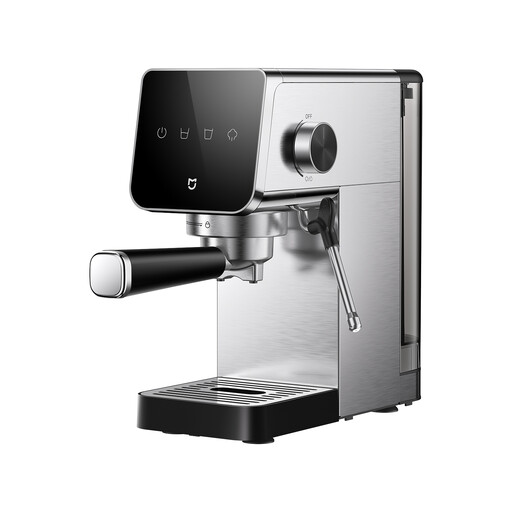
Mijia Semi-Automatic Espresso Machine, 20Bar Pump
Consider this for a manual espresso-and-milk routine where users are willing to operate and clean the steam wand. Check the room needed for tank access and portafilter handling, not just the space the machine occupies.
The product name specifies a 20Bar pump; that figure alone does not establish how the finished piccolo will taste.
View on Joybuy
 No image available
Lavazza A Modo Mio Deséa, Integrated Milk Frother, 1.1 L
This capsule-machine option suits users who prefer an integrated milk-drink routine to preparing ground coffee in a portafilter. Check that its espresso serving options and milk quantity suit the piccolo you want, and agree how the frother will be cleaned.
It uses Lavazza A Modo Mio capsules and has an integrated hot-and-cold milk frother, a glass mug and a stated 1.1 L capacity.
View on Joybuy
 No image available
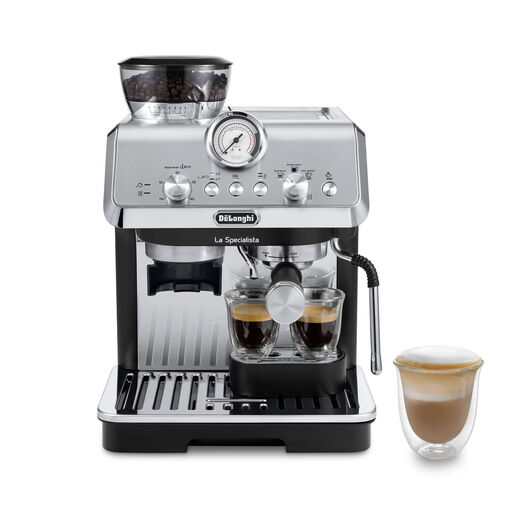
De'Longhi La Specialista Arte EC9155.MB
Consider this if a regular user wants to prepare espresso and steam milk manually rather than rely on an automatic milk programme. Confirm that the counter leaves room for the machine and for the hands-on preparation around it.
The product is described as a manual bean-to-cup machine with a milk frother.
View on Joybuy
 No image available
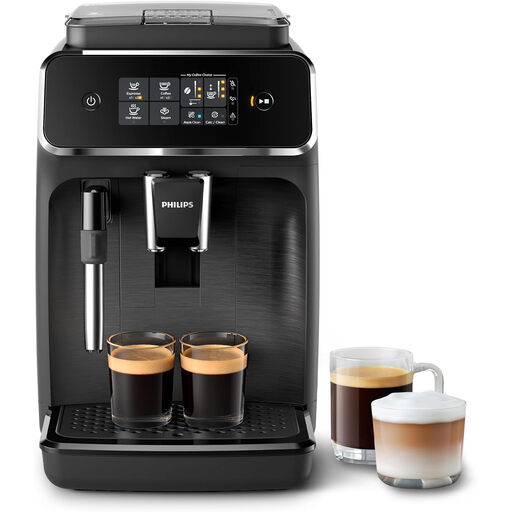
Philips EP2220/10 2200 Series Bean-to-Cup Machine
This is an option for users who want bean-to-cup coffee preparation but are content to handle milk frothing separately. Check the milk routine and the model's intended-use instructions if the shared kitchen serves a business.
The product name specifies a ceramic grinder, a milk frother and two coffee drinks; it does not identify the frother as an automatic milk-texturing system.
View on Joybuy
 No image available
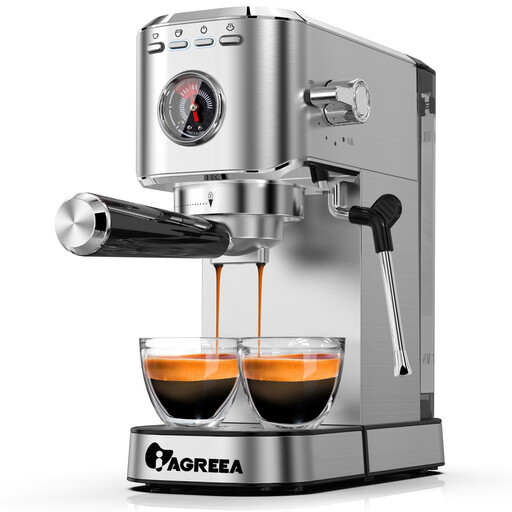
IAGREEA 20Bar Espresso Machine, 1.1 L Tank
This manual espresso-and-milk option suits users willing to share responsibility for steaming and cleaning. Measure the counter with enough space to reach the removable tank and use the portafilter.
The product name specifies a steam wand, pressure gauge, single- and double-shot options, and a 1.1 L removable water tank. Its 20Bar figure alone does not establish drink quality.
View on Joybuy
Frequently asked questions
Do we need automatic milk texturing for piccolo lattes?
No: a manual steam wand is an option if the people making the drinks are willing to learn and repeat the milk step. Automatic texturing is worth considering when several users want selectable milk settings without steaming by hand, but it does not remove coffee preparation or cleaning.
How should we handle dairy and plant milks on one machine?
Agree who cleans the wand and jugs between uses, and follow the machine's instructions for milk-contact parts. If a food business prepares drinks for people with declared allergies, it needs a procedure suited to that risk; Lancaster City Council warns that sanitiser wipes do not remove allergen proteins, so a wipe alone should not be treated as an allergen-control procedure.
How often should a shared espresso machine be cleaned and descaled?
Use the cleaning and descaling instructions for the exact model and agree who carries them out. For food businesses, GOV.UK says a cleaning schedule should cover what is cleaned or disinfected, how often and which products are used. De'Longhi says descaling frequency for its cited Dedica models depends on water hardness; that interval should not be applied to every machine.
Does a shared kitchen need a commercial espresso machine?
Not solely because several people share the kitchen: the intended use and the setting matter. For a food business or commercial operation, check the machine manufacturer's intended-use instructions and obtain setting-specific advice on hygiene and equipment safety before installation. Argyll and Bute Council's commercial-coffee-machine guidance addresses pressure-system considerations for commercial machines, but applicability depends on the equipment and its use.


