Shared-kitchen convenience seekers
If several people make lattes, a one-touch bean-to-cup machine or a capsule setup with a frother offers a more defined routine than grinding and steaming milk manually for every drink.


Choose an automatic bean-to-cup machine if several people want milk drinks with few preparation steps, or a capsule machine with a frother if straightforward portions matter more than using whole beans. A manual machine suits a group willing to grind coffee, steam milk and clean up after each drink. Hazelnut syrup is an addition to the drink, so make the decision around the milk routine, cleaning responsibilities, worktop space and a coffee format everyone can replenish.
If several people make lattes, a one-touch bean-to-cup machine or a capsule setup with a frother offers a more defined routine than grinding and steaming milk manually for every drink.
If adjusting espresso and milk texture matters to you, a machine with a grinder and manual steam wand gives you those controls. Expect to take responsibility for the preparation and clean-up.
Allow space for the machine and its day-to-day use, agree who cleans it and, in a workplace kitchen, check the site’s appliance approval and electrical-equipment maintenance process.
For a shared-kitchen hazelnut latte, agree on the preparation and cleaning routine before choosing how much control each user needs.
Choose when: Several users want espresso-based milk drinks without learning to grind, dose and steam milk themselves.
Allow for: A permanent counter position, replenishing beans and water, emptying grounds and following the milk-system care routine.
Choose when: Users prefer portioned coffee and a defined espresso-and-milk routine.
Allow for: The selected machine’s capsule system and a workable way to collect used capsules. Frother cleaning still needs an owner.
Choose when: Regular users want to adjust fresh-bean espresso and texture milk with a steam wand.
Allow for: Learning the workflow and cleaning the grinder area, portafilter and steam wand after use.
| Concern | What to check | Who this matters to |
|---|---|---|
| Few preparation steps | Check whether espresso and milk follow a routine each user can manage, and which beans or capsules it requires. | When several people share the kitchen, I want to make a latte without holding up the next user; around 42% of consumers put low-step preparation first. |
| Milk-system care | Check how milk-contact parts are cleaned after use and what descaling the exact model requires. | I need the milk equipment left ready for the next person, rather than assuming someone else will clean it. For around 33% of consumers, cleaning ownership comes first. |
| Espresso and milk control | Check for an integrated grinder, adjustable settings and a steam wand if hands-on control is the priority. | If I want to adjust my espresso and milk texture, I can accept more preparation and wipe-down work; around 25% of consumers prioritise that control. |
A manual machine calls for grinding, dosing and steaming milk for each drink. Those steps can become an obstacle when users expect a button-led routine.
Choose it only if regular users are willing to learn the workflow and clean up; otherwise, consider automatic milk preparation or a capsule machine with a frother.
An after-use milk-cleaning function does not replace the model’s other cleaning and descaling instructions. In a shared kitchen, those tasks need an agreed owner.
Before buying, check the exact machine’s milk-part care, descaling guidance and any consumables it calls for.
Portioned drinks are convenient only if the group also has somewhere to keep used capsules and a practical return or disposal arrangement.
Check the options for the capsule system you choose. Nespresso describes UK drop-off and collection routes for its capsules; do not assume the same arrangements apply to another system.
De’Longhi gives the Magnifica Start ECAM220.60.B EX:1 dimensions as 240 × 440 × 350 mm. A workplace kitchen may also have its own process for introducing and maintaining electrical equipment.
Measure the proposed position, including access for filling and cleaning. If the kitchen is at work, ask the building or facilities manager about appliance approval before ordering.
The Barista Express BES875UK is a hands-on option for making fresh-bean espresso and texturing milk for lattes.
The Magnifica Start ECAM220.60.B EX:1 illustrates the automatic-milk route for shared espresso-based drinks.
CitiZ & Milk is a Nespresso Original capsule example with an integrated Aeroccino3 frother.
These machines cover automatic bean-to-cup, capsule-and-frother and hands-on espresso approaches to a shared-kitchen hazelnut latte. Compare the coffee format and milk clean-up each group is prepared to manage; add hazelnut syrup separately.
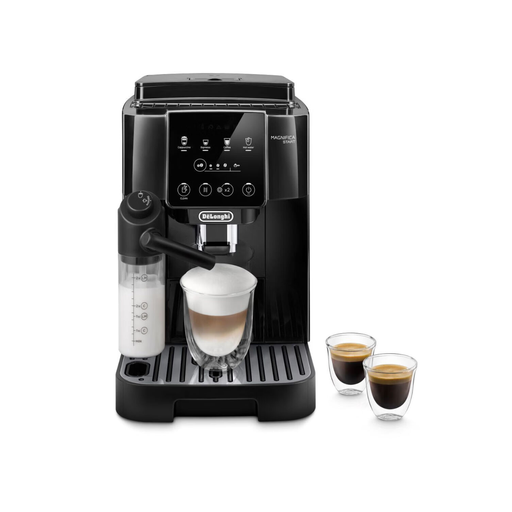 No image available
Consider this bean-to-cup model when several users want an automatic-milk drink routine rather than manual steaming.
The listed configuration has four one-touch recipes and automatic milk preparation. Agree who will handle milk-system care, grounds and descaling, and check the space needed for the exact model.
 No image available
This pod machine suits users who want a capsule espresso-and-milk routine without a manual steam wand.
Its title specifies an integrated hot-and-cold milk frother and a 1.1 L water tank. Confirm that the group can replenish Lavazza A Modo Mio capsules and that the machine fits the available worktop.
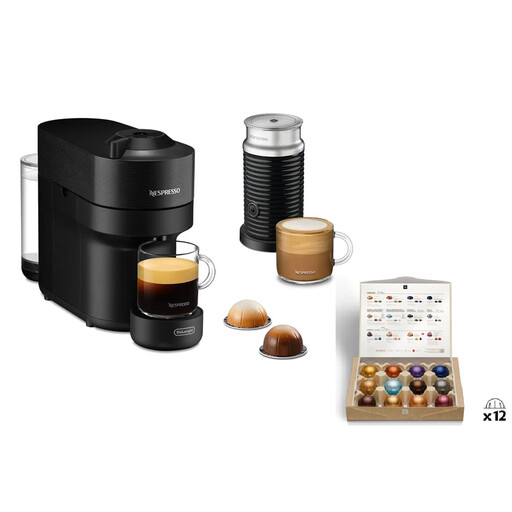 No image available
Consider this bundle when users prefer portioned coffee and a separate frother for milk.
The bundle name includes an Aeroccino frother. Confirm access to Vertuo capsules, a used-capsule routine and enough space for both pieces of equipment.
 No image available
This is another capsule-and-frother option for users who do not want to steam milk manually.
The listed variant has hot-and-cold milk frothing and a 1.0 L water tank. Check that Lavazza A Modo Mio capsules suit the group, and agree who will rinse the frother components after use.
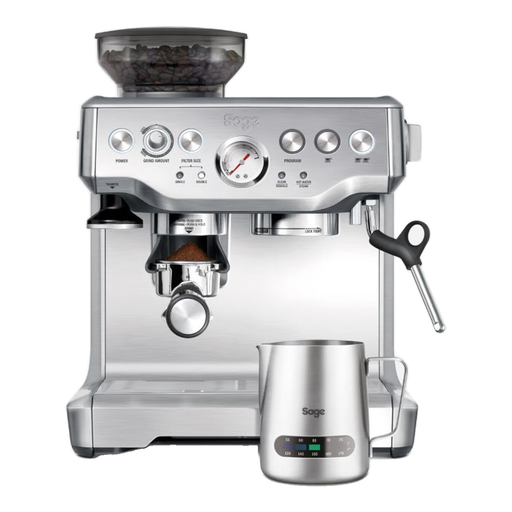 No image available
Choose this hands-on route if regular users want to adjust fresh-bean espresso and steam their own latte milk.
The listed machine has an integrated grinder with 16 settings, PID temperature control and a manual steam wand. Make sure users will grind, dose, steam and clean up, and confirm worktop fit and electrical suitability for its intended location.
No dedicated hazelnut setting is needed: choose a machine that makes the espresso and milk you want, then add hazelnut syrup to taste. A steam wand offers hands-on milk texturing; an automatic milk system or frother reduces the manual steps.
Follow the instructions for the exact model and the local water-hardness setting. De’Longhi says descaling frequency for its Dedica machines depends on water hardness; do not apply one model’s schedule to every shared-kitchen machine.
Do not assume a single testing rule applies to every workplace machine. The Health and Safety Executive describes a portable-electrical-equipment maintenance approach involving user checks, visual inspection and testing; ask the facilities manager how the workplace assesses and maintains appliances before bringing one in.
Choose a collection and return routine that works for the capsule system before adopting it for the kitchen. Nespresso UK describes supermarket drop-off, boutique and collection options for its capsules; check the applicable arrangements if choosing another brand.