
24/7 Customer Support

Free returns

Same-day & Next-day Delivery

Quality Guaranteed

Unlock Your Welcome Offers: FREE Delivery | Up to 80% OFF | Free 30-day JoyPlus trial
Download the APP
Bringing the café experience into your home is an appealing thought, but choosing the right machine can feel like navigating a minefield of marketing jargon. Many of us have been tempted by a sleek-looking machine, only to find it produces lacklustre coffee or becomes a hassle to clean. As your Joybuy Product Recommendation Officer, my role is to help you see past the hype and focus on the features that genuinely deliver a superb cup of coffee, day after day.
Before you invest, let's look at a few common pitfalls that can lead to buyer's remorse.
coffee machine with steam wand often provides more control and is significantly easier to keep clean.compact espresso machine is a fantastic solution for smaller UK kitchens. However, some ultra-small models achieve their size by shrinking essential components. This can mean a tiny water tank that needs constant refilling, a small drip tray that overflows easily and a less robust internal build that may not stand up to daily use.To make a confident choice, focus on the core mechanics of the machine rather than just the headline features. Here are the three parameters you should always check.
The ideal pressure for extracting espresso is around 9 bars at the group head. A machine rated for 15 to 20 bars indicates it has a powerful pump capable of achieving this consistently. Look for models that mention a quality pump, such as an ULKA pump, which is known for its reliability. A 20 bar coffee machine with a pressure gauge is even better, as it gives you real-time feedback, helping you perfect your technique and become a true home barista coffee machine operator.
How a machine heats water directly impacts its speed and consistency. Most modern home machines use a thermoblock system. This works like an instantaneous water heater, flash-heating only the water needed for your shot. This means a much faster start-up time compared to older boiler designs. For those who love a cappuccino and latte maker, a dual-circuit thermoblock is a significant advantage, as it allows you to pull an espresso shot and steam milk at the same time, just like in a professional café.
The materials used in an espresso machine are a good indicator of its longevity and performance. A stainless steel espresso machine is not just about aesthetics; the metal body offers superior durability and is easier to wipe clean than plastic. Stainless steel also contributes to better thermal stability, helping to keep the machine at an optimal temperature during brewing. Pay attention to the portafilter (the handle you put the coffee in) as well—a heavier, well-made portafilter will retain heat better and contribute to a more consistent extraction.
Instead of a single "best" model, the right machine is one that fits your specific needs and lifestyle. Here are a few options from our catalogue, matched to different types of home coffee lovers.
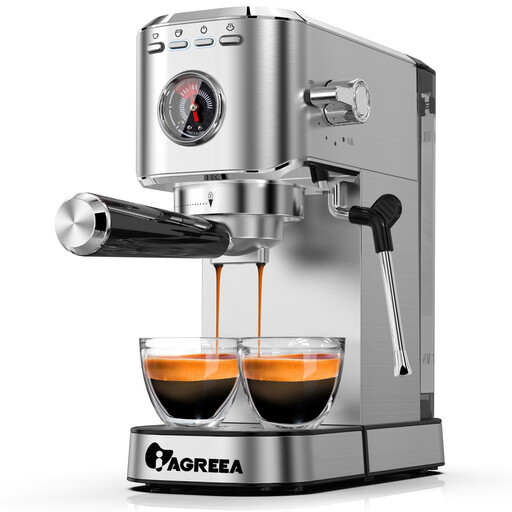
Why This Fits Their Persona: This user wants control and feedback to hone their skills. The visible pressure gauge, powerful adjustable steam wand and durable stainless steel build provide the tools and reliability needed to experiment with grind size, tamping pressure and latte art.
It directly counters the "high-pressure hype" by including a pressure gauge, shifting the focus from a simple number to observable, consistent performance during extraction.
Real-time pressure gauge for extraction feedback. Adjustable steam wand offers precise control for creating microfoam.
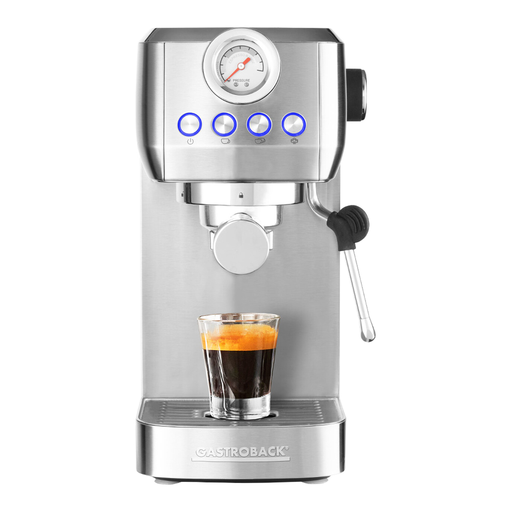
Why This Fits Their Persona: Perfect for someone in a flat or with limited counter space who still wants authentic espresso. Its ultra-slim 15cm width is a major benefit, but it doesn't sacrifice core quality, featuring a professional ULKA pump and a manual steam wand for learning the craft.
It avoids the "overly compact compromise" by using quality internal components like a ULKA pump and a decent 1.3L water tank, ensuring it performs reliably despite its small footprint.
Ultra-slim 15cm width fits in tight spaces. Features a professional 15 bar ULKA pump for reliable extraction.
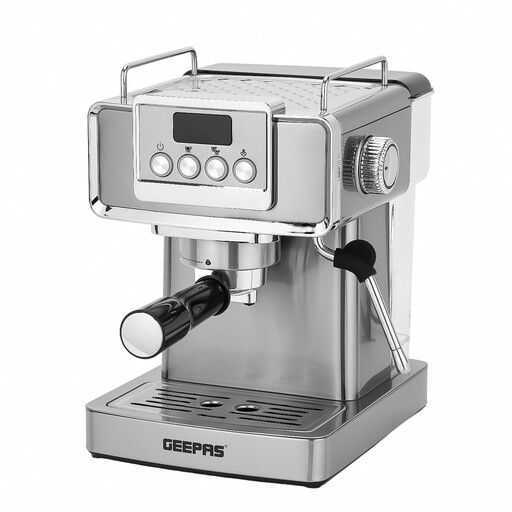
Why This Fits Their Persona: This user values robust construction and user-friendly features for daily use. The Geepas machine offers a powerful 20 bar pump, a large 1.8L water tank for fewer refills and a durable stainless steel finish, making it a reliable workhorse for any kitchen.
By combining a powerful 20 bar pump with a rapid heat system and a simple manual steam wand, it avoids the cleaning complexity of automatic frothers while delivering consistent power for both brewing and steaming.
Large 1.8L water reservoir reduces frequency of refills. Includes a cup warming tray to maintain coffee temperature.
A great coffee setup is also a clean one. While all these machines feature removable drip trays to catch spills, you can further protect your countertops and maintain a tidy brewing station with a dedicated mat. A purpose-built kitchen drain mat or water tray placed under your machine and grinder can catch stray grounds and drips, making cleanup effortless.
We have compiled a complete, real-time list of products that fully satisfy these strict selection criteria and UK safety regulations.
Not necessarily. The optimal extraction pressure is around 9 bars. Both 15 and 20 bar pumps are more than capable of achieving this. The more important factors are the quality of the pump and the machine's ability to maintain stable pressure and temperature throughout the shot. A well-regulated 15 bar machine will outperform a poorly designed 20 bar one.
For a manual steam wand, you should wipe it with a damp cloth and purge it (run steam through it for a second) immediately after every use. The drip tray should be emptied and rinsed daily. A deeper clean, known as backflushing (if the machine supports it) and descaling should be performed every 1-3 months, depending on your usage and water hardness.
Yes, you can. Oat, soy and almond milks can all be steamed to create foam for lattes and cappuccinos. However, "barista edition" versions of these milks contain stabilisers that help them create a more stable and silky microfoam, similar to dairy milk. Results with standard plant-based milks can vary.