Low-fuss family latte makers
If you prepare several drinks around a meal, automatic or guided milk controls reduce the amount of steaming you need to manage yourself. Check how the selected machine handles consecutive drinks.


For several coconut milk lattes around a family meal, choose automatic or guided milk preparation if reducing hands-on steaming matters most; choose a manual steam wand if you want direct control and are willing to practise. Check the exact machine’s plant-milk settings: Sage Appliances advises keeping non-dairy milk at or below 55°C because it can separate or curdle above that temperature.
If you prepare several drinks around a meal, automatic or guided milk controls reduce the amount of steaming you need to manage yourself. Check how the selected machine handles consecutive drinks.
If avoiding overheated or separated coconut milk is your priority, look closely at temperature adjustment, texture controls and access for cleaning the milk system. Sage Appliances advises keeping non-dairy milk at or below 55°C.
If you want to grind beans and control milk texture yourself, a grinder-equipped machine with a manual steam wand may suit you. Allow for the preparation and practice involved when making more than one latte.
Start with the milk workflow, then consider how many manual steps you want when serving the family and whether you intend to use whole beans.
| Concern | What to check | Who this matters to |
|---|---|---|
| Coconut-milk texture | Check the exact model’s milk-temperature and texture controls, plant-milk guidance and milk-system cleaning instructions. Sage Appliances advises keeping non-dairy milk at or below 55°C. | If my coconut milk overheats, the latte may separate rather than have the texture I want. Around 42% of consumers put reliable coconut-milk texture first. |
| Serving several drinks | Look for automatic steaming or guided drink controls, and check the stated brewing and steaming workflow if serving pace matters. | When drinks are needed around the meal, I would rather spend less time adjusting each serving by hand. For around 33% of consumers, an easier sequence of drinks is the primary need. |
| Fresh-bean control | Check whether a grinder is integrated, whether dosing or tamping is assisted, and whether milk steaming is manual. | I want to prepare espresso from whole beans and am happy to practise using a steam wand. That hands-on control comes first for around 25% of consumers. |
For a coconut milk latte, the milk-preparation workflow also matters: espresso specifications alone do not tell you how coconut milk will be heated or textured.
Check the selected machine’s milk controls and plant-milk guidance. Sage Appliances advises keeping non-dairy milk at or below 55°C.
The Sage Bambino Plus has an automatic steam wand but no integrated grinder, so automatic milk preparation does not settle how you will prepare the coffee.
If you intend to use whole beans, check for an integrated grinder or plan to use a separate suitable grinder.
Using whole beans with a grinder-free machine adds a separate grinding step.
Repeated milk drinks mean repeated cleaning of the wand or milk system, alongside the machine’s other maintenance tasks.
Read the exact model’s instructions for milk-system care, group-head cleaning, descaling and any filter changes. Sage Appliances’ general guidance calls for weekly cleaning of most parts when making two to five cups a day.
Check the appliance variant you will receive rather than relying on a similar model name. GOV.UK’s electrical-equipment guidance addresses products placed on the Great Britain market; requirements for Northern Ireland differ.
Before ordering, confirm the exact variant’s voltage, plug, supplied instructions and seller warranty for where you will use it.
Worth comparing if you are deciding between compact automatic steaming and a grinder-equipped, more hands-on espresso workflow.
Relevant when guided drinks and adjustable automatic milk preparation matter more than a fully manual steaming routine.
Relevant if you prefer a traditional espresso machine and manual steam wand to automatic milk programmes.
These machines offer different ways to prepare espresso and milk for family lattes, from automatic frothing to manual milk texturing. For coconut milk, check the exact model’s plant-milk guidance and temperature controls before choosing.
 No image available
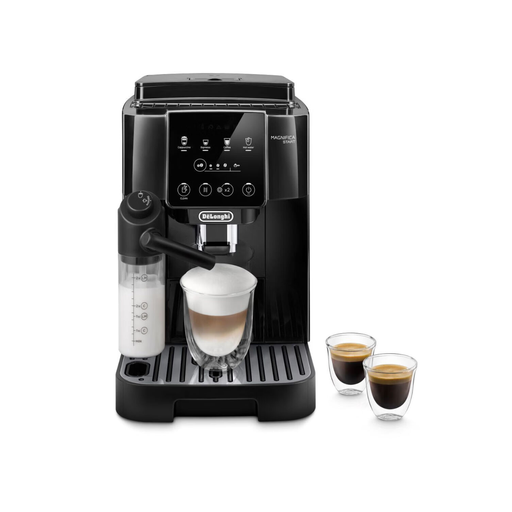
Consider this bean-to-cup machine if automatic milk preparation is more useful to you than steaming each family latte by hand.
The product name specifies automatic milk preparation and four one-touch recipes. Check the ECAM220.60.B instructions for coconut-milk use, milk-temperature adjustment and cleaning, as well as the plug and documentation for the supplied variant.
 No image available
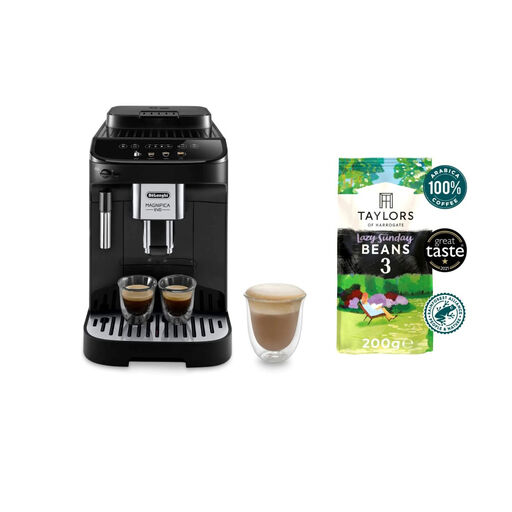
This bean-to-cup option suits someone who wants a hands-on milk-frothing step when preparing family lattes.
The product name specifies a milk frother and a 200 g coffee-bean bundle. Confirm how the ECAM290.21.B frother should be used with coconut milk, whether milk temperature can be adjusted, and the supplied variant’s plug and documentation.
 No image available
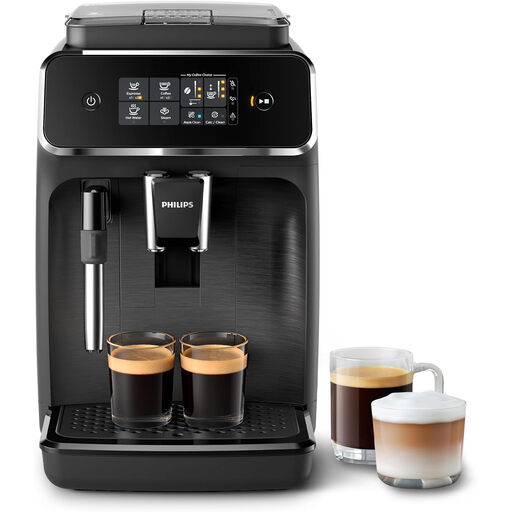
Consider this bean-to-cup machine if you want coffee preparation alongside a separate milk-frothing step.
The product name specifies a ceramic grinder, milk frother and two coffee drinks. Check the EP2220/10 guidance for coconut milk and temperature control, plus the plug and documentation for the variant offered.
 No image available
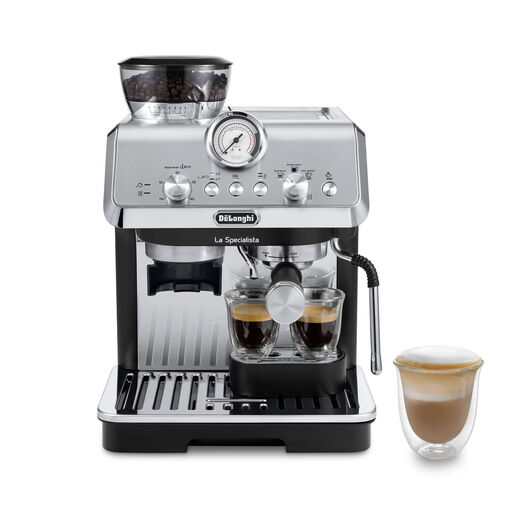
This manual bean-to-cup option is for someone willing to take a more active role in preparing espresso and milk for each latte.
The product name identifies the EC9155.MB variant and a milk frother. Check its coconut-milk instructions and milk-temperature controls separately from any coffee-temperature settings, and confirm the supplied plug and documentation.
 No image available
Consider this model if reducing manual milk-frothing steps matters when making more than one latte.
The product name specifies automatic milk frothing and ground-coffee use; its 20Bar wording should not be treated as a measure of drink quality. Check the H13A instructions for coconut milk, milk-temperature control and cleaning, and confirm the supplied plug and documentation.
Yes, with a steam wand or milk system suitable for the drink you are using, but control the heat rather than treating coconut milk exactly like dairy milk. Sage Appliances advises keeping non-dairy milk at or below 55°C because it can begin to separate or curdle above that point; check the selected machine’s instructions too.
Not necessarily: decide whether brewing espresso and steaming milk at the same time is important to your serving routine. Check that the exact model explicitly supports both actions together if you need them; otherwise, plan a sequence for making the espresso and texturing the milk.
Clean the milk-contact parts after use and follow the exact machine’s maintenance instructions. For a routine of two to five cups a day, Sage Appliances’ general guidance calls for weekly cleaning of most parts; the selected model’s manual should guide descaling and other maintenance.
Confirm the exact appliance variant’s voltage, plug, supplied instructions and seller warranty for where you will use it. GOV.UK’s electrical-equipment guidance covers products placed on the Great Britain market, while Northern Ireland has different provisions; a similar-looking listing does not establish the suitability of an imported variant.