Hands-on honey-latte makers
If you want to adjust espresso made from fresh beans and texture the milk yourself, a machine with a grinder and manual steam wand suits that routine. You will still need to prepare the drink and stir honey into the cup.


Choose a manual espresso machine if controlling the shot and texturing milk yourself matters most; choose an automatic bean-to-cup machine with an automatic milk system if you would rather handle fewer coffee-and-milk preparation steps. Neither route adds the honey for you: Meraki Honey’s recipe stirs it into hot espresso in the cup before the milk goes in. Check the exact machine’s milk workflow, cleaning instructions and worktop fit before deciding.
If you want to adjust espresso made from fresh beans and texture the milk yourself, a machine with a grinder and manual steam wand suits that routine. You will still need to prepare the drink and stir honey into the cup.
If reducing daily handling matters more than hand-texturing milk, look at automatic bean-to-cup models with an automatic milk system. Check how the particular model cleans that system; honey remains a separate in-cup step.
If worktop width is the main constraint, a slim manual machine may suit you. De'Longhi UK specifies its Dedica Style EC685.BK at 15 cm wide, with ground-coffee and E.S.E.-pod options and manual milk frothing.
Decide how much of the espresso and milk preparation you want to do yourself, then check whether the resulting machine and any coffee-preparation equipment fit your space.
Choose it when: Worktop width is tight and you are happy to prepare the coffee and froth milk yourself.
Trade-off: A slim machine need not include a grinder; the Dedica Style EC685.BK uses ground coffee or E.S.E. pods.
Choose it when: You want fresh-bean grinding and help with preparation while keeping control of milk texturing.
Trade-off: Sage’s Barista Express Impress assists dosing and tamping, but steaming milk remains a manual task.
Choose it when: You make milk drinks often and want the machine to handle more of the coffee-and-milk routine.
Trade-off: You still add honey in the cup and need to follow the exact model’s milk-system care instructions.
| Concern | What to check | Who this matters to |
|---|---|---|
| Espresso and milk control | Look for the coffee adjustments you intend to use and a manual steam wand if you want to texture milk yourself. | If I want to adjust my espresso and steam milk to my preferred texture, I am willing to spend more time preparing each drink. Around 37% of consumers put that hands-on control first. |
| Less daily handling | Check the exact model’s coffee and automatic milk programmes, milk-system format and cleaning steps. | When I make milk drinks regularly, I would rather let the machine handle more of the coffee and frothing routine, even though I still stir in the honey. For around 36% of consumers, reducing that daily handling is the primary need. |
| Worktop fit and setup | Measure the available space and check machine dimensions, coffee format and whether your chosen setup needs a separate grinder. | With little room on the worktop, I need a machine that fits before I consider a more involved fresh-bean setup. That space-and-setup need comes first for around 27% of consumers. |
An automatic programme can prepare coffee and milk, but honey is a separate ingredient. Meraki Honey’s method dissolves it in hot espresso in the cup.
Choose an automatic machine for its coffee-and-milk workflow, and allow for the in-cup honey step.
Manual machines can require different coffee inputs: De'Longhi’s Dedica Style EC685.BK takes ground coffee or E.S.E. pods, while Sage lists an integrated grinder for the Barista Express Impress.
Decide whether you intend to use ground coffee, pods or whole beans, then check the exact machine’s coffee format and grinder arrangement.
Using whole beans with a setup that requires ground coffee also means allowing space for a separate grinder.
Automatic milk-cleaning functions are specific to particular models; they do not tell you everything about cleaning removable parts or descaling.
Read the exact model’s care instructions and check which milk-contact parts you will need to handle.
Similar-looking models can have different market specifications, so a product photograph is not enough to establish which variant is being sold.
Check the exact model number, voltage, plug and seller support information before buying for UK use.
Its specified UK models include both compact manual espresso and automatic bean-to-cup approaches.
The Barista Express Impress is an assisted-manual option for preparing espresso from whole beans and steaming milk yourself.
Its specified automatic bean-to-cup lines focus on selectable milk drinks and milk-system cleaning functions.
These choices cover hands-on espresso preparation, a bean-to-cup machine with a listed milk frother, and a capsule machine with a separate frother. Compare the coffee format and milk steps carefully: the listed models should not be treated as interchangeable automatic-milk options.
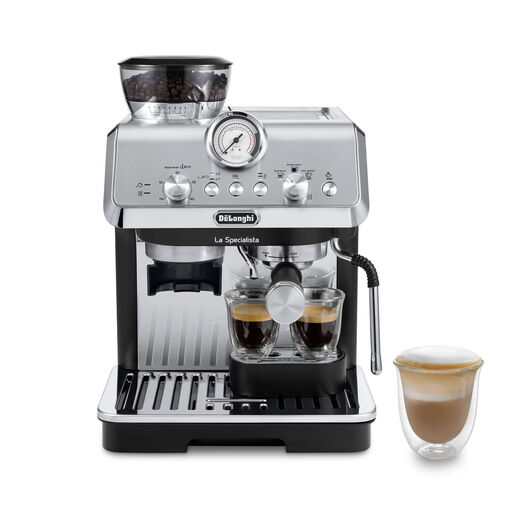 No image available
Consider this manual bean-to-cup model if you want an involved espresso routine for your honey latte. Check the milk-preparation steps and worktop fit for this exact variant; stir honey into the espresso in the cup.
 No image available
This is a hands-on choice if you want to grind coffee and steam milk as separate parts of making a honey latte. Its title specifies 20 grind levels, a 1.8 L water tank and 20-bar pressure; the pressure figure alone does not establish how the espresso will taste. Check the plug and model specification for UK use.
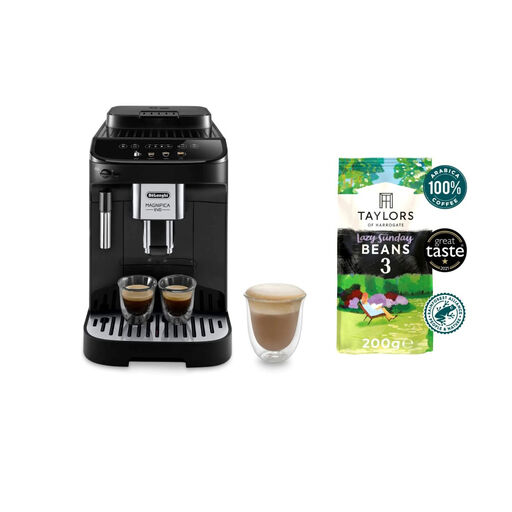 No image available
Consider this bean-to-cup machine if you want to prepare coffee from beans while retaining a milk-frothing step. The bundle includes Taylors of Harrogate Lazy Sunday coffee beans; check how this exact model froths milk, along with its dimensions and care instructions, before treating it as an automatic-milk choice.
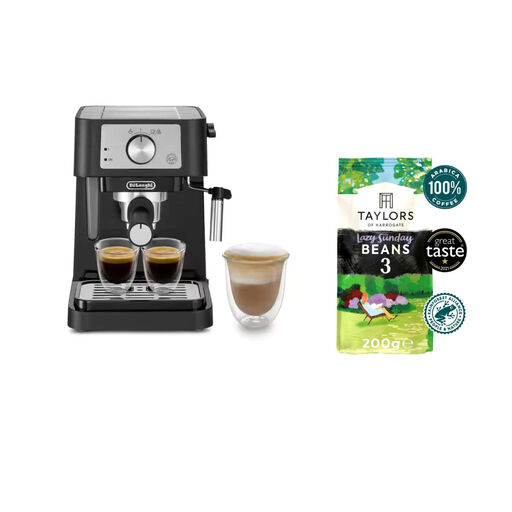 No image available
This compact manual espresso model suits a buyer willing to froth milk with a steam wand. Its title specifies 15-bar pressure and includes Taylors of Harrogate Lazy Sunday coffee beans; if you plan to use those beans, check how you will grind them. Measure the installation space and confirm the electrical variant.
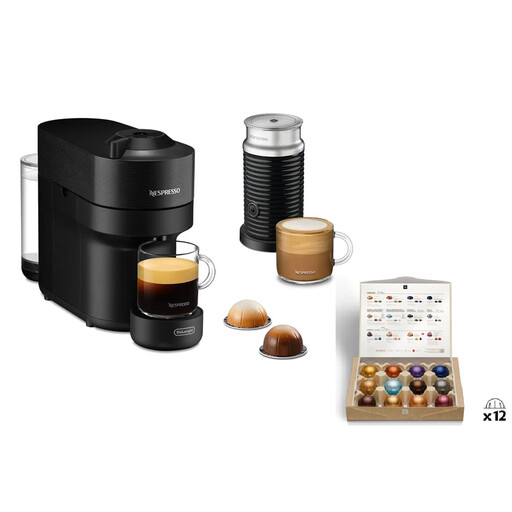 No image available
Consider this bundle if you prefer a capsule coffee routine and a separate device for frothing milk. It pairs a Vertuo Pop pod machine with an Aeroccino frother, rather than a ground-coffee espresso setup; check that the capsule format and available drink sizes suit the coffee base you want.
An automatic coffee-and-milk programme can reduce preparation steps, but you still need to add the honey. Meraki Honey’s recipe calls for stirring it into hot espresso in the cup before adding milk.
For Meraki Honey’s recipe, dissolve the honey in hot espresso instead, then add the milk. Keeping honey out of the milk-preparation step also follows that recipe’s advice for avoiding clumps when honey meets cold milk.
No: a model’s automatic milk-cleaning function is only one part of its care routine. Check its instructions for removable milk-contact parts and descaling, even if it runs a cleaning cycle after milk drinks.
Making drinks for private household use is different from running a food business. If you intend to sell drinks or otherwise start a food business, the Food Standards Agency says to register with the local authority at least 28 days before trading or food operations begin.
Confirm the exact model’s voltage, plug and seller support information rather than relying on a photograph of a similar-looking machine. Check that the specification shown for the product you intend to buy matches your intended UK setup.